
Stop the Bow: How to Prevent Wood Panels from Bowing During Glue-Up
For any intermediate woodworker, there is no sound more disheartening than the 'creak' of a panel beginning to arch under pressure. You’ve spent hours milling your lumber, selecting the perfect grain match, and applying the right amount of glue, only to watch your tabletop transform into a shallow boat hull. Knowing how to prevent wood panels from bowing during glue up is the difference between a professional-grade furniture piece and a frustrating shop scrap.
Table of Contents
- Why Wood Panels Bow During Glue-Up
- Traditional Solutions: The Problem with Cauls
- The 4-Way Pressure Revolution
- Product Spotlight: SPETOOL 36-Inch 4-Way Panel Clamp
- Step-by-Step Guide to a Perfectly Flat Panel
- Maintenance and Glue Management
Why Wood Panels Bow During Glue-Up
Bowing occurs primarily due to two factors: internal wood tension and external clamping force. While moisture content and alternating grain direction play a role, the most common culprit in a DIY shop is uneven clamping pressure. Standard bar clamps apply force only from the sides. If the clamp heads are even slightly off-parallel, or if the pressure isn't perfectly centered on the board's edge, the panel will naturally buckle upward or downward.
Traditional Solutions: The Problem with Cauls
Traditionally, woodworkers used 'cauls'—slightly curved pieces of wood clamped across the top and bottom of the panel—to force it flat. While effective, cauls are cumbersome. They require extra clamps, take up significant space, and often shift just as you are tightening the main bars. This is where modern engineering, specifically the 4 way panel clamp, changes the game.
The 4-Way Pressure Revolution
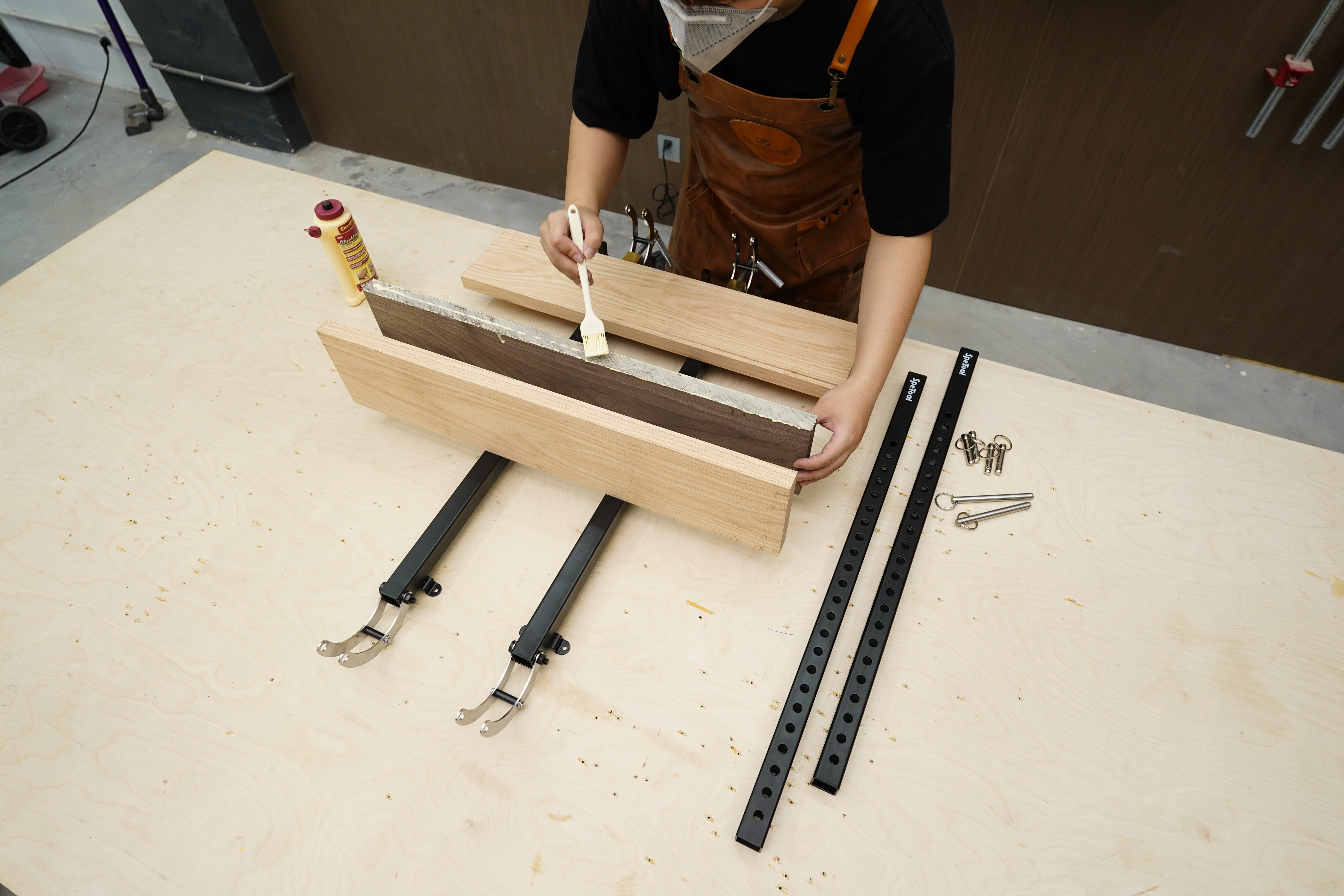
Instead of battling with sacrificial boards and dozens of individual clamps, savvy builders are switching to integrated pressure systems. A spetool panel clamp utilizes a parallelogram-action coupler system. When you tighten the side screw, the clamp simultaneously applies vertical pressure from the top and bottom while squeezing the joints together from the sides. This ensures that the boards stay flush and the panel remains dead flat without the need for secondary cauls.
Product Spotlight: SPETOOL 36-Inch 4-Way Panel Clamp
If you are looking to upgrade your assembly table, the SPETOOL 36-inch 4-way panel clamp is a professional-grade solution designed for the DIY woodworker. These woodworking clamps 36 inch are built with heavy-duty steel pipe and a durable powder-coat finish, ensuring they won't flex under the immense pressure required for wide glue-ups.
Key Features:
- Dual-Direction Clamping: The parallelogram couplers allow the tool to clamp in two directions at once, making it easier to achieve flat panels and flush joints.
- Extreme Versatility: It accommodates panels up to 36'' wide and thicknesses ranging from 1/4" to 3", making it perfect for anything from thin cutting boards to thick bench tops.
- User-Friendly Design: Featuring fix pins and copper thread bushings for smooth operation, it is easy to adjust the width and thickness you need.
- Easy Cleanup: The special surface treatment allows glue squeeze-out to be easily removed by hand or knife without damaging the fixture.
For more high-quality jigs and accessories, visit the SPETOOL homepage to explore their full range of precision tools.
Step-by-Step Guide to a Perfectly Flat Panel
- Dry Fit First: Always arrange your boards without glue first to check for gaps and ensure your 4 way panel clamp is adjusted to the correct width.
- Apply Even Glue: Use a roller to ensure a consistent thin layer of glue on both mating surfaces.
- Position the Clamps: Space your woodworking clamps 36 inch every 8-12 inches for maximum stability.
- Engage the Parallelogram: As you tighten the lead screw, watch the boards pull together horizontally while the vertical bars lock them into a flat plane.
- Check for Flushness: Run your hand over the joints; they should feel perfectly flush thanks to the simultaneous vertical pressure.
Maintenance and Glue Management
One common complaint in woodworking forums is glue sticking to the clamp bars. The spetool panel clamp addresses this with a specialized powder coating. However, it is always a best practice to wipe away excess squeeze-out with a damp cloth or wait for it to reach a 'rubbery' state before scraping it off with a plastic putty knife. This keeps your tools in top shape for years of reliable service.