
Aluminum vs Wood Router Sleds: Why Your DIY Jig is Ruining Your Slabs
You’ve spent hundreds of dollars on a beautiful, kiln-dried walnut slab. You’ve spent hours prep-sanding. But when you finally run your router across your homemade wooden jig, the result is a wavy surface that takes days of sanding to correct. The culprit? The material of your sled itself. When comparing aluminum vs wood router sled systems, the difference isn't just price—it's the physics of woodworking.
Table of Contents
- The Hidden Enemy: Humidity and Warping
- Precision Milling: The Aluminum Advantage
- Dust Management and Workshop Safety
- The Professional Solution: SpeTool Xpert Pro
- Compatibility and Setup
The Hidden Enemy: Humidity and Warping
Most DIYers start with a wood router sled because it's cheap and accessible. However, wood is an organic material that reacts to environmental changes. According to hygroscopy principles, wood expands and contracts based on ambient humidity. A wooden rail that was straight in July may have a 1/16-inch bow by October.
In contrast, aluminum alloy rails provide thermal stability and rigidity. An aluminum system won't sag under the weight of a heavy 3-HP plunge router, ensuring that the first pass is as level as the last. This is why professional shops have moved away from shop-built plywood jigs toward engineered metal solutions.
Precision Milling: The Aluminum Advantage
Accuracy in slab flattening is measured in fractions of an inch. A common complaint with wooden jigs is the "stutter" or friction caused by wood-on-wood contact. To achieve a glass-like finish on a live edge table, you need smooth, predictable movement.
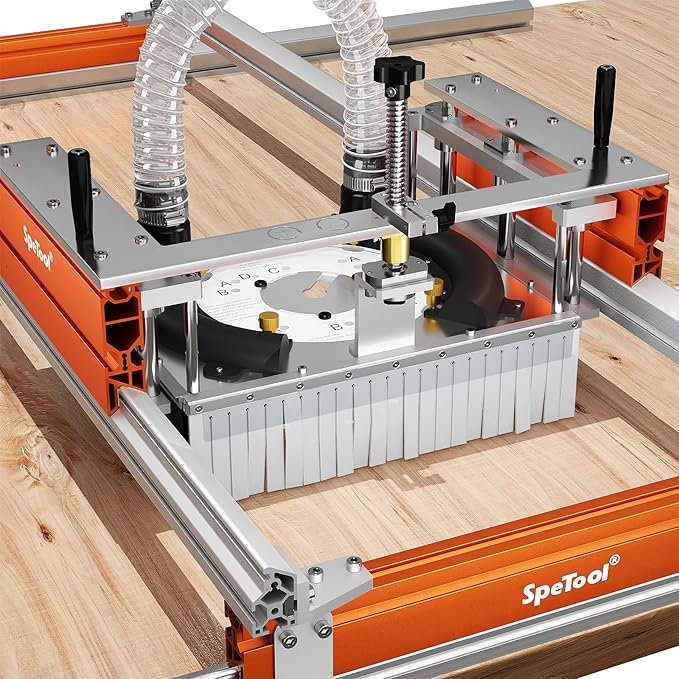
The SpeTool Xpert Pro Router Sled solves this with X and Y axis aluminum rails equipped with UHMW glide pads. These pads facilitate effortless movement across large surfaces, whether you are working on small charcuterie boards or massive 38-inch wide dining tables. Furthermore, while wood jigs require manual shimming for height, a professional spetool router sled features integrated custom bearing housings with angular contact ball bearings, providing a precise 5/32 inch depth change per full rotation.
Dust Management and Workshop Safety
Flattening a slab creates a massive volume of wood chips. DIY wooden sleds are notorious for throwing debris across the entire shop, creating a respiratory hazard. High-quality aluminum sleds are designed with integrated dust collection in mind. Features like dual dust ports, full-surround brushes, and silicone curtains are nearly impossible to implement effectively on a scrap-wood jig.
The Professional Solution: SpeTool Xpert Pro
If you are tired of the inconsistency of DIY jigs, the spetool router sled offers a significant upgrade in both capacity and precision. This system is engineered for the serious woodworker who values time and material integrity.
- Material and Dimensions: High-grade aluminum alloy rails and carriage with a maximum work capacity of 38 x 38.2 inches.
- Height Adjustment: Range from 1/4 to 3-3/8 inches to accommodate varying slab thicknesses.
- Stability: The rigid structure eliminates the "dip" often found in the center of long wooden spans.
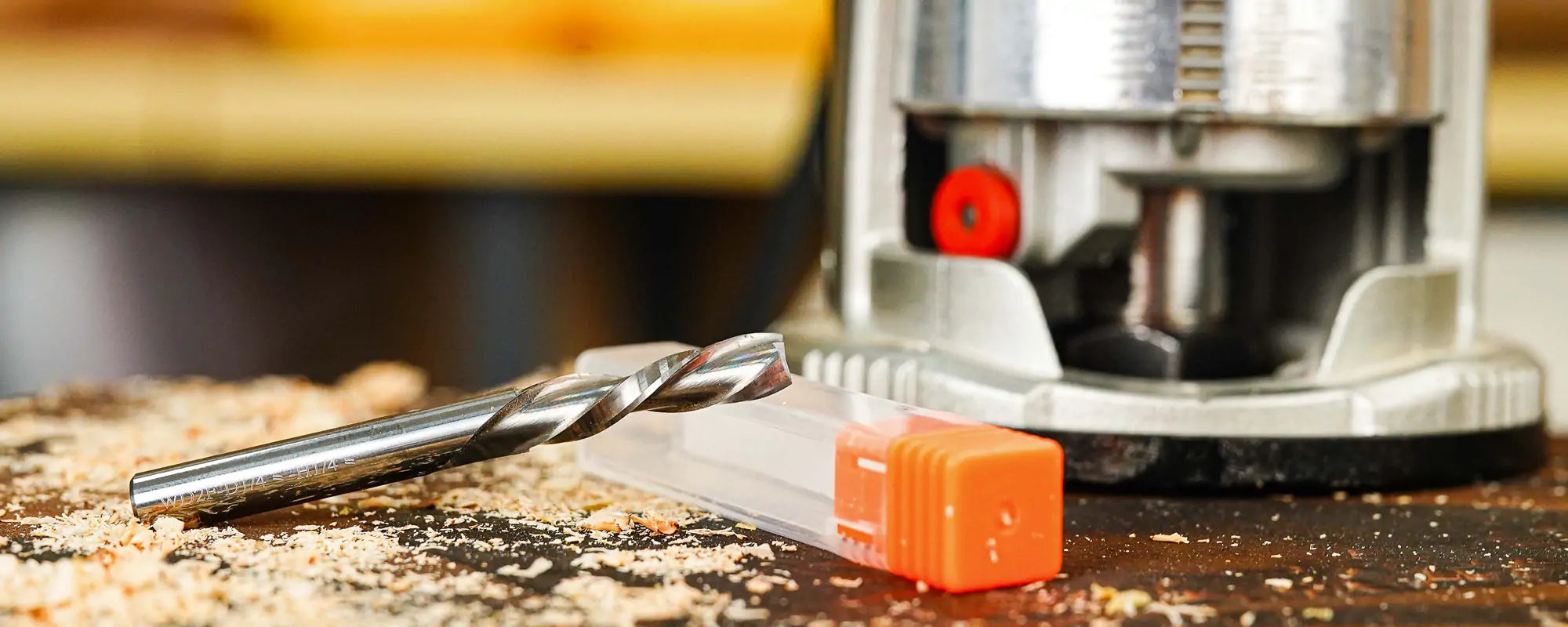
For more information on high-quality milling bits to pair with your sled, explore the SpeTool collection.
Compatibility and Setup
One of the biggest headaches of building a DIY jig is drilling the base plate to fit your specific router. A professional aluminum sled comes with a pre-drilled base plate. The Xpert Pro is compatible with industry standards such as the DeWalt 616/618, Bosch 1617/1618, and Festool OF 1400 EBQ. This "plug-and-play" capability ensures you spend your time flattening wood, not troubleshooting your tools.
Final Verdict
While a wood jig might save you money upfront, the cost of a ruined slab or hours of extra sanding far outweighs the investment in a metal system. For stability, precision, and a cleaner shop, aluminum is the clear winner.