
From Concept to Prototype: Precision Drilling for Inventors
The Challenges of Drilling Plastics
For inventors and product designers, the transition from a digital CAD model to a physical prototype is a critical phase. When working with materials like Acrylic (PMMA) or PVC, the margin for error is razor-thin. Standard hand drilling often leads to two major issues: heat-induced melting and bit wandering. Unlike wood, plastic has a low melting point; friction from a drill bit can quickly turn a precise aperture into a warped, gummy mess.
Furthermore, achieving a perfectly Straight Hole manually is nearly impossible. If the bit enters at even a slight angle, the structural integrity of the prototype is compromised, and mating parts won't align. This is where the spetool drill guide becomes an essential part of the inventor's toolkit.
Why a Straight Hole Matters in Prototyping
In engineering, tolerances define success. A Straight Hole ensures that fasteners, axles, and sensors fit exactly as intended. Engineering students often find that manual drilling leads to 'radial runout,' where the hole is slightly elliptical. Using the spetool portable drill guide, you can maintain a radial runout of less than 0.1mm, delivering professional-grade results that mimic a stationary drill press but with the portability of a hand tool.
The SpeTool Solution for High-Precision Results
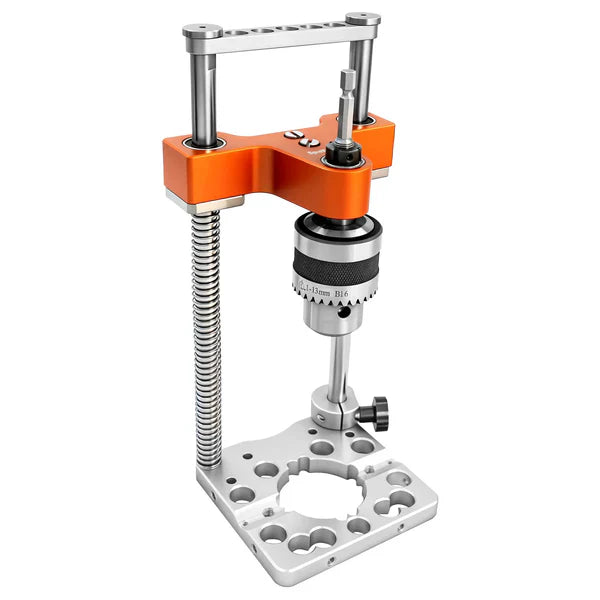
The SpeTool Auto Line Portable Drill Guide is specifically engineered to solve the common frustrations of prototyping. Its core feature is the Auto Line Precision mechanism. This spring-loaded system automatically returns the drill to the starting position after each operation, significantly reducing user fatigue and speeding up the workflow during batch drilling.
Key Features for Inventors:
- 90° Vertical Accuracy: The precision-machined guide head ensures every hole is perfectly perpendicular to the surface.
- Smooth Operation: Built-in ball bearings allow the carriage to glide effortlessly along the dual columns without the need for messy lubricants that could contaminate your plastic workpiece.
- Durable Aluminum Build: The corrosion-resistant aluminum base provides a stable platform that won't flex or crack, unlike cheaper plastic alternatives.
Explore the full specs of the spetool portable drill guide and upgrade your workshop today.
Pro Tips for Clean, Non-Melted Holes
To get the best results in acrylic and PVC using your spetool drill guide, follow these steps:
- Control Your RPM: High speeds cause friction. Keep your hand drill at a medium-low speed.
- Peck Drilling: Use the guide's smooth travel to drill in short bursts. Pull the bit out frequently to clear plastic chips, which carry heat away from the hole.
- Secure the Workpiece: Use the built-in V-groove on the SpeTool base to center round stocks like PVC pipes or dowels, preventing them from rolling during the operation.
Edge Drilling and Versatility
One of the most unique features of this tool is Zero-Edge Drilling. By removing the column caps and flipping the chuck carrier, you can drill flush against an edge. This is vital for installing hinges or brackets on the side of a prototype casing where space is limited. The 1/2" (13mm) keyed chuck is compatible with bits ranging from 1mm to 13mm, making it versatile enough for everything from micro-electronics mounts to heavy-duty structural frames.
Conclusion
Precision drilling in plastic for prototypes doesn't require a $2,000 floor-standing drill press. For the modern inventor, the spetool drill guide offers the perfect balance of accuracy, portability, and durability. Whether you are working on furniture assembly or a complex engineering project, this tool ensures your concept is realized with professional-grade precision.