
Flawless Finishes: How to Surface Epoxy and Wood Hybrid Tables
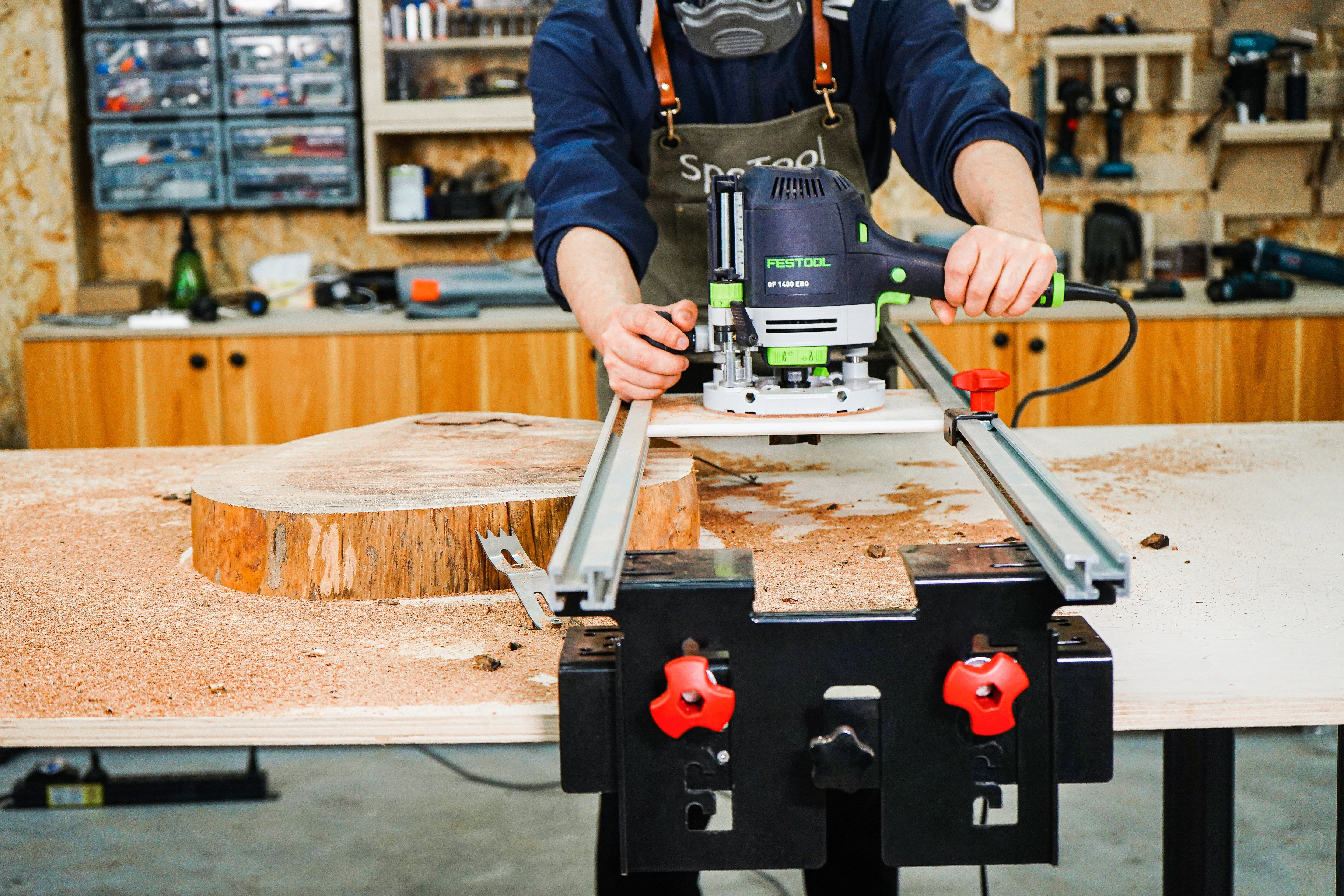
Creating an epoxy river table is a rite of passage for modern furniture makers. However, the most daunting phase isn't the pour—it's the surfacing. When you are dealing with two materials of vastly different densities, such as walnut and cured epoxy resin, achieving a perfectly flat plane without heat damage requires precision. This guide explores professional techniques for surfacing epoxy river tables using a high-quality router flattening sled.
Table of Contents
- The Challenge of Mixed Materials
- Choosing the Right Router Sled for Flattening Slabs
- Setting Up Your SpeTool Cratos Sled
- Techniques to Prevent Resin Melting
- Final Surface Preparation
The Challenge of Mixed Materials
Surfacing a hybrid slab is tricky. Wood is fibrous and porous, while epoxy is a dense plastic. If your feed rate is too slow or your bit is dull, the friction generates heat. For epoxy, heat is the enemy; it leads to "gumming" or melting, which can ruin your router bit and leave unsightly swirls on your table. To avoid this, you need a stable platform and consistent depth control. This is where professional-grade router sleds become indispensable.
Choosing the Right Router Sled for Flattening Slabs
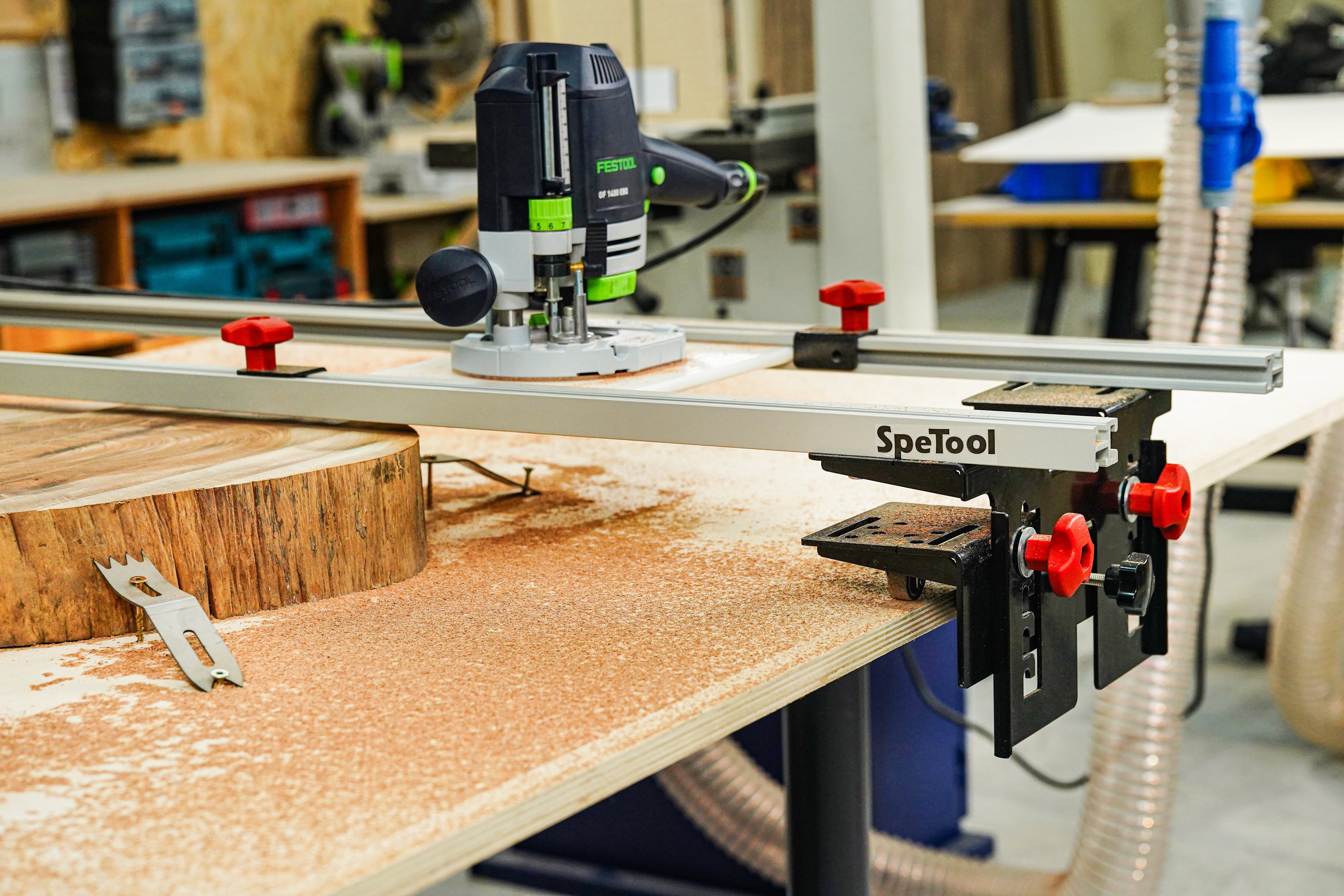
For epoxy artists, the choice of equipment determines the quality of the final polish. The SpeTool Cratos S01001 Router Sled is specifically designed to handle these complexities. Its rail is constructed from 6061 high-strength anodized aluminum alloy, ensuring it will never bend or warp under the weight of a heavy plunge router. This rigidity is crucial when surfacing epoxy river tables because even a millimeter of flex can result in gouges that take hours to sand out.
Beyond stability, this router sled for flattening slabs features a laser pre-set position for the Z-axis, making height adjustments effortless and slip-free. For those worried about the mess, it integrates seamlessly with the SpeTool dust collection system, capturing up to 90% of wood chips and resin dust, which is vital for a healthy workshop environment according to OSHA safety standards regarding wood dust exposure.
Setting Up Your SpeTool Cratos Sled
Proper setup is the foundation of a flat table. The Cratos S01001 simplifies this with its base and lift bracket system. The lift bracket offers five preset heights—no more balancing acts or manual measuring. You simply "click and go."
Steps for Alignment:
- Secure your slab using the included clamping tools to ensure zero movement during the pass.
- Slide your router into the "Easy Slide-In" opening breach in the brackets.
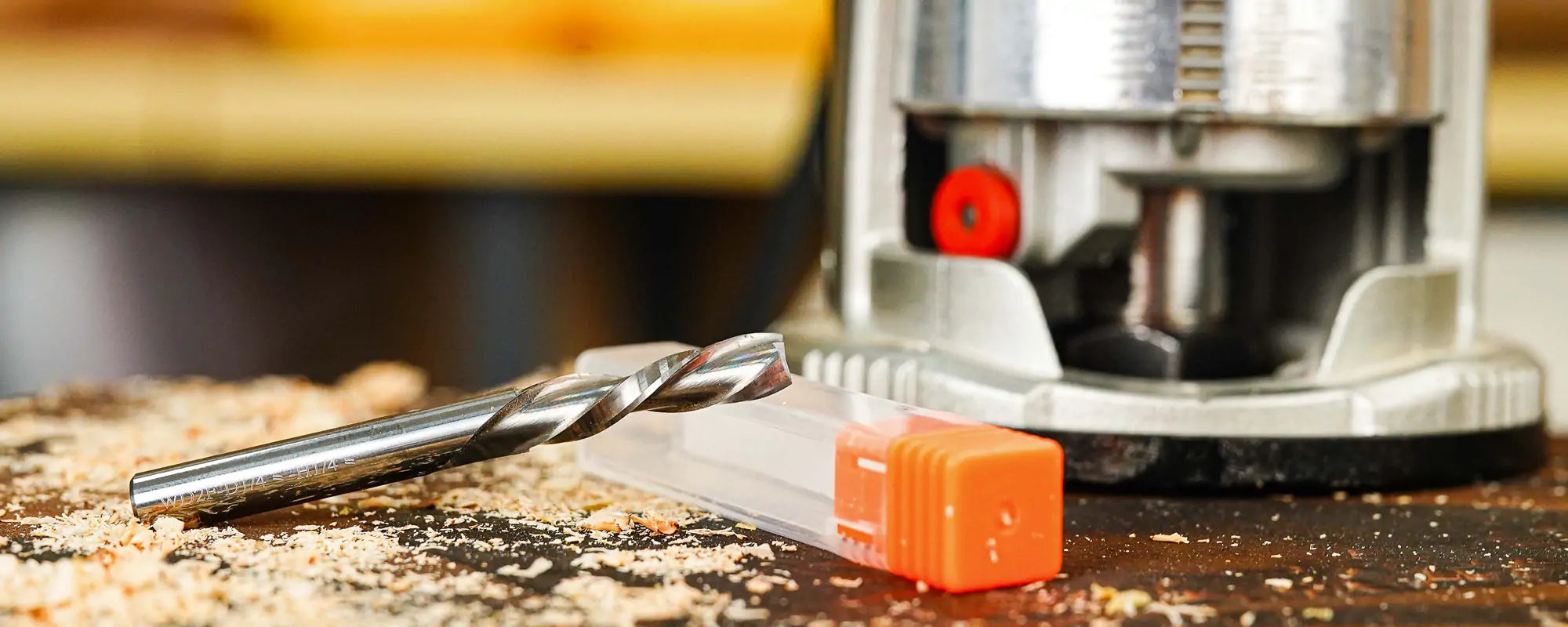
- If your flattening bit is short, utilize a Router Collet Chuck Extension to reach the desired depth safely.
- Check for level across the X and Y axes using a precision spirit level.
Techniques to Prevent Resin Melting
To achieve a glass-like finish on the resin sections, follow these professional tips:
- High Speed, Fast Feed: Keep the router RPM high but move the router flattening sled across the surface at a steady, brisk pace. Stopping in one spot for even a second will melt the epoxy.
- Shallow Passes: Instead of taking off 1/4 inch at once, take multiple passes of 1/16 inch. This reduces load and heat.
- Sharp Tooling: Use carbide-tipped flattening bits. Dull bits rub rather than cut, creating excessive friction.
- Dust Management: Clear chips immediately. Recutting old chips increases heat. Using the SpeTool dust collection attachment is highly recommended here.
Final Surface Preparation
Once you have finished with the router sleds, your surface will be flat but will have fine tooling marks. You can now transition to sequential sanding. Start at 80 grit and work your way up to 400 grit for the wood, and potentially up to 3000 grit for the epoxy sections if you desire a high-gloss finish. For more on advanced finishing, refer to the Wikipedia guide on wood finishing.
Ready to level up your craft? Invest in the precision of the SpeTool Cratos S01001 and turn your wavy slabs into heirloom-quality furniture.