
Clamping Thin Wood Panels: How to Prevent Warping in 1/4 Inch Material
The Challenge of Thin Wood Glue-ups
For luthiers crafting guitar soundboards, box makers creating delicate lids, and scroll saw artists assembling backgrounds, working with 1/4-inch material is a daily reality. However, thin wood panels present a unique set of challenges during the glue-up process. Unlike thick slabs, a 1/4-inch board has very little structural rigidity. When edge pressure is applied, the wood tends to 'buckle' or 'bow' upward or downward, leading to uneven joints and hours of corrective sanding.
To achieve a professional result, you need a solution that manages pressure in more than one direction. This is where specialized woodworking clamps become essential for precision work.
Why Traditional Clamps Fail Thin Stock
Standard bar clamps or pipe clamps apply force exclusively to the edges of the board. With thin stock, this lateral pressure inevitably forces the panel out of alignment. Even if you use 'cauls' (secondary boards used to distribute pressure), the setup becomes cumbersome and prone to slipping. For those making intricate items, such as custom cutting boards or instrument tops, any misalignment can ruin the entire project.
The 4-Way Advantage for 1/4 Inch Material
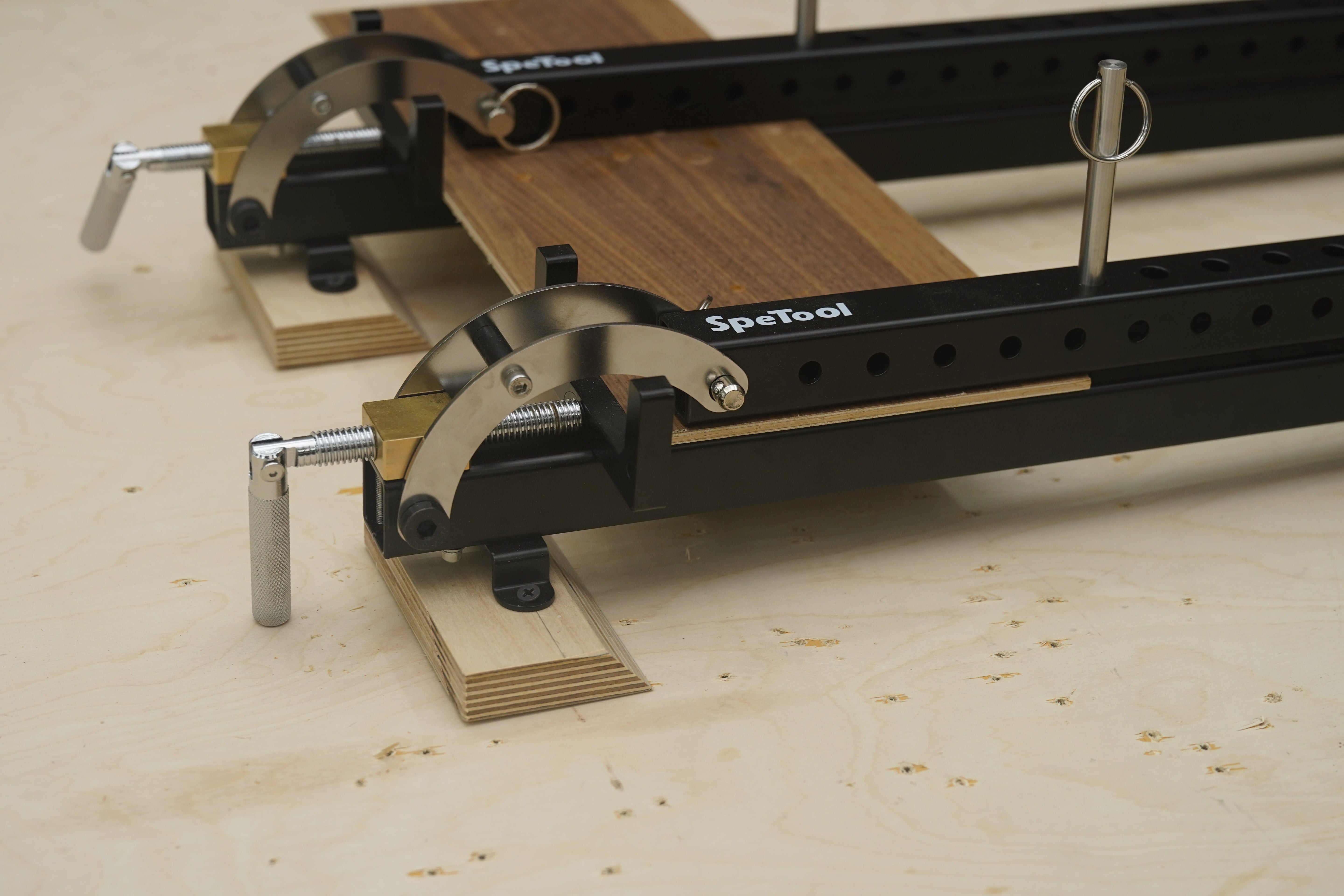
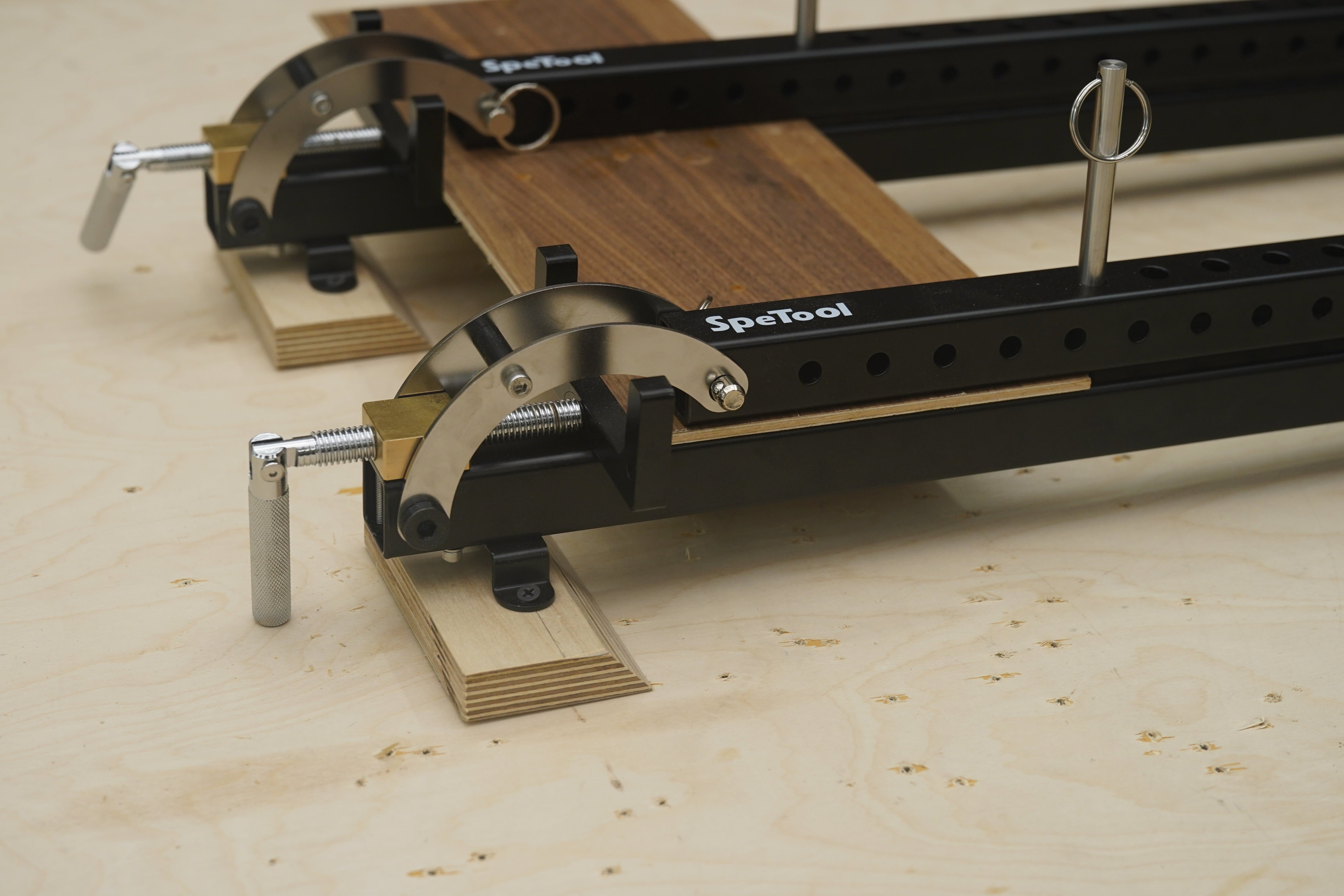
The solution to buckling is simultaneous pressure from four directions: top, bottom, and both sides. The spetool panel clamp is specifically engineered to handle this. While many industrial clamps are designed for thick tabletop slabs, this system is uniquely versatile, accommodating thicknesses ranging from a delicate 1/4 inch up to 3 inches.
These 4-way panel clamps utilize parallelogram-action couplers. As you tighten the screw to apply side pressure, the vertical bars are pulled together, sandwiching the thin panel and forcing it to remain perfectly flat. This 'two-directions-at-once' clamping ensures flush joints that require minimal cleanup.
Step-by-Step Guide to a Flat Glue-up
1. Preparation and Dry Fit
Always perform a dry fit before applying glue. Adjust the fix pins on your spetool panel clamp to match the width of your project (up to 24 inches). Ensure the parallelogram couplers are positioned to contact the 1/4-inch edge of your wood.
2. Uniform Glue Application
Apply a thin, even layer of wood glue. For thin panels, excessive glue can cause the wood to swell, increasing the risk of warping. Whether you are using specialized woodworking tools or a simple brush, consistency is key.
3. Engagement of the 4-Way Pressure
Place your boards into the clamp. As you turn the handle, the 4-way panel clamps will begin to exert downward and upward pressure simultaneously with the side pressure. This prevents the 1/4-inch stock from lifting off the reference surface.
4. Checking for Flushness
Run your finger across the joint. Because the clamp applies pressure from all sides, the boards should be perfectly flush. This is particularly crucial for clamps for cutting boards where a level surface reduces the need for heavy planing later.
Maintenance and Glue Management
One common concern with thin glue-ups is squeeze-out sticking to the clamp. The SpeTool system features a durable powder-coat finish and copper thread bushings. The special surface treatment allows dried glue to be easily removed by hand or a plastic knife, ensuring the precision of your tool isn't compromised over time.
For those looking to upgrade their workshop, the SpeTool 24-inch 4-Way Panel Clamp 2-Pack offers a reliable, professional-grade solution for panels up to 24" wide. It is an ideal investment for anyone focused on high-quality joinery in thin-material projects.