
How to Drill Perfectly Straight Holes Without a Drill Press: A Step-by-Step Guide
Table of Contents
The Challenge of Straight Holes
For many DIY enthusiasts and apartment-dwelling woodworkers, the dream of owning a full-sized drill press is often crushed by a lack of floor space. However, drilling straight, perpendicular holes by hand is notoriously difficult. Even a slight tilt of the wrist can result in a crooked hole, ruining your project and wasting expensive lumber.
The "wobbly hand" problem is real, but you don't need a heavy, industrial machine to solve it. The solution lies in a compact, versatile tool designed for precision: the portable drill guide for straight holes.
What is a Portable Drill Guide?
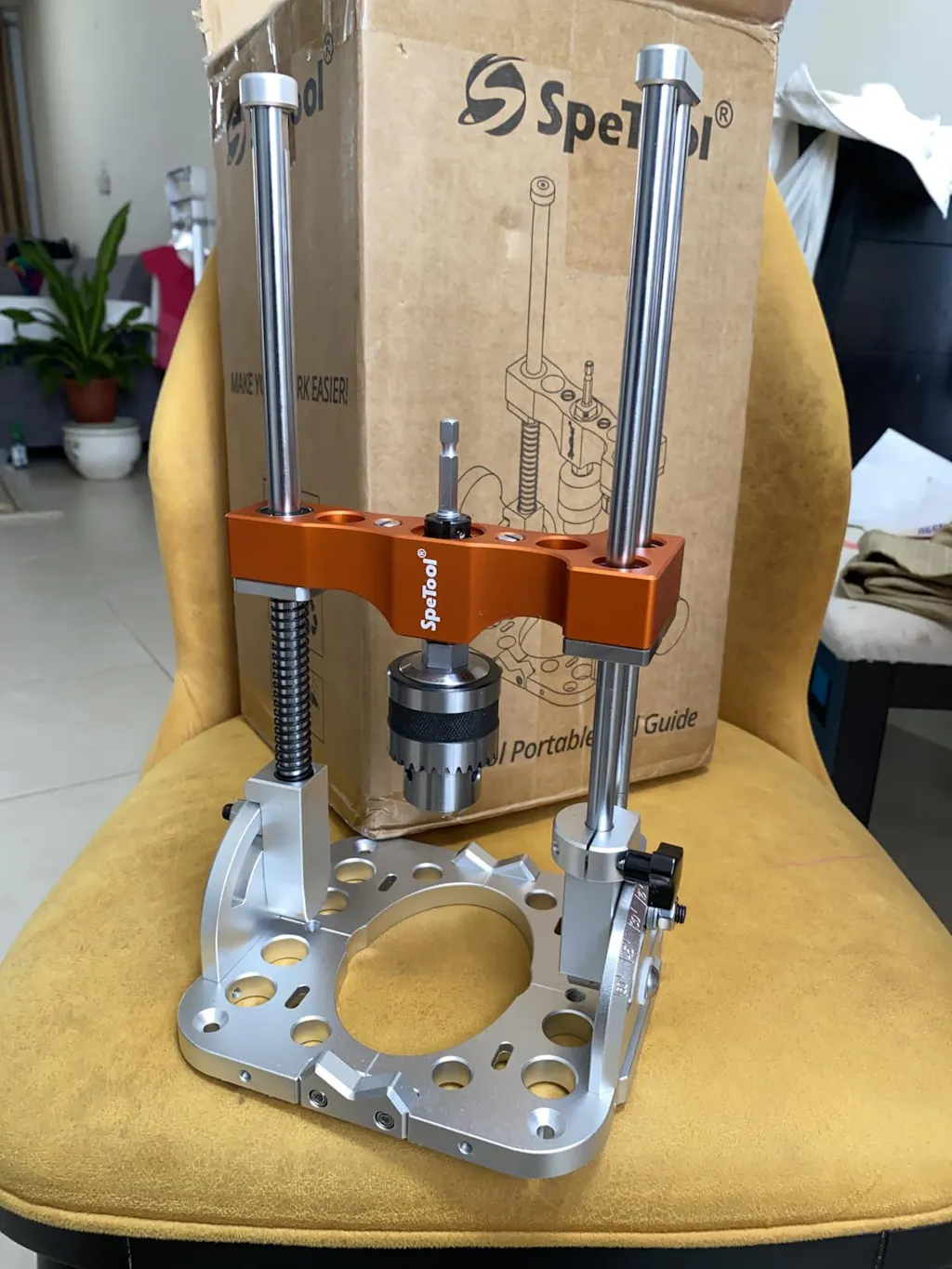
A portable drill guide is a jig that attaches to your standard handheld drill, acting as a mobile workstation. It provides the stability and alignment of a drill press while remaining light enough to carry to any job site or store in a kitchen drawer. This is the ultimate tool for those who need accuracy but value portability.
Why Choose the SpeTool Drill Guide?
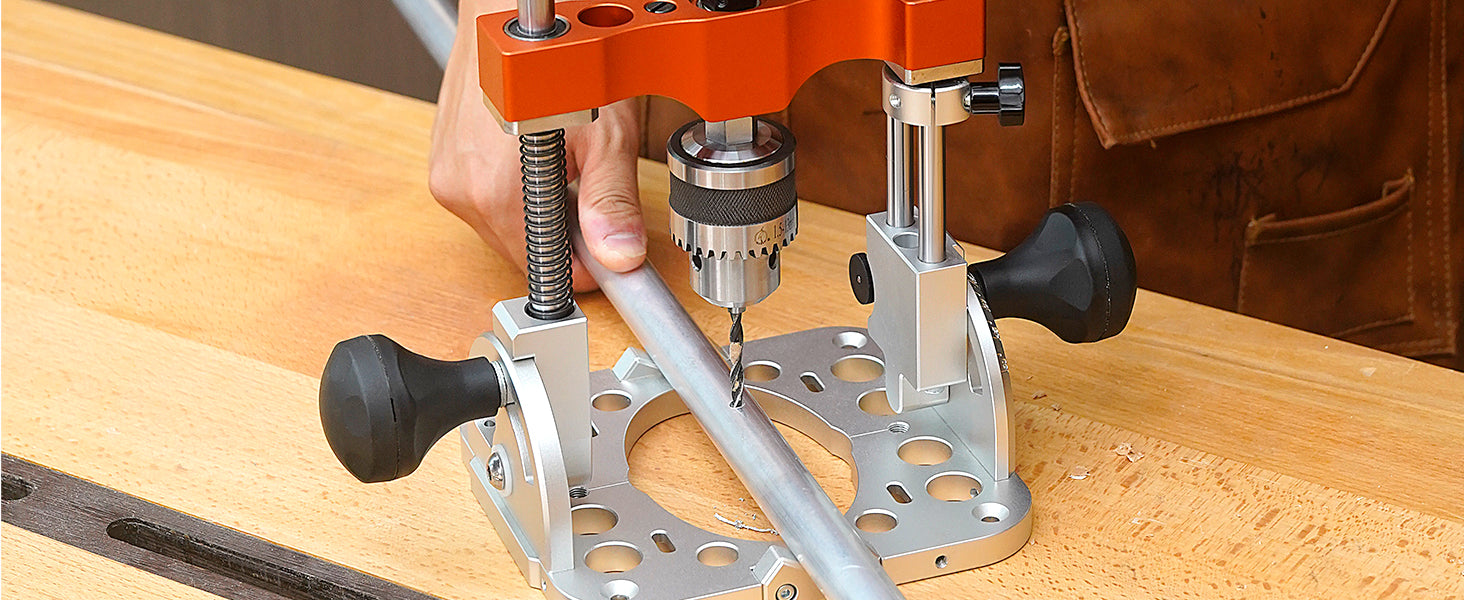
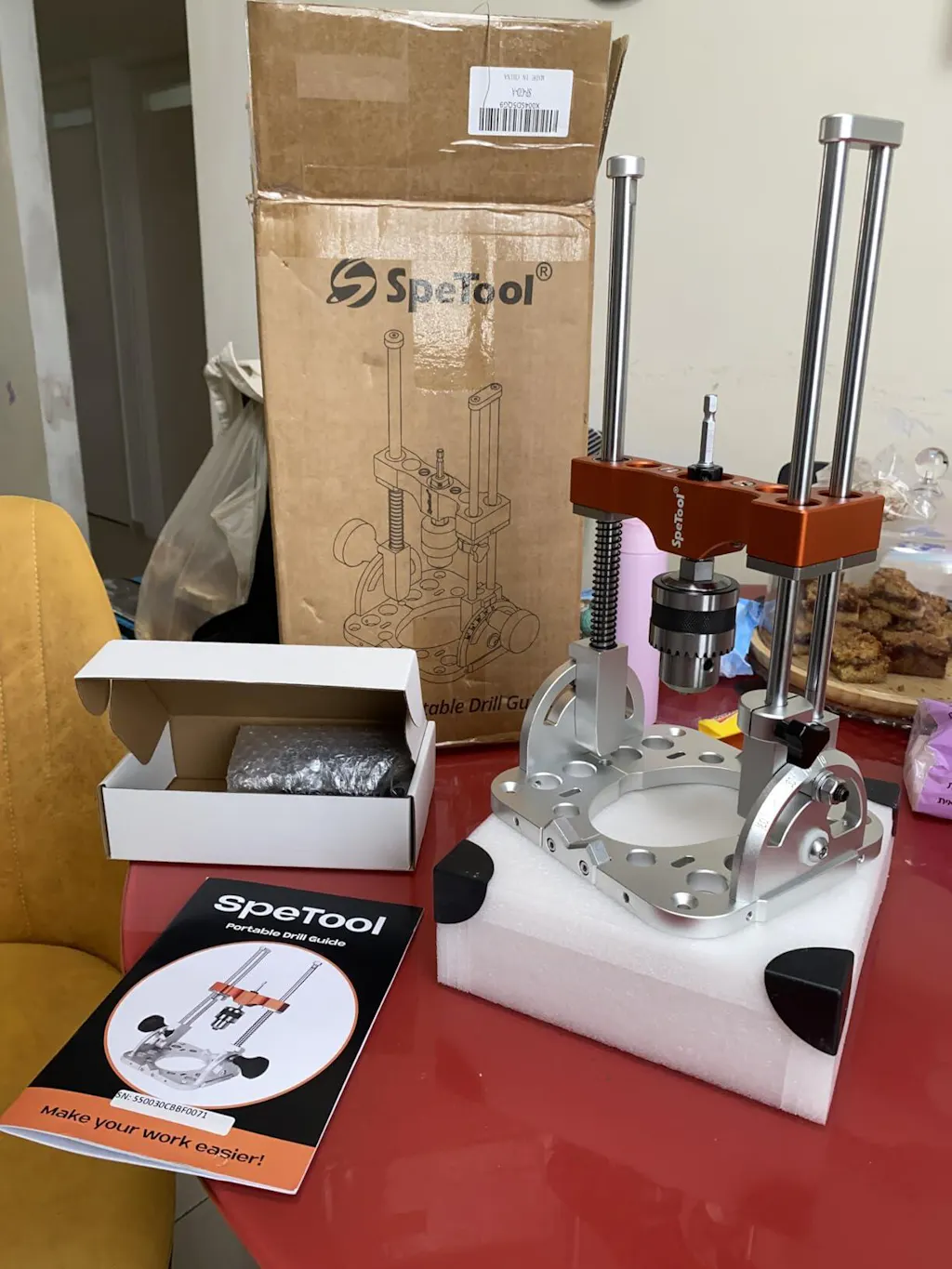
When it comes to balancing precision and versatility, the SpeTool Portable Drill Guide stands out. Unlike basic plastic jigs, this spetool drill guide features an adjustable angle range from 0 to 60 degrees, allowing for both perfectly vertical and complex angled drilling. Its solid construction minimizes vibration, ensuring that your drill guide remains stable even when working with hardwood.
Whether you are building furniture in a small studio or fixing a deck, this portable drill guide offers the accuracy of a benchtop model without the bulk.
Step-by-Step: Drilling Like a Pro
1. Preparation and Marking
Accuracy begins before the drill even touches the wood. Use a sharp pencil or a marking knife to pinpoint the exact center of your hole. For high-precision projects, a small indentation with a center punch can help prevent the drill bit from wandering.
2. Setting Up the Portable Drill Guide
Place the base of your spetool drill guide over the marked spot. If your model has centering notches, align them with your layout lines. For repetitive tasks, you might consider clamping the guide to your workpiece for extra security.
3. Adjusting the Depth Stop
One major advantage of using a professional drill guide is the depth stop. Set the collar on the guide rods to your desired depth to ensure every hole is consistent—a crucial feature when installing hardware or dowels.
4. The Drilling Process
Insert your drill chuck into the guide's spindle. Start the drill at a medium speed and apply steady, downward pressure. Let the tool do the work; the guide rods will maintain the vertical alignment, preventing the wobbly hand effect.
Maintenance and Tips
To keep your portable drill guide performing at its best, ensure the guide rods are kept clean and lightly lubricated. Check for any loose screws before each use to maintain maximum rigidity. According to various user reviews, keeping the base flat against the material is the most important factor for success.
Conclusion
You don't need a massive workshop to achieve professional results. By using a high-quality portable drill guide for straight holes, you can overcome the limitations of space and hand-drilling. Tools like the SpeTool guide provide the precision you need for your next woodworking masterpiece.