
The Engineering Behind the Slab Mill Height Adjustment Mechanism: Why it Matters
For professional woodworkers and tool enthusiasts, the difference between a 'good' project and a 'masterpiece' often lies in the microns. When using a Router Sled for Flattening Slabs, the most critical point of failure isn't usually the motor or the bit—it’s the slab mill height adjustment mechanism. If there is even a hint of 'slop' or axial play in the carriage, your perfectly planned dining table can end up with unsightly ripples and uneven surfaces.
Table of Contents
- The Physics of Precision: Understanding Axial Play
- Angular Contact Ball Bearings: The Professional Secret
- The SpeTool Xpert PRO Advantage
- Stability Beyond the Carriage: Rails and Pads
- Managing the Mess: Integrated Dust Collection
- Conclusion
The Physics of Precision: Understanding Axial Play
In mechanical engineering, axial play refers to the unwanted movement of a component along the axis of a shaft. In the context of a Slab Flattening Mill, this means the router carriage moving up or down independently of your adjustment setting. This usually happens because standard deep-groove ball bearings are designed for radial loads (side-to-side) but struggle with the vertical thrust loads created by a heavy router spinning a large flattening bit.
When your router encounters a knot or a change in grain direction, the upward pressure can cause a low-quality mechanism to 'jump' or shift. This results in 'snipe' or gouges that require hours of sanding to fix.
Angular Contact Ball Bearings: The Professional Secret
To solve the problem of axial play, high-end engineering utilizes angular contact ball bearings. Unlike standard bearings, the inner and outer ring raceways of angular contact bearings are displaced relative to each other in the direction of the bearing axis. This design allows them to handle combined radial and significant axial loads simultaneously.
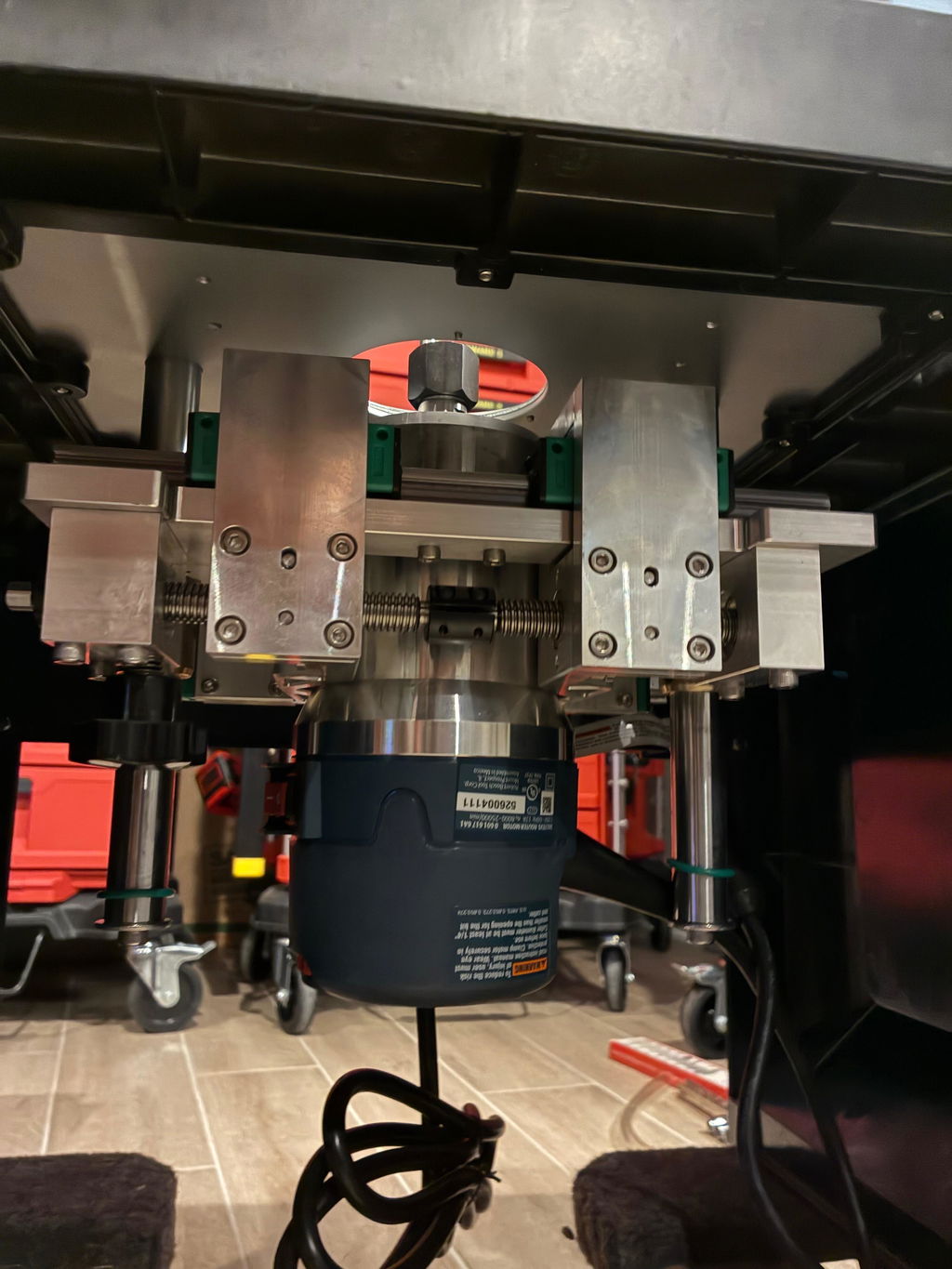
By utilizing a custom bearing housing paired with these bearings, the slab mill height adjustment mechanism becomes rigid. It locks the router into its vertical position, ensuring that the depth of cut remains identical from the first pass to the last.
The SpeTool Xpert PRO Advantage
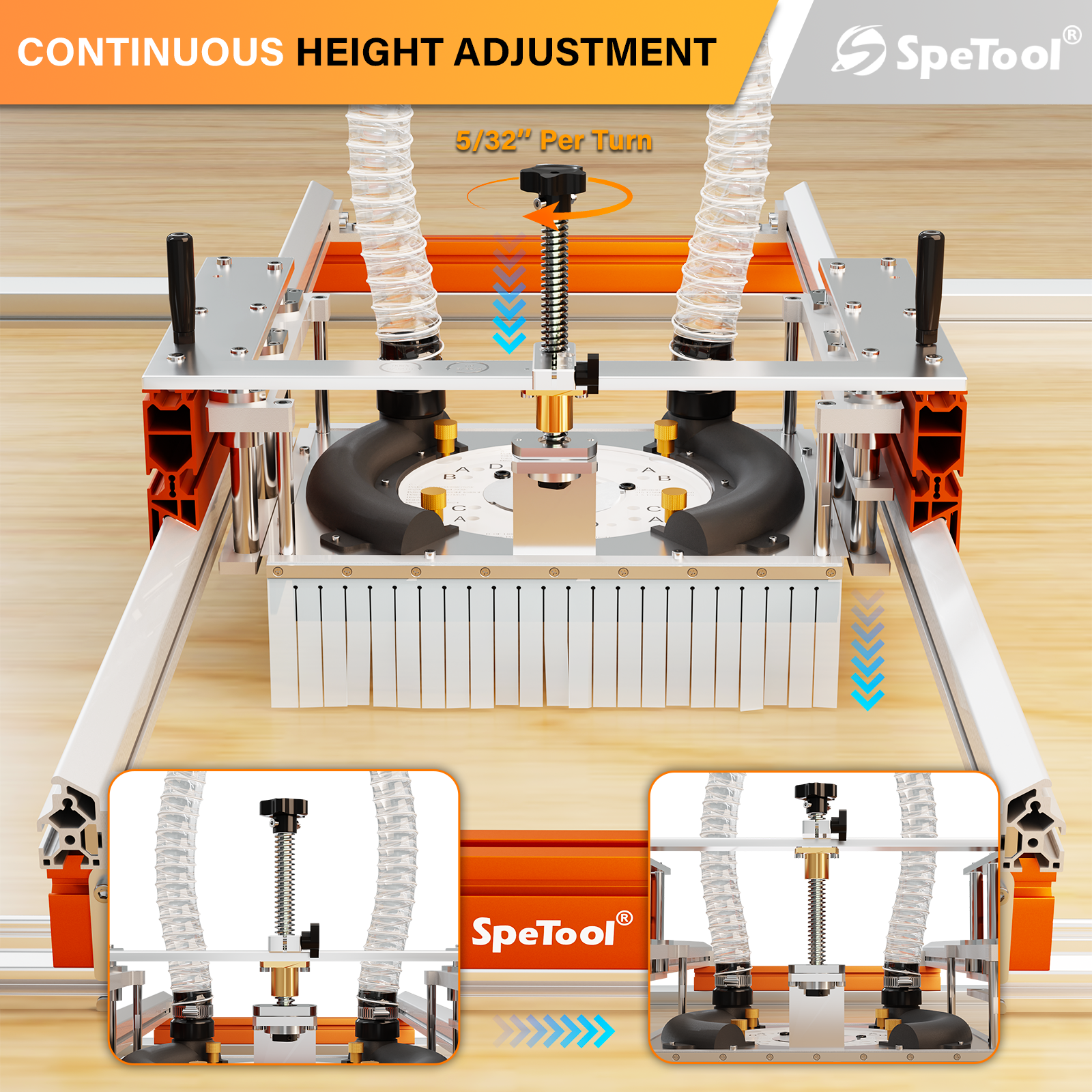
If you are looking for a system that implements this level of engineering, the spetool xpert PRO is designed specifically for those who scrutinize build quality. The spetool router sled features an upgraded height-adjustment mechanism where each full turn delivers a precise 5/32” depth change. This allows for microscopic adjustments across a wide range (1/4” to 3-3/8").
The modular build of the spetool xpert PRO means most of the carriage is pre-assembled. You can move from unboxing to milling in under 20 minutes, securing the rails and attaching the brushes without needing a specialized machine shop setup. Learn more about their precision router bits to pair with this system.
Stability Beyond the Carriage: Rails and Pads
Precision isn't just about the vertical axis; it’s about the entire frame. A high-quality Slab Flattening Mill must resist deflection. The SpeTool system uses durable aluminum rails that maintain rigidity during X and Y axis movements. Furthermore, the use of UHMW (Ultra-High-Molecular-Weight) glide pads under the carriage reduces vibration and wear, ensuring a smooth glide that won't stutter across the slab.
Managing the Mess: Integrated Dust Collection
Slab flattening is notoriously messy. A professional Dust Collection System is mandatory. The SpeTool Xpert PRO includes a dual-port system and a full-surround brush that captures over 90% of debris. By combining a brush with a silicone curtain on the operator side, it prevents chips from blowing back, allowing you to focus on the mechanical feedback of the cut rather than dodging wood chips.
Conclusion
The engineering of your slab mill height adjustment mechanism dictates the quality of your finished product. By choosing a system like the spetool router sled that prioritizes angular contact ball bearings and eliminates axial play, you save hours of labor and ensure professional-grade results. Don't settle for 'close enough' when you can have mechanical perfection.