How to Use a 7mm Drill Guide and Stop Collar (Without Messing It Up)
Let’s be honest—if you’re searching for “how to use a 7mm drilling guide and stop collar,” you probably already bought the tools, stared at them for a bit, and thought: “Okay… now what?”
I’ve been there. You want clean, straight holes that are exactly the right depth. You know a drill guide and stop collar are supposed to help. But the instructions that came with them? Either missing or written in some kind of engineering shorthand.
So here’s the plain‑English version. No jargon. No assumptions that you already know what you’re doing. Just a step‑by‑step guide that actually makes sense.
Table of Contents
-
What Size Stop Collar for a 7mm Drill Bit?
– Will I buy the wrong one if I don’t match it exactly? -
How Do You Attach a Stop Collar to a Drill Bit?
– Do I screw it on, clamp it, or hammer it? And will it slip? -
Do I Install the Drill Guide or the Stop Collar First?
– Is there a right order, or can I mess it up? -
How Do I Make Every Hole the Same Depth?
– The first hole looks great. The second one is deeper. What went wrong? -
Why Is My Hole Still Crooked?
– I’m using both tools—so why does it still look like I freehanded it?
1. What Size Stop Collar for a 7mm Drill Bit?
Short answer: You need a stop collar that fits the shank of your drill bit, not the tip.
A 7mm drill bit usually means the tip is 7mm wide. But the shank (the part that goes into your drill) is also 7mm unless it’s a reduced‑shank bit. So yes—a 7mm stop collar is the right match.
What happens if you buy the wrong size?
If the collar is too big, it won’t clamp tight and will slide while you’re drilling. If it’s too small, it won’t fit over the bit at all. So check the packaging: most decent stop collars list the bit size they’re made for.

2. How Do You Attach a Stop Collar to a Drill Bit?
It’s not complicated, but it’s easy to do wrong.
Most stop collars have a small hex screw on the side. You slide the collar onto the drill bit, set it at the depth you want, then tighten the screw with the little Allen key that comes with it.
A few tips:
-
Tighten it firmly, but don’t go full gorilla mode—over‑tightening can dent the bit.
-
If your collar doesn’t have a hex screw and uses a thumb screw, the same idea applies: hand‑tighten until it feels solid.
-
After you tighten it, try to push it along the bit with your fingers. If it moves, it’s not tight enough.
Once it’s locked, it stays put. It won’t magically slip while you’re drilling.

3. Do I Install the Drill Guide or the Stop Collar First?
This is the step where people usually get stuck.
The right order is:
-
Attach the stop collar to the drill bit first.
Figure out how deep you want the hole. Slide the collar to that measurement (measuring from the tip of the bit), then lock it in place. -
Insert the bit into the drill guide.
Now the collar should sit above the top of the drill guide. -
Drill.
When you lower the bit, it moves down until the collar hits the top of the drill guide. At that moment, you stop—perfect depth, every time.
If you put the bit in the guide before attaching the collar, it’s awkward. You can still do it, but the order above is smoother and faster.

4. How Do I Make Every Hole the Same Depth?
This is the whole reason you bought a stop collar. And it works—if you set it up right.
Here’s the trick:
Once the collar is locked, every hole will automatically be the same depth, as long as:
-
The drill guide stays flat on the workpiece.
-
The collar doesn’t move (check it after the first hole).
-
You push the drill down until the collar contacts the guide every single time.

What if the first hole is perfect but the second one is deeper?
That usually means the collar slipped. Grab it and try to twist it. If it moves, re‑tighten the screw. If it happens often, the collar might be cheap—it’s worth spending a few extra dollars on one with a good locking mechanism (some have two screws or a wider clamping band).
5. Why Is My Hole Still Crooked?
You’re using the drill guide. You’re using the stop collar. So why does the hole look like you eyeballed it?
A few common reasons:
-
The drill guide moved. If the guide isn’t clamped down or held firmly, it can shift as you drill. Make sure the base is flush against the workpiece and not wobbling.
-
The drill wasn’t fully seated. Some guides let you insert the bit but don’t hold the drill body. If your drill is angled inside the guide, the hole will be angled too. Hold the drill so the bit stays centered in the guide sleeve.
-
The workpiece wasn’t secured. If the wood or metal moves while you’re drilling, all bets are off. Clamp it down.
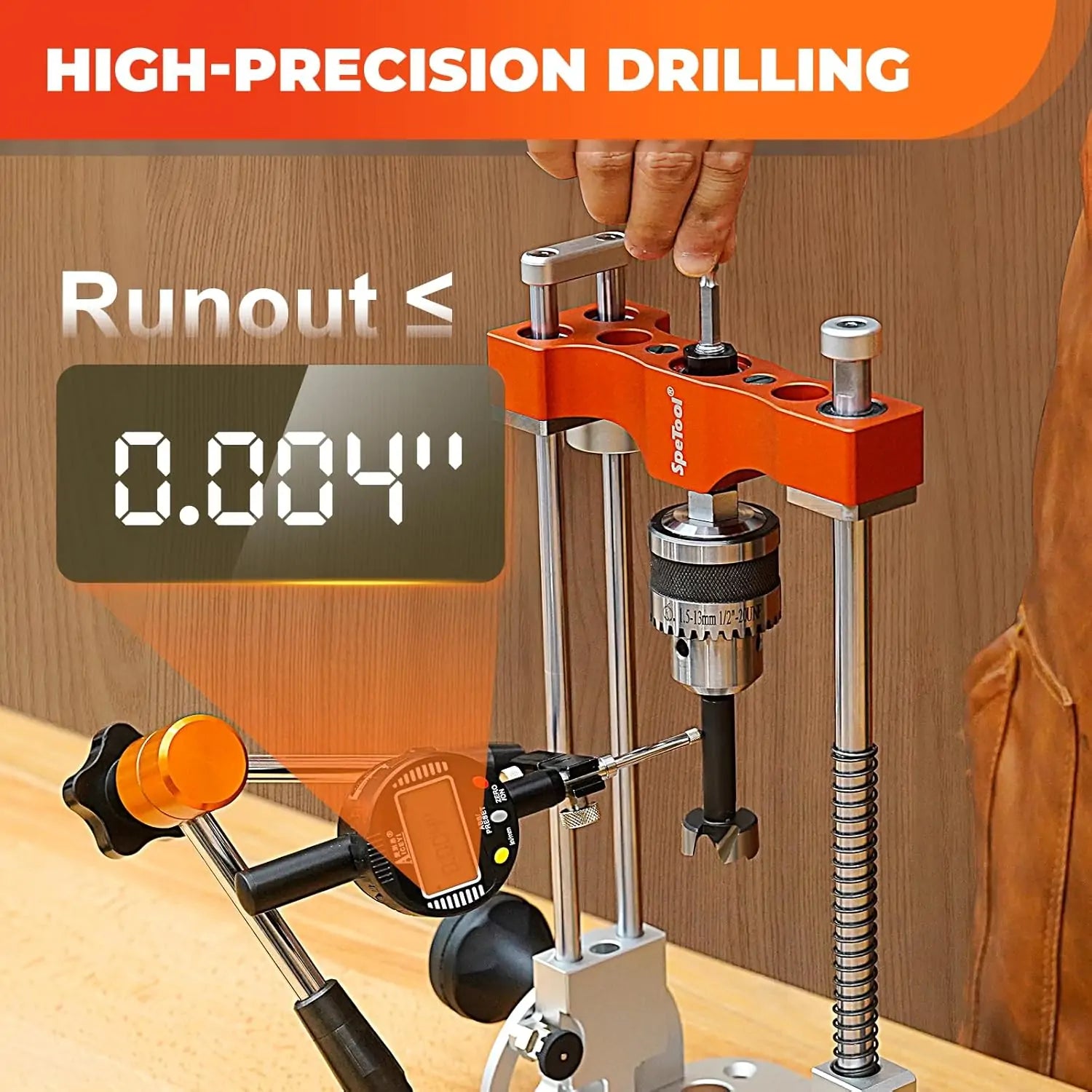
A good drill guide (like the SpeTool one with its three‑rod design) helps a ton here because it keeps everything rigid. But even the best tool needs the basics right: stable guide, stable workpiece, and a straight drill.
Wrapping It Up
If you’re reading this, you’re probably someone who wants the job done right—without cheap tools that make things worse. That’s exactly why you bought a real drill guide and a stop collar.
Once you get the hang of these steps, drilling clean, straight, perfectly deep holes becomes second nature. And honestly? Once you’ve used a good setup, you’ll never go back to freehand drilling.
If you found this helpful, drop a comment below. I’d love to know what you’re building—or what other tool questions are tripping you up.
And if you’re still shopping for a drill guide that actually stays straight and works with stop collars without fuss, you can check out the SpeTool guide [here]. It’s the one I use, and it’s saved me more ruined workpieces than I care to admit.