Aluminum vs. Acrylic: Which Router Sled Plate Should You Choose?
When it comes to flattening large wood slabs or epoxy projects, the efficiency of your rail router setup often depends on the material of your sled plate. Woodworkers frequently debate between acrylic and aluminum. While both have their place in the shop, choosing the right one can mean the difference between a perfectly flat tabletop and a project ruined by mechanical flex.
Table of Contents
- Understanding Router Sled Basics
- The Case for Acrylic Plates
- The Case for Aluminum Plates
- Why the SPEtools Aluminum Plate Wins
- Final Verdict
Understanding Router Sled Basics
A router sled is a jig that allows a handheld wood router to travel over a workpiece on a fixed plane. This is essential for surfacing wide slabs that cannot fit through a standard planer. The system typically consists of router sled rails and a carriage plate that holds the router. The material of this plate is critical because it must support the weight of a heavy-duty router without sagging.
The Case for Acrylic Plates
Acrylic plates are popular because they are transparent, allowing you to see the bit as it contacts the wood. However, they come with significant drawbacks for long-term use:
- Flexibility: Even thick acrylic can flex under the weight of a 3.25 HP router, leading to uneven cuts.
- Durability: Acrylic is prone to cracking, especially around the mounting holes due to vibration.
- Heat Sensitivity: High temperatures from the router motor can cause acrylic to warp over time.
The Case for Aluminum Plates
Aluminum is widely considered the professional standard for a rail router plate. It offers a level of rigidity that plastics simply cannot match.
- Precision: Aluminum does not flex, ensuring that the router remains perfectly parallel to the router sled rails.
- Durability: It resists scratches and will not crack or warp, making it a lifetime investment.
- Heat Dissipation: Aluminum helps dissipate heat away from the router base.
Why the SPEtools Aluminum Plate Wins
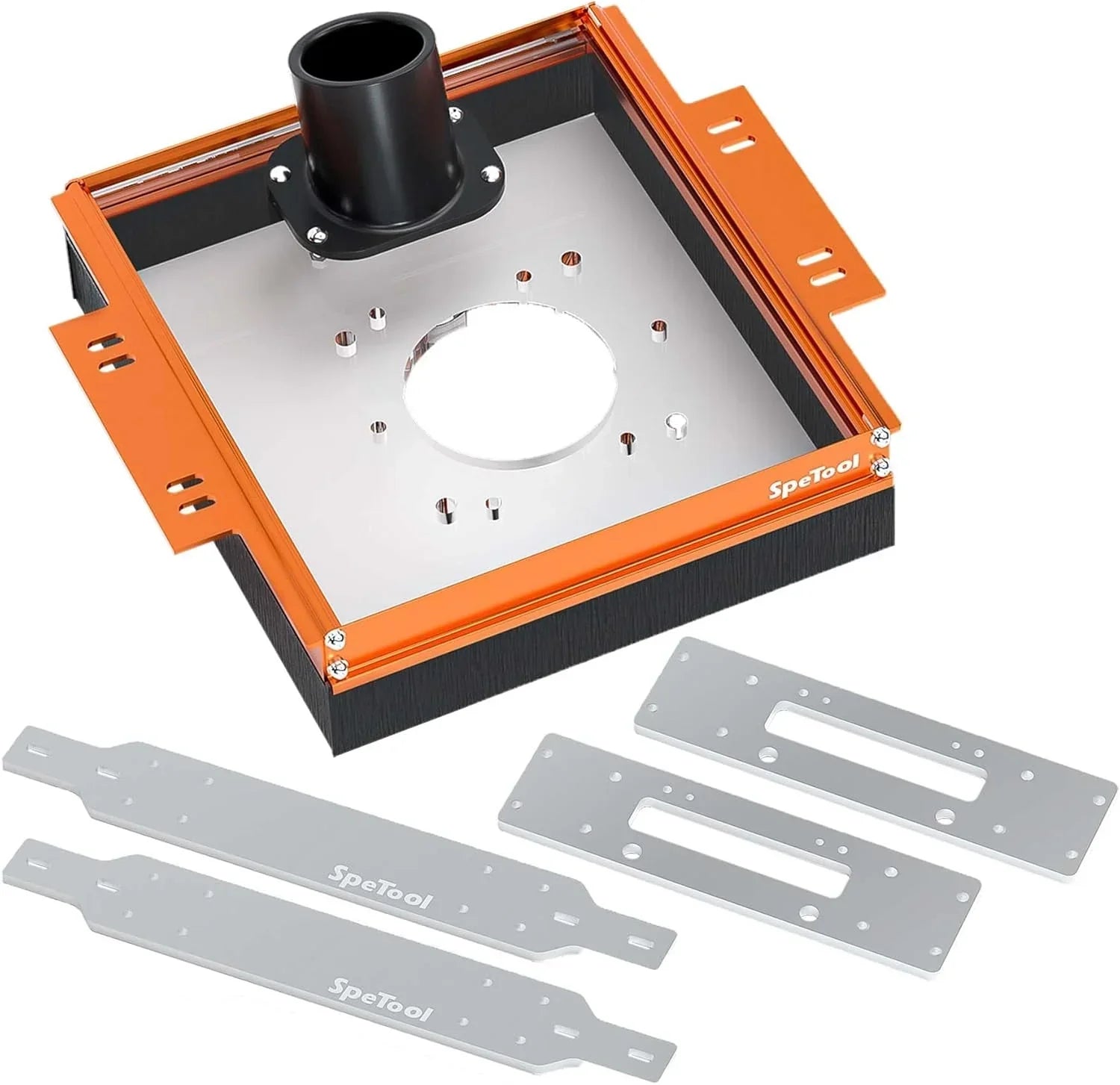
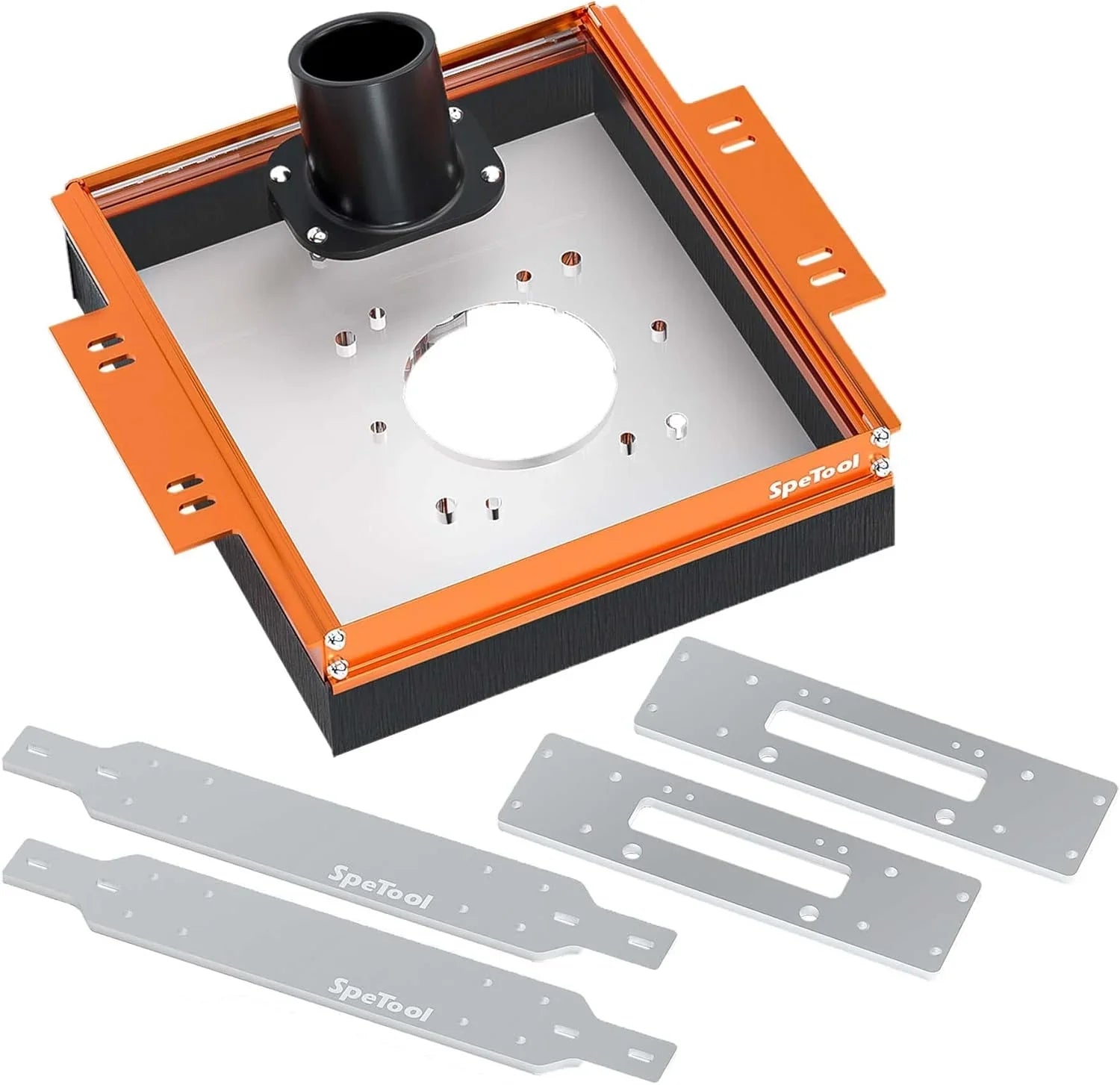
If you are looking for the ultimate balance between performance and ease of use, the SPEtools Aluminum Router Sled Plate is a game-changer. This spetool router sled component is specifically designed for the SBR20UU and SCS20UU linear rail systems.
Key Features:
- Sturdy and Lightweight: Engineered from high-grade aluminum, it provides the strength of steel without the cumbersome weight, making operation smooth and effortless.
- Integrated Dust Collection: Features a pre-drilled port and high-density brushes that capture 90% of wood particles, keeping your shop clean.
- Easy Installation: The slider adapter plate connects to your rails in minutes, allowing you to get to work faster.
- Universal Compatibility: Pre-drilled for major brands including Bosch, DeWalt, Makita, and Milwaukee.
For those serious about precision, this aluminum plate is a MUST HAVE. It connects your linear rails via a slide connector to provide a stable, pre-drilled platform for conveniently flattening your slab. (Note: Linear rail NOT included).
Final Verdict
While acrylic is a budget-friendly option for occasional hobbyists, professionals and serious enthusiasts should opt for aluminum. The spetool router sled plate offers the durability and stability required for high-precision woodworking. By investing in quality aluminum components, you ensure that your router sled rails perform at their peak for every project.
Explore more high-quality woodworking tools at SPEtools and take your slab flattening to the next level.