Router Sled Brush vs. Dust Shroud: Which Actually Captures More Sawdust?
Flattening large wood slabs is one of the most rewarding parts of woodworking, but it is also one of the messiest. When using a rail router setup to level uneven timber, the volume of wood chips generated can quickly overwhelm a workshop. If you are building or upgrading your setup, you likely face a common dilemma: should you use a traditional rigid dust shroud or a flexible brush system? In this guide, we compare the efficiency of a router sled brush vs dust shroud to see which keeps your air cleaner.
Table of Contents
- The Challenge of Slab Flattening Dust
- Brush vs. Shroud: Key Differences
- The SPETOOLS Advantage for Router Sled Rails
- Installation and Compatibility
- Final Verdict
The Challenge of Slab Flattening Dust
Standard dust collection often fails during slab flattening because the distance between the router bit and the workpiece changes constantly. Fine wood dust is not just a nuisance; according to OSHA standards, it poses significant respiratory risks. A fixed plastic shroud often leaves gaps where chips escape, whereas a brush design aims to create a moving seal.
Brush vs. Shroud: Key Differences
1. Flexibility and Contact
A rigid dust shroud is often limited by its fixed height. If the shroud is set too high, dust escapes from the bottom. If it is too low, it can snag on high spots of a raw slab. Conversely, the spetool router sled utilizes a high-density brush system. These brushes conform to the uneven surface of the wood, maintaining a seal even as the router moves across varying thicknesses.
2. Airflow Dynamics
Dust shrouds rely heavily on high-CFM vacuums to pull air from a wide area. Brushes help concentrate the vacuum's suction by creating a physical barrier. This containment ensures that particles are directed immediately into the port rather than being thrown across the room by the router's centrifugal force.
The SPETOOLS Advantage for Router Sled Rails
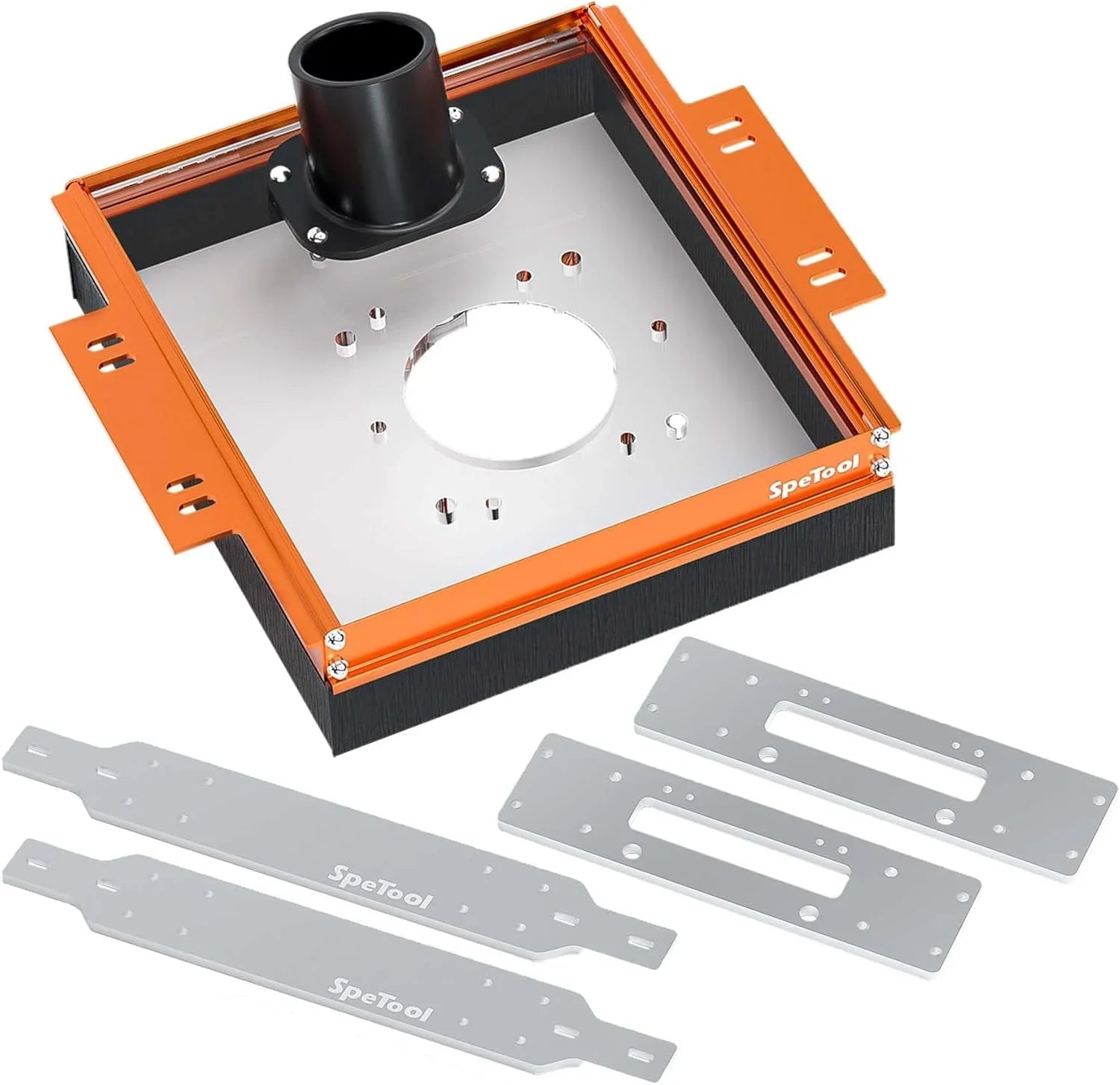
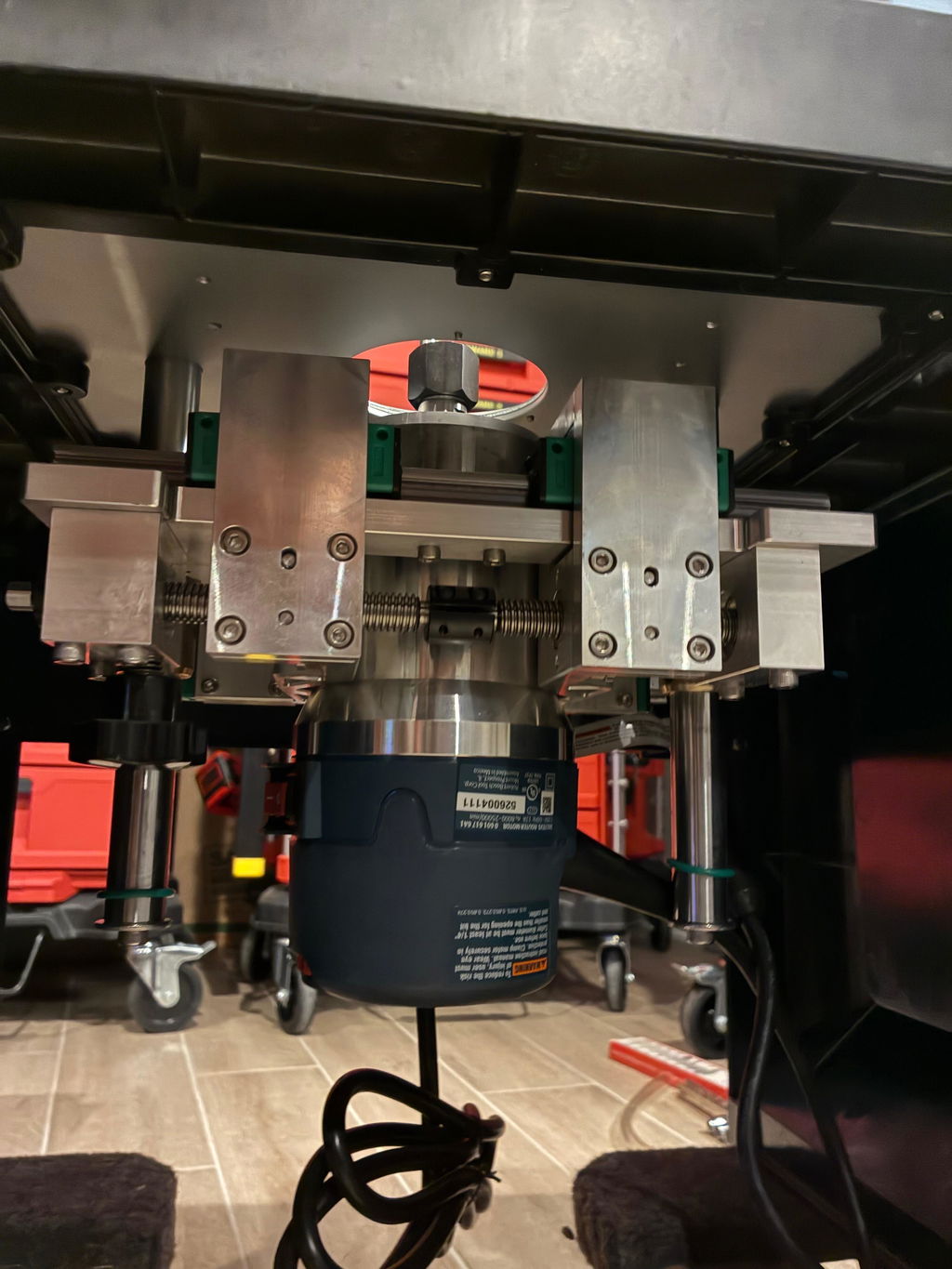
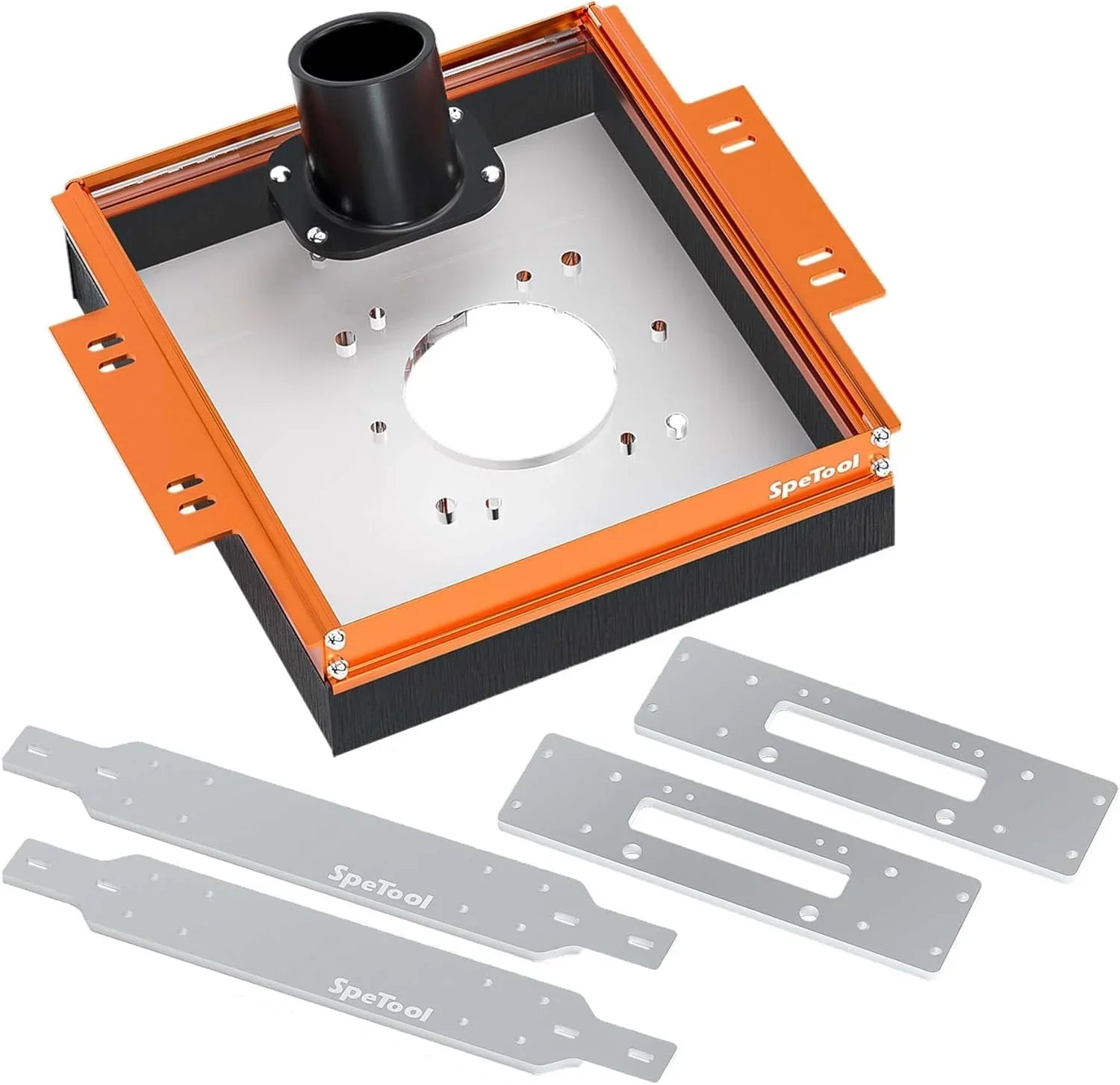
For those utilizing router sled rails, the SPETOOLS Linear Rail Router Sled Slide Connector is a game-changer. This is a MUST-HAVE for any Linear Rail Router Sled setup, specifically designed to connect SBR20UU and SCS20UU Linear Rails via a specialized slide connector.
Key benefits include:
- Effective Dust Collection: Features optimal brush hardness and density to capture up to 90% of wood particles, providing a significantly healthier work environment.
- Sturdy and Lightweight: Constructed from premium aluminum, it offers durability without adding unnecessary weight to your rail router assembly.
- Superior Sealing: The frame and plate inlay design ensures a tight seal, preventing dust from escaping through the gaps common in generic DIY shrouds.
Installation and Compatibility
One major frustration with generic shrouds is the need for custom brackets. The spetool router sled connector solves this with a pre-drilled router plate. It is widely compatible with major brands including Bosch, DeWalt, Makita, Porter-Cable, and Milwaukee. For more information on woodworking tool standards, you can refer to Wikipedia's overview of router technology.
Installation only takes a few minutes. By providing a slider adapter plate that connects directly with SBR20UU and SCS20UU rails, woodworkers can achieve a professional-grade setup without the guesswork of DIY mounting solutions.
Final Verdict
While a basic shroud is better than nothing, the flexibility and 90% capture rate of a brush-based system like the one found on the SPETOOLS connector make it the superior choice for slab flattening. If you value a clean shop and precision movement on your router sled rails, upgrading to a dedicated aluminum brush system is the most effective investment you can make.