
Why an All-Metal Portable Drill Guide is Better Than Plastic: Accuracy Tested
For serious hobbyists and woodworkers, the quest for shop-grade accuracy in a mobile format often leads to the purchase of portable drill guides. However, many are quickly disappointed by the cheap, plastic-laden models found at big-box retailers. If you have ever experienced a 'straight' hole that ended up slanted, you have likely encountered the inherent flaws of polymer-based tools.
The Problem with Plastic: The 'Flex' Factor
The primary enemy of precision in drilling is 'flex.' In engineering terms, materials have a property known as the Young's Modulus, which measures their stiffness. Most portable drill guides made of plastic or thin-walled aluminum composites lack the structural integrity to withstand the lateral forces applied during drilling.
When you apply pressure to a plastic guide, the vertical posts and the carriage itself can deflect. Even a deflection of 0.5 millimeters at the top of the guide can result in a hole that is several degrees off-center at the bottom. This is why many Amazon reviews for budget models highlight 'slop' and 'play' in the mechanism as their number one complaint.
The Physics of Accuracy: Eliminating Bit Wander
Bit wander occurs when the drill bit deflects from its intended path. This is exacerbated when using Forstner bits or large spade bits. An all metal portable drill guide provides a rigid framework that contains these forces.
- Torsional Rigidity: Metal components do not twist under the torque of a high-powered drill.
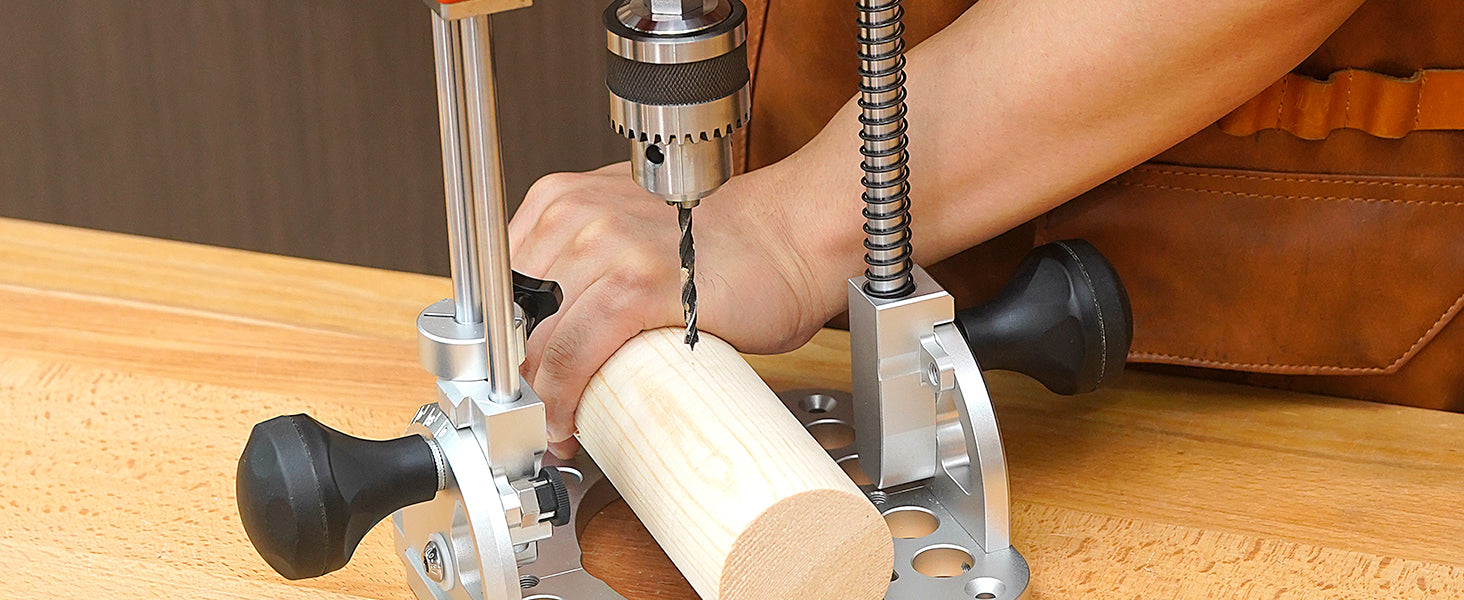
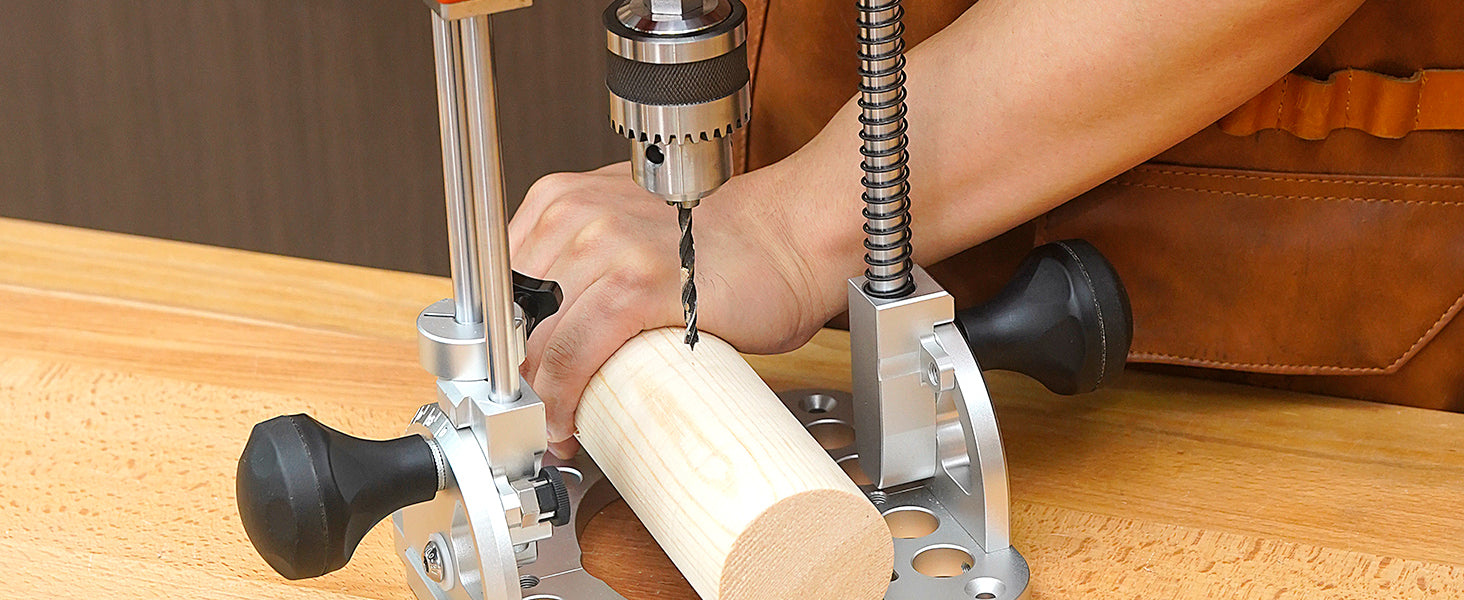
- Bushing Precision: All-metal guides, such as the Spetool portable drill guide, use high-tolerance metal bushings or bearings that hold the chuck assembly securely, preventing the 'wobble' common in plastic housings.
- Base Stability: A heavy, machined metal base creates a lower center of gravity and better friction against the workpiece.
Durability and Long-Term Value
Plastic guides are prone to wear and tear. Over time, the heat generated by the friction of the drill shaft can actually melt or warp plastic guide holes. In contrast, an all-metal construction is designed for longevity. By investing in high-quality portable drill guides from the start, you avoid the 'buy it twice' trap that plagues many DIY enthusiasts. Check out more professional tools at Spetools to see the difference in build quality.
The Spetool Advantage: Engineered Rigidity
If you are tired of compromised accuracy, the Spetool portable drill guide is designed to solve these specific pain points. Unlike plastic competitors, it features an all-metal construction that supports 0-60 degree adjustable angles with rock-solid locking mechanisms.
Key benefits of the Spetool all-metal portable drill guide include:
- Precision-machined guides for zero lateral play.
- An adjustable fence for repeatable accuracy.
- The ability to handle heavy-duty drilling tasks without the fear of the guide snapping or bending.
Conclusion
While plastic guides are tempting due to their low price, the cost of ruined workpieces and frustration far outweighs the initial savings. For those who demand shop-level precision in the field, an all-metal solution is the only viable choice. The scientific reality is simple: rigidity equals accuracy.