
Zero-Edge Drilling: The Secret to Perfect Hinge and Trim Work Every Time
Whether you are a seasoned woodworker or a weekend DIY enthusiast, there is one challenge that haunts every project: drilling a perfectly perpendicular hole exactly where you need it. When you are working on cabinet hinges or intricate trim work, even a fraction of a millimeter of 'runout' can ruin the alignment of a door or the finish of a room. This is where a zero-edge drilling guide becomes an indispensable part of your toolkit.
Table of Contents
- What is Zero-Edge Drilling?
- The SpeTool Auto-Line Advantage
- Mastering Hinges and Trim Work
- Technical Precision and Durability
- Frequently Asked Questions
What is Zero-Edge Drilling?
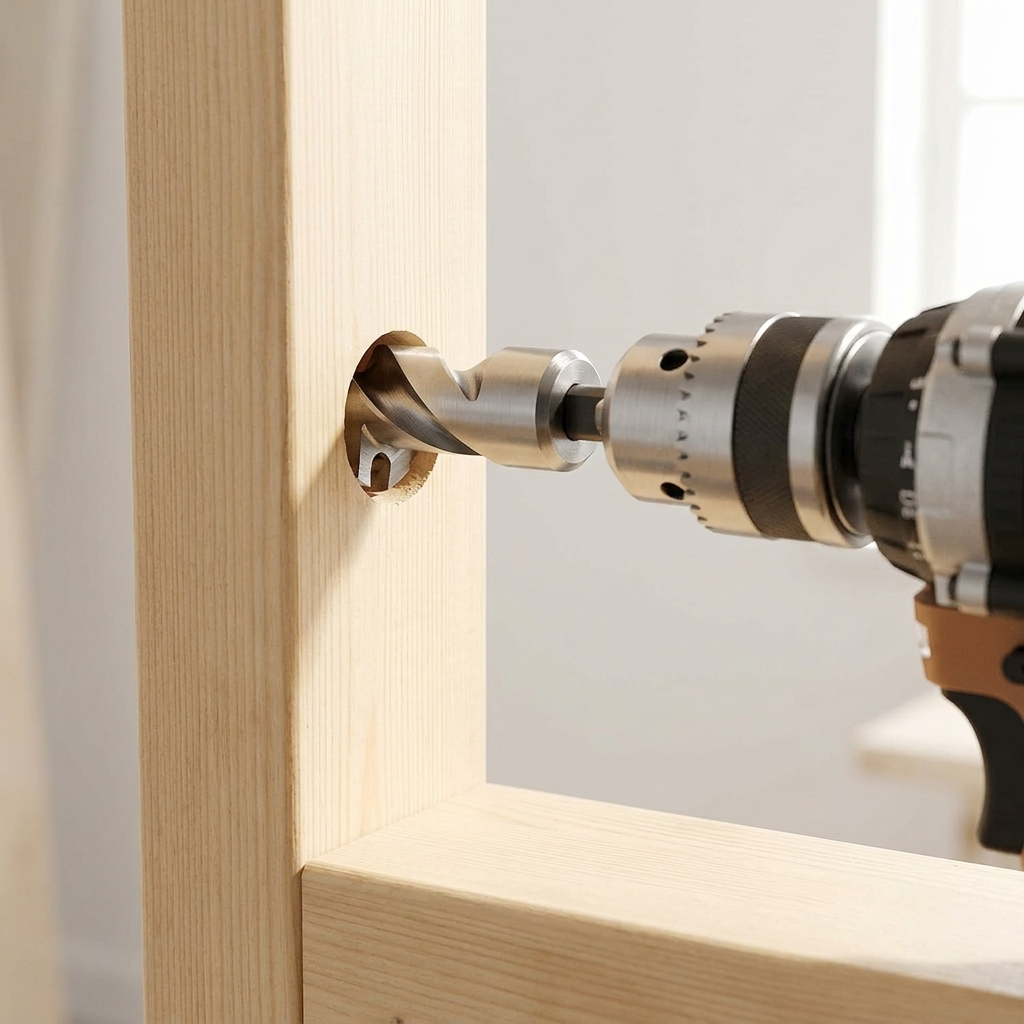
Standard drill presses and guides often have a bulky base that prevents you from getting close to the edge of your workpiece. Zero-edge drilling refers to the ability to drill a hole flush against an edge or vertical surface. This is critical for installing concealed hinges, where the mounting plate must be perfectly aligned with the cabinet frame.
By using a dedicated zero-edge drilling guide, you eliminate the guesswork. Instead of struggling to balance a hand drill, the guide provides a stable, perpendicular platform right at the edge of the board.
The SpeTool Auto-Line Advantage
Traditional drill guides can be clunky and prone to friction. The SpeTool Auto-Line Portable Drill Guide solves these issues with high-end engineering. Unlike plastic alternatives that flex under pressure, this guide features a solid, corrosion-resistant aluminum base.
One of its standout features is the spring-loaded mechanism. This returns the drill to the starting position after each hole, significantly reducing fatigue during repetitive tasks like batch drilling shelf pins. For those interested in the physics of woodworking precision, maintaining a low radial runout (less than 0.1mm) is what separates a professional finish from a 'close enough' DIY job.
Mastering Hinges and Trim Work
Hinge installation requires extreme accuracy. If your hole is slightly tilted, the hinge won't sit flat, and the door won't close properly. To achieve zero-edge precision with the SpeTool guide, you simply pop off the column caps and flip the chuck carrier to the outside of the base. This allows the drill bit to reach the very edge of the material.
Why Precision Matters in Trim
Trim work often involves drilling in tight corners or through delicate moldings. According to experts at This Old House, stability is key to preventing wood splitting. The SpeTool’s built-in V-groove is perfect for centering round stock like dowels or pipes, ensuring that even your trim accents are perfectly aligned.
Technical Precision and Durability
- Radial Runout: Less than 0.1mm for surgical accuracy.
- Drilling Depth: Up to 160mm, suitable for deep pocket holes or thick timber.
- Chuck Capacity: A 1/2" (13mm) keyed chuck that fits most standard bits.
- Smooth Operation: Built-in ball bearings mean no friction and no need for constant lubrication.
By turning your standard hand drill into a mobile precision machine, you save space in your shop while maintaining the accuracy of a full-sized drill press. For more professional woodworking accessories, visit SpeTool.
Frequently Asked Questions
Can I use this guide on metal?
Yes, the SpeTool drill guide is designed for wood, plastic, and thin metal, provided you use the appropriate drill bits for the material.
How do I switch to the zero-edge mode?
Simply remove the caps on the guide columns and flip the chuck carrier so it faces outward. This allows the bit to sit flush with the edge of the base.
Conclusion
The difference between a project that looks amateur and one that looks professional is often found in the smallest details. A zero-edge drilling guide ensures that your hinges are straight, your trim is perfect, and your holes are always 90 degrees. Don't leave your next project to chance; invest in a tool that brings drill-press precision to the palm of your hand.