
Aluminum vs. MDF: Why Your DIY Router Sled is Ruining Your Projects
You have spent hundreds of dollars on a beautiful, live-edge walnut slab. You have spent hours building a DIY router sled out of MDF or plywood. But after the first few passes, you notice it: scalloping, uneven depths, and a surface that is anything but flat. If this sounds familiar, you are not alone. Many woodworkers fall into the trap of thinking a homemade wooden sled is 'good enough' for precision surfacing.
Table of Contents
- The Hidden Failure of MDF Router Sleds
- Why 6061 Aluminum is the Professional Choice
- SpeTool Cratos: The Ultimate Router Planer Sled
- Achieving Precise Height Adjustment
- Frequently Asked Questions
The Hidden Failure of MDF Router Sleds
MDF (Medium-Density Fibreboard) is a staple in the workshop, but it is fundamentally flawed for use in a router sled for planing. The primary issue is deflection. Even a 3/4-inch sheet of MDF will sag under the weight of a heavy 2.25 HP or 3 HP router. This sag creates a 'dish' effect in your wood, meaning the center of your slab will always be thinner than the edges.
Furthermore, wood-based materials are susceptible to hygroscopic warping. Changes in workshop humidity cause MDF to expand and contract unevenly. If your sled rails are not perfectly straight, your router planer sled will skip and chatter, leaving behind ugly tool marks that require hours of sanding to remove.
Why 6061 Aluminum is the Professional Choice
When precision is non-negotiable, professionals turn to 6061 high-strength anodized aluminum alloy. Unlike wood, aluminum is isotropic—it maintains its shape regardless of humidity or temperature fluctuations in your shop. It offers a strength-to-weight ratio that allows for long spans without the dreaded 'sag' found in wooden DIY versions.
SpeTool Cratos: The Ultimate Router Planer Sled
If you are tired of fighting your equipment, it is time to upgrade to a purpose-built solution. The SpeTool Cratos S01001 Router Sled is engineered specifically to solve the problems of DIY versions. The rails are constructed from 6061 high-strength anodized aluminum, ensuring they never bend or warp, even after years of heavy use in a professional environment.
Key features that set the SpeTool Cratos apart include:
- Sturdy and Precision: The 6061 aluminum rail provides a rock-solid foundation. With laser pre-set positions for the Z-axis, you can adjust height with extreme accuracy and zero slip.
- Easy Slide-In Design: An opening breach in the brackets allows your router to slide in effortlessly, eliminating complex setup steps.
- Universal Compatibility: The package includes two router plates (one pre-drilled and one blank) to ensure it fits almost any router on the market.
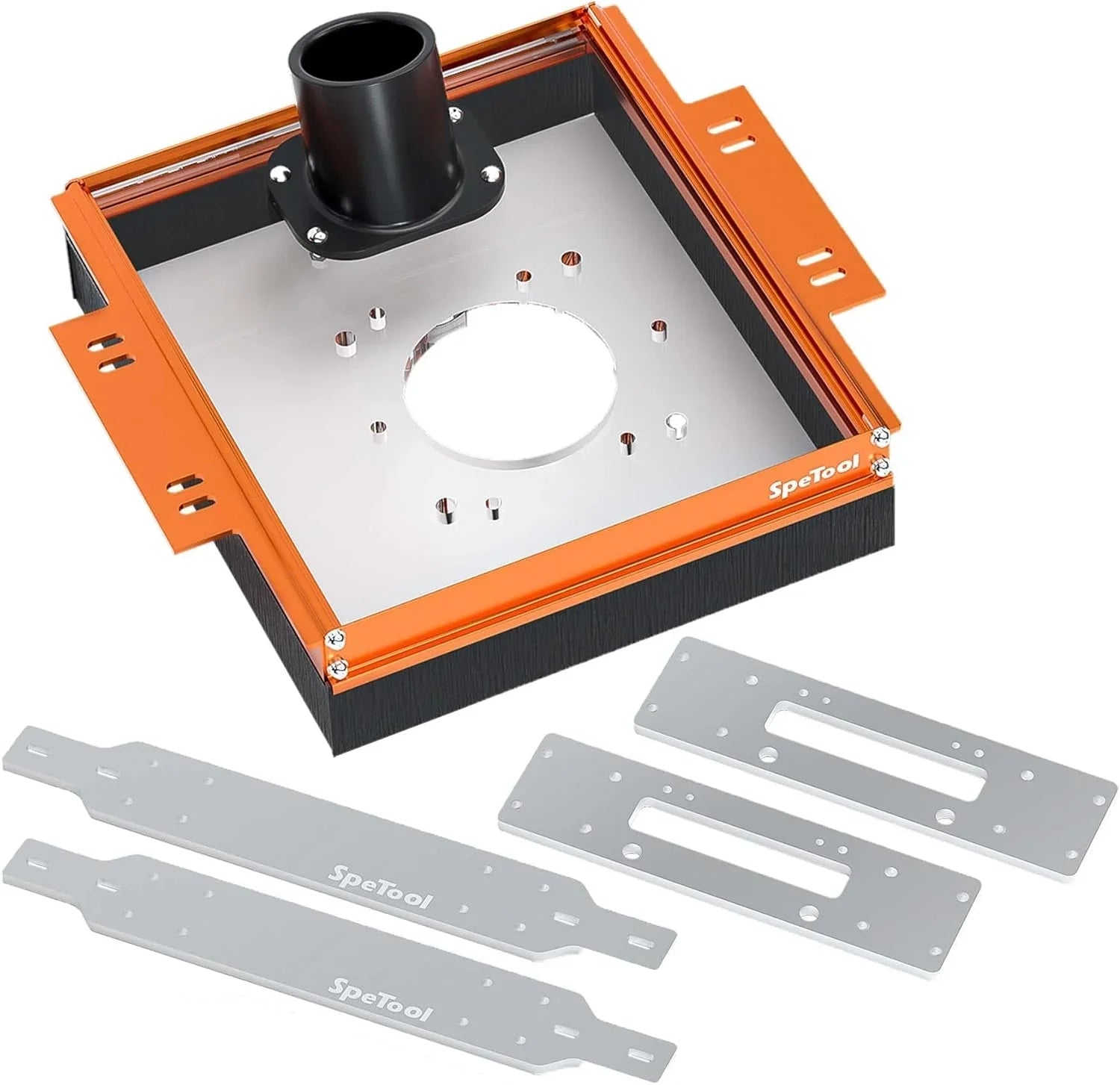
- Dust Control: Pair it with the SpeTool dust collection attachment (ASIN: B0D78YXTK8) to capture up to 90% of wood chips, keeping your shop clean.
Achieving Precise Height Adjustment
One of the biggest headaches with a DIY router sled is balancing the rails. The SpeTool Cratos utilizes a base bracket and lift bracket system with 5 preset heights. There is no balancing needed—just click and go. This is particularly useful for thin wood slabs where a lower profile is required for stability.
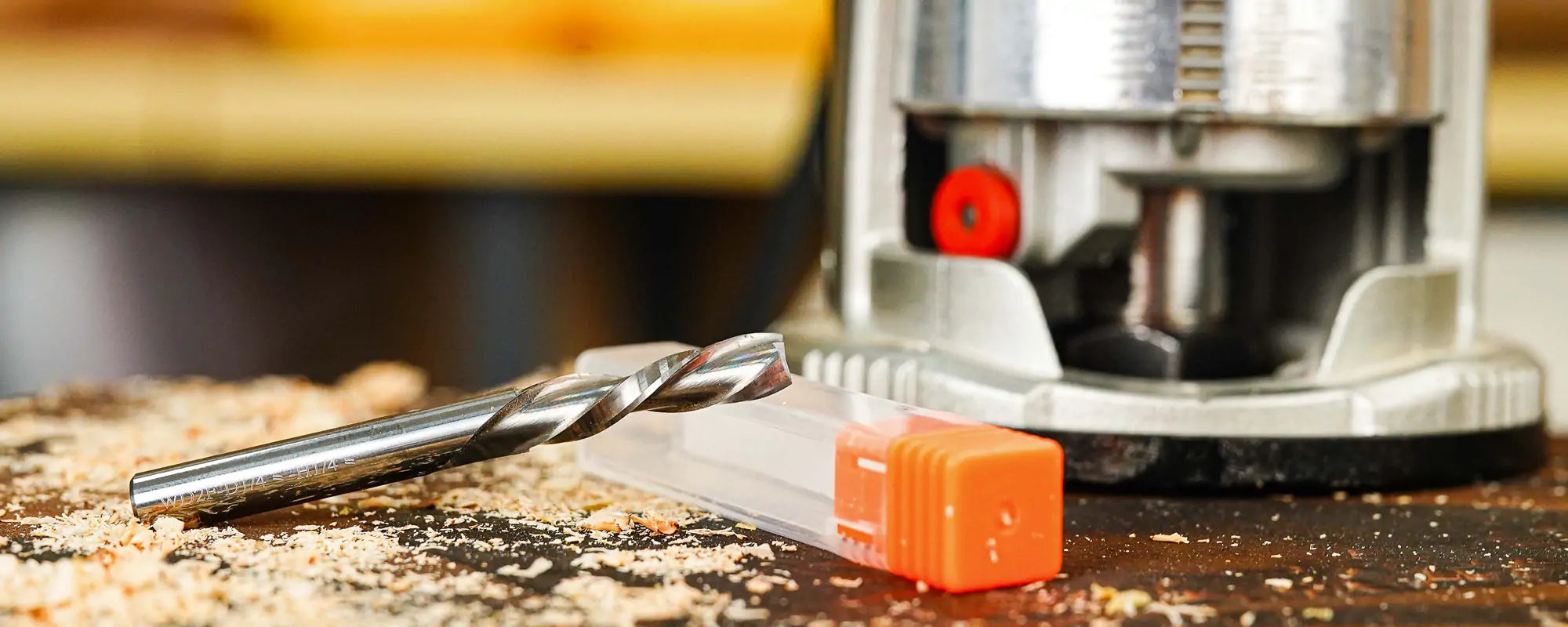
If you find your router bit is too short for certain projects, SpeTool recommends using a Router Collet Chuck Extension. By following the overhang formulas provided in the product documentation, you can safely extend your reach without sacrificing safety or finish quality.
Stop wasting expensive lumber on inadequate tools. Invest in a router planer sled that works as hard as you do. Explore the full range of SpeTool woodworking accessories to elevate your craft.