
Spetool vs. Bessey: Is the 4-Way Clamp Better Than a Parallel Clamp?
Achieving a perfectly flat glue-up is the holy grail of woodworking. Whether you are crafting a walnut dining table or a simple cutting board, the moment you apply pressure and see your boards start to "bow" or "buckle" is the moment stress levels peak. For decades, the industry standard has been the parallel clamp, with Bessey leading the charge. However, a different technology is gaining traction: the 4-way panel clamps.
In this guide, we compare the traditional parallel clamp (Bessey K Body REVO style) against the innovative spetool panel clamp to help you decide which technology belongs in your workshop.
Table of Contents
Understanding Parallel Clamps (Bessey)
Parallel clamps, like the Bessey K Body REVO, are designed to provide massive amounts of pressure while keeping the jaws perfectly parallel to each other. They are versatile and excellent for assembly, but they have a fundamental weakness when it comes to edge-gluing wide panels: they only apply pressure from the sides. If your boards aren't perfectly jointed or if you apply too much force, the panel will naturally want to buckle upward or downward.
Understanding 4-Way Clamps (Spetool)
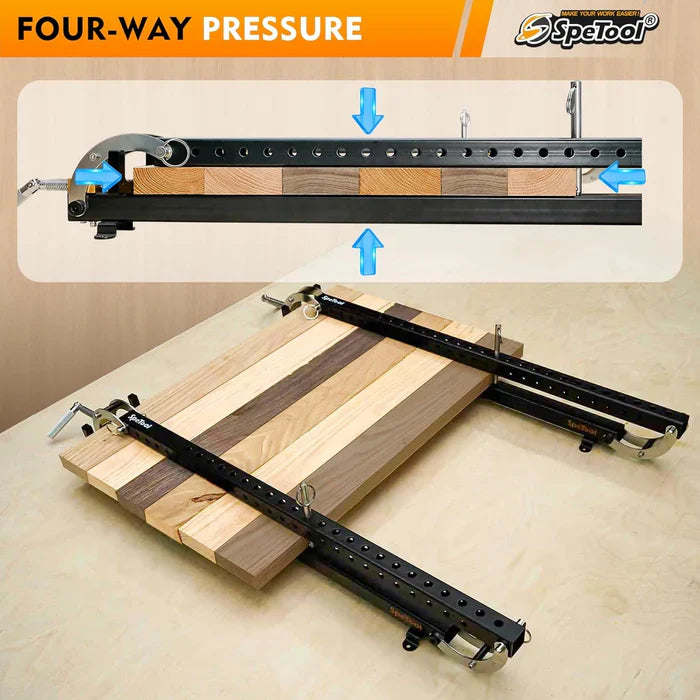
The spetool clamp uses a completely different mechanical principle. Instead of just pressing from the ends, it utilizes parallelogram-action couplers. As you tighten the screw, the clamp applies pressure from all four sides simultaneously. This forces the boards downward against the bars while squeezing them together, effectively eliminating the "bowing" effect common in wide glue-ups.
Key Comparison: Pressure and Alignment
When using a Bessey clamp, woodworkers often have to use "cauls" (extra scrap wood clamped across the top and bottom) to keep the panel flat. This adds time and complexity to the glue-up. The Spetool 24-inch 4-Way Panel Clamp integrates the caul function directly into the clamping mechanism. This 2-pack system is designed to accommodate panels up to 24'' wide and thicknesses ranging from 1/4" to 3".
Why the Spetool Clamp Wins for Large Panels
If your projects include table tops, wide door panels, or thick bench tops, the spetool panel clamp offers several advantages:
- Two-Directional Pressure: It clamps in two directions at once, making it significantly easier to achieve flush joints without extra hardware.
- Adjustability: With fix pins and the parallelogram couplers, it is easy to adjust for different widths and thicknesses quickly.
- Durable Construction: Made from steel pipe with a powder-coat finish and copper thread bushings, these are built for the heavy-duty environment of a professional shop.
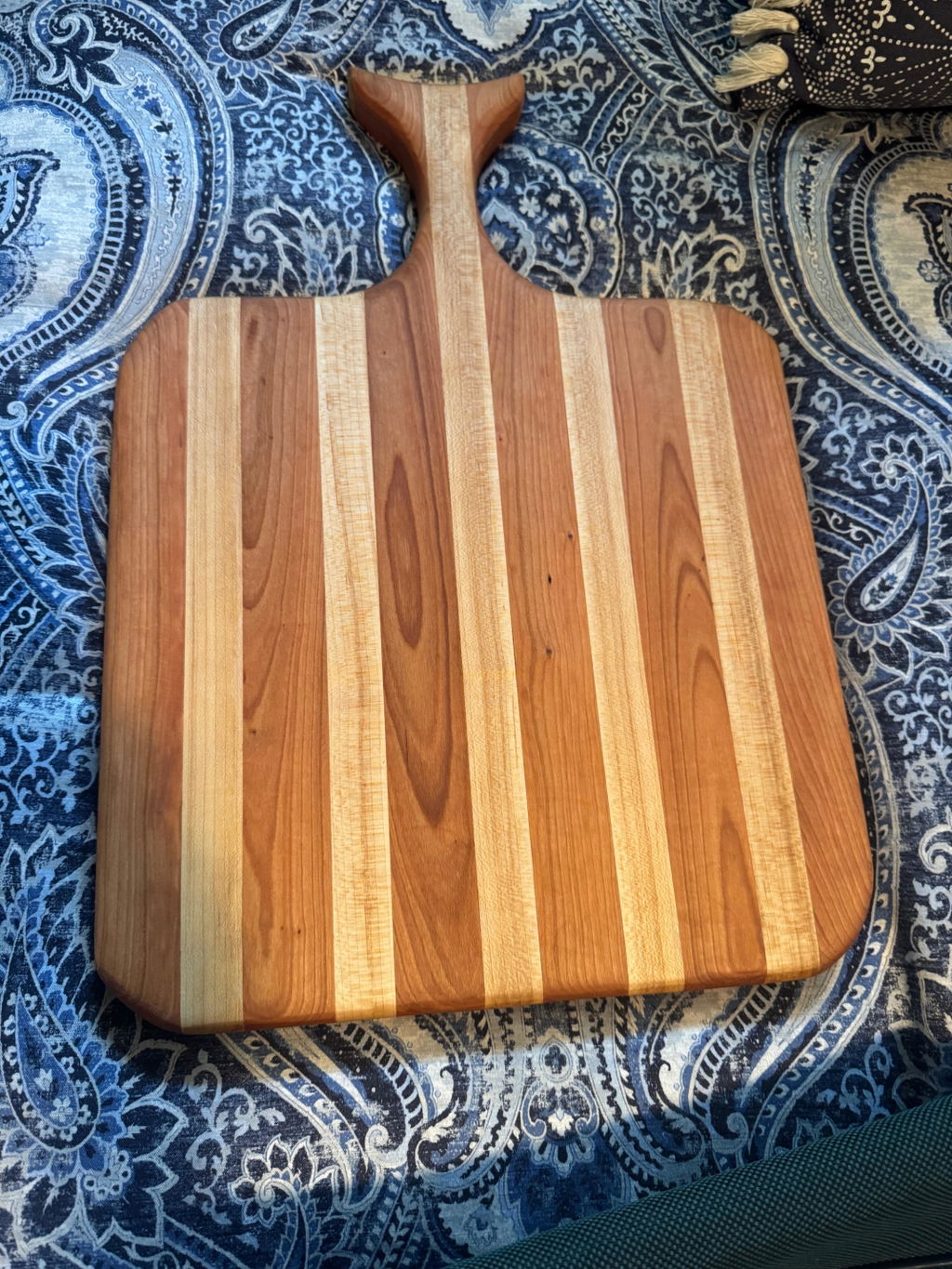
For those looking to upgrade their glue-up station, you can find the featured 2-pack here. It is particularly effective for medium projects like cutting boards and cabinet tops.
Maintenance and Glue Cleanup
One common complaint about metal clamps is glue adhesion. Dried glue can ruin the threads or the surface of the clamp. Spetool has addressed this with a special surface treatment. Glue spilled during the splicing process can be easily removed by hand or a putty knife without damaging the fixture. This is a significant quality-of-life improvement over traditional zinc-plated or raw steel bars found on many parallel clamps.
The Verdict
If you are doing general assembly—like building boxes or cabinets—the Bessey parallel clamp is indispensable. However, for panel clamps specifically intended for glue-ups, the spetool clamp provides a superior mechanical solution. By applying pressure from four sides, it solves the problem of panel bowing before it starts, saving you hours of sanding and planing later. Visit Spetools.com to explore their full range of precision woodworking tools.