
4-Way Panel Clamps vs. Parallel Clamps: Which Is Better for Table Tops?
For intermediate woodworkers, the transition from simple joinery to large-scale panel glue-ups—like table tops and cutting boards—is a significant milestone. However, this transition often brings the frustration of 'bowing.' You apply pressure with your trusty parallel clamps, and suddenly, the center of your panel arches upward. This necessitates the use of cauls, more clamps, and eventually, more sanding.
When deciding between 4-way panel clamps vs parallel clamps, the choice often comes down to how much work you want to do after the glue dries. While parallel clamps are industry standards for general assembly, specialized 4-way panel clamps offer a mechanical advantage that solves the flatness problem at its source.
Understanding the Mechanics
Parallel clamps operate on a simple principle: they provide high-pressure linear force between two large, flat jaws. According to Wikipedia's overview of clamping tools, maintaining jaw parallelism is crucial for even pressure. However, parallel clamps only apply pressure from the sides. If your boards are even slightly mismatched or the pressure is too high, the panel will buckle.
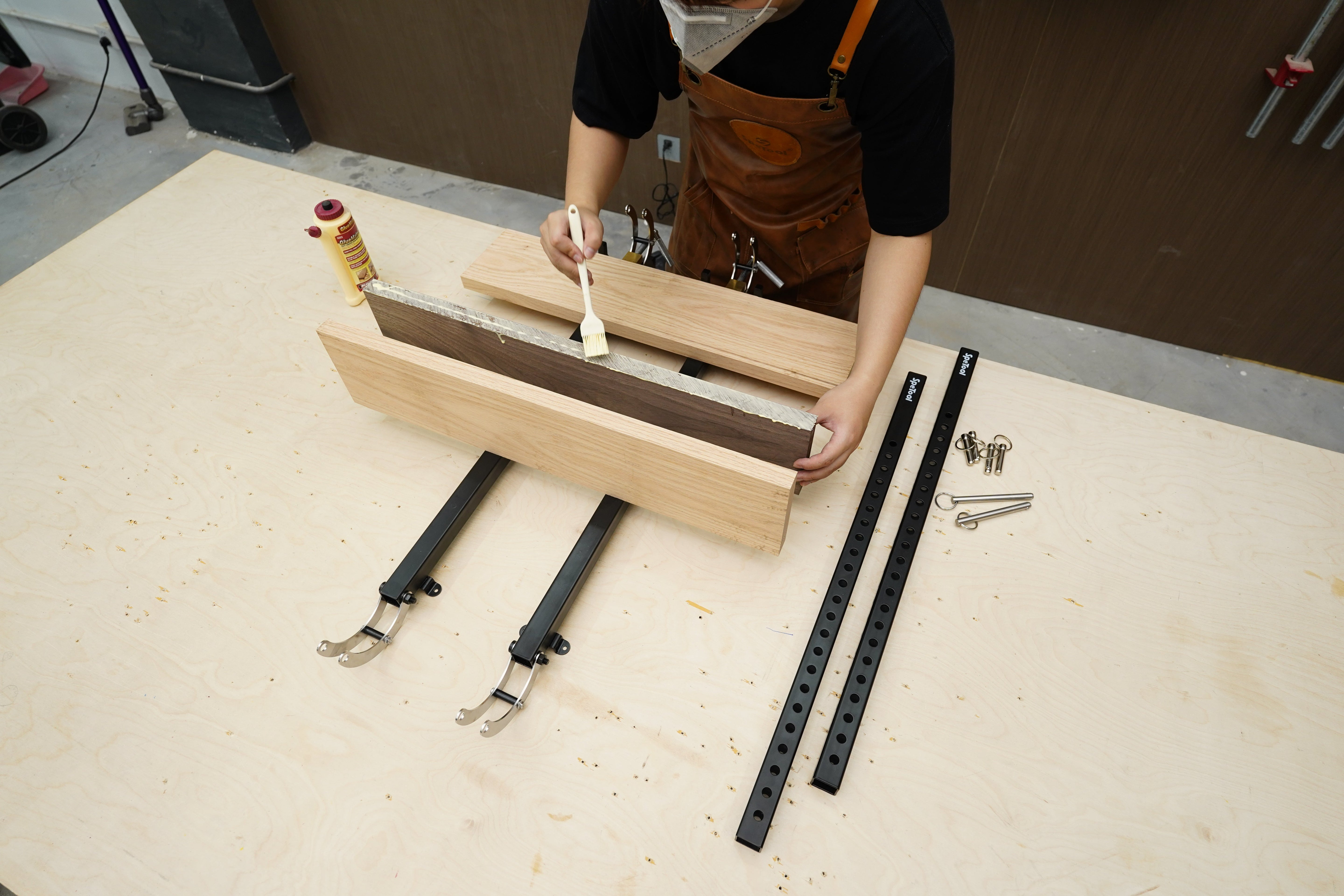
In contrast, 4-way panel clamps use a parallelogram-action coupler. As you tighten the screw, the clamp applies pressure from the left and right while simultaneously squeezing the top and bottom of the panel. This 'four-way' pressure ensures the boards stay flush against each other throughout the curing process.
Vertical Pressure: The Secret to Flatness
The primary advantage of 4-way panel clamps is the elimination of 'caul-clamping.' Traditional glue-ups require woodworkers to clamp 'cauls' (stiff boards) across the width of the panel to keep it flat. This consumes twice as many clamps and clutters the workspace.
By using a tool like the Spetool 24-inch 4-way panel clamp, the vertical pressure is built into the mechanism. The parallelogram couplers force the bars toward each other as the lateral pressure increases. This keeps the joints flush without the need for additional vertical supports.
Cost-Effectiveness and Efficiency
While high-quality parallel clamps from brands like Bessey or Jet are excellent, a large table top can require 6 to 10 clamps. For a similar result, you might only need 3 to 4 4-way panel clamps because they handle the job of both the parallel clamp and the caul.
For woodworkers looking to upgrade their glue-up station, the spetool panel clamp offers a durable, budget-friendly alternative that doesn't sacrifice precision. Its steel pipe construction and copper thread bushings ensure it handles the high torque required for thick table tops without stripping or bending.
The Spetool 4-Way Panel Clamp Advantage
If you are tired of spending hours at the planer or drum sander fixing uneven glue-ups, the Spetool 24-inch 4-Way Panel Clamp 2-Pack is the solution. Specifically designed for versatility, it accommodates panels from 1/4" to 3" thick and up to 24" wide.
- Two-Directional Clamping: Achieve flat panels and flush joints effortlessly with simultaneous lateral and vertical pressure.
- Durable Build: Made with powder-coated steel pipes and copper thread bushings for long-term reliability.
- Easy Cleanup: The special surface treatment allows spilled glue to be removed easily by hand or a scraper, protecting the tool's finish.
- Adjustable Versatility: Perfect for a variety of projects, from thin door panels to thick bench tops.
Upgrade your workshop today by visiting the official Spetool product page to see these clamps in action.
Best Use Cases: From Cutting Boards to Table Tops
Which clamp should you use for your next project? Here is a quick breakdown:
Clamps for Cutting Boards
When making end-grain cutting boards, even a millimeter of misalignment can ruin the pattern. Using 4-way panel clamps as clamps for cutting boards is highly effective because they keep the small blocks perfectly aligned vertically while the glue sets.
Wide Table Tops and Door Panels
For wide surfaces, 4-way clamps are superior. They prevent the 'rainbow' effect common in wide glue-ups. However, if you are doing general cabinet assembly or box joints, parallel clamps remain the more versatile tool for those specific 90-degree tasks.
Thin Panels
Many traditional clamps struggle with thin stock (1/4"), often causing it to snap or bow. The adjustable nature of the Spetool system allows for precise pressure on thin door panels without the risk of damage.