
How to Drill Perfect Holes in Round Pipes and Dowels Using a Portable Guide
The Challenge of Round Stock
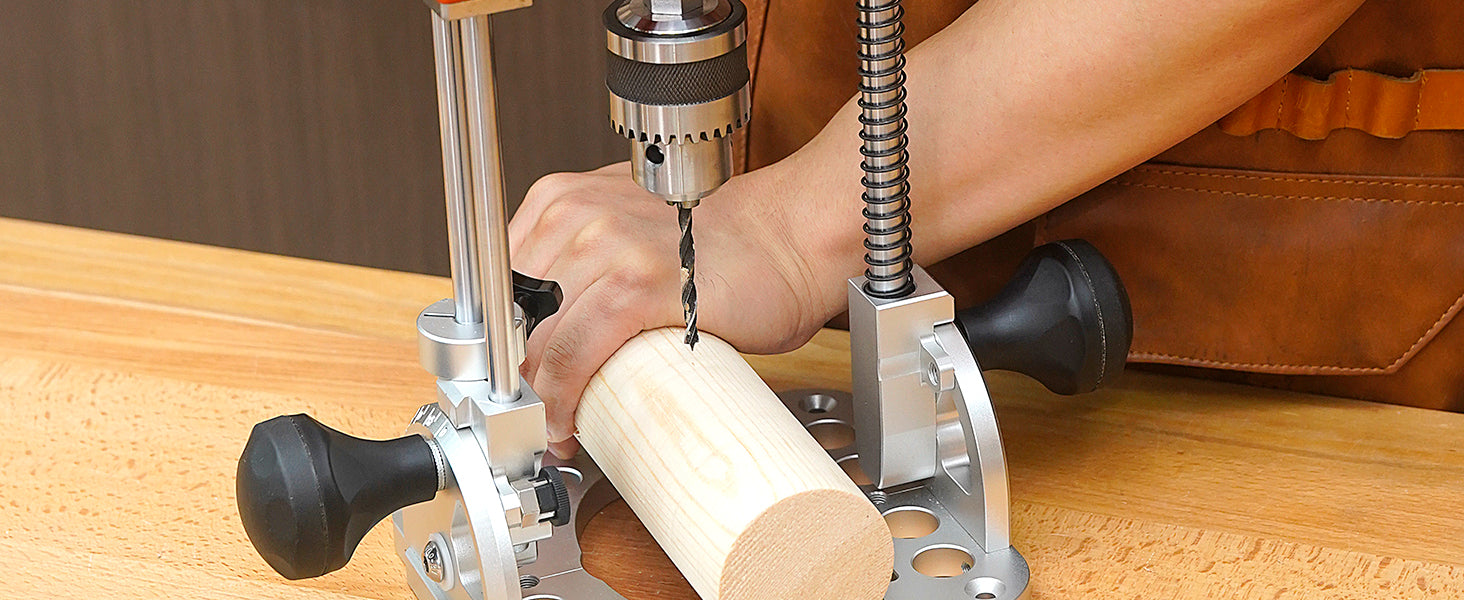
Drilling a hole into a flat surface is straightforward. However, drilling perpendicular holes in round stock—such as metal pipes, PVC, or wooden dowels—presents a unique set of challenges. The primary issue is "walking," where the drill bit slides off the center of the cylinder due to its curved surface. For professionals like chair makers and metal fabricators, even a fraction of a millimeter of misalignment can ruin a project's structural integrity.
While a stationary drill press is a traditional solution, it is not always practical for large-scale projects or on-site repairs. This is where a high-quality portable drill guide becomes an indispensable tool in your workshop.
Why a V-Groove Matters
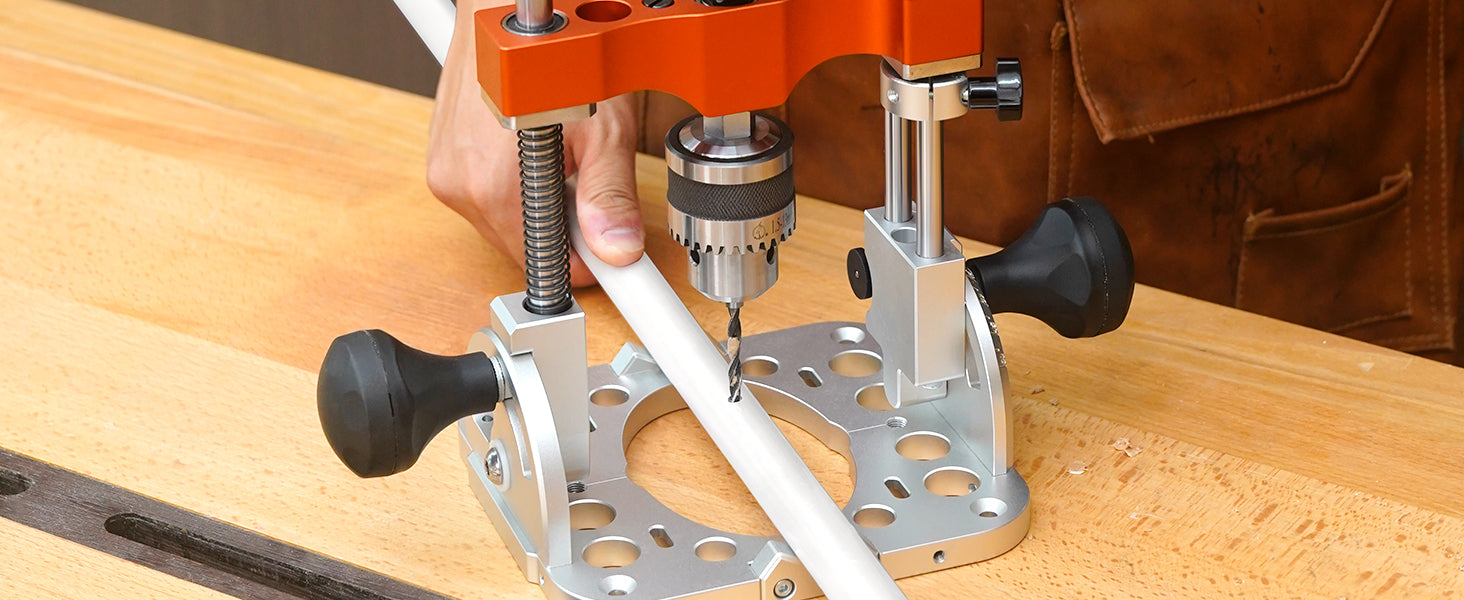
The secret to centering a hole on a cylinder lies in the base of your tool. High-quality guides, such as the spetool drill guide, feature a specialized "V-groove" integrated into the base. This V-shaped notch allows the guide to sit securely on top of round stock, naturally self-centering the drill bit along the apex of the pipe or dowel.
Benefits of the V-Groove Design:
- Stability: Prevents the guide from rocking during the drilling process.
- Accuracy: Ensures the hole is perfectly perpendicular to the center axis.
- Versatility: Accommodates various diameters of stock without needing custom jigs.
Choosing the Right Portable Drill Guide
When selecting a drill guide, you need more than just a basic holder. Metalworkers often require the ability to drill at angles, especially for custom exhaust work or frame building. The Spetool Portable Drill Guide stands out because it offers a 0-60 degree adjustable range, which is critical for complex joinery.
As noted in many Amazon user reviews, the rigidity of the guide columns is what separates professional-grade tools from DIY toys. A sturdy portable drill guide minimizes vibration, which is essential when working with hardened materials.
Step-by-Step: Drilling Perpendicular Holes
1. Mark Your Centerpoint
Use a center punch for metal or an awl for wood to create a small indentation. This gives the drill bit a starting point and prevents it from wandering.
2. Align the V-Groove
Place your portable drill guide over the stock. Ensure the V-groove is firmly seated on the curve. If you are using the Spetool model, you can lock the angle at 90 degrees for a perfectly perpendicular hole.
3. Secure the Stock
Even with a guide, the pipe should be held in a vise or clamped securely. For chair makers, using a "cradle" jig made of two scrap boards can help keep long dowels from rotating.
4. Execute the Drill
Apply steady pressure. If you are drilling through thick-walled metal, use a cutting fluid to reduce heat and extend the life of your bits. The guide will maintain the verticality that is impossible to achieve by hand alone.
Industry Applications: Metalwork & Chair Making
In the world of Windsor chair making, precision is everything. Drilling the mortises into rounded legs for stretchers requires absolute accuracy. A drill guide allows the maker to bring the tool to the workpiece, which is often easier than maneuvering a large, heavy chair frame onto a drill press table.
For metalworkers, especially those involved in automotive or architectural metalwork, the ability to drill into round tubing on-site is a game-changer. The portability of the spetool drill guide means you can achieve shop-quality precision in the field.
Maintenance and Tips
To keep your portable drill guide performing at its best, ensure the guide rods are kept clean and lightly lubricated. Check the alignment of the base periodically to ensure that the 90-degree stop remains accurate. For more high-quality machining tools and accessories, explore the full range at Spetool.