
Stop the Shaking: How to Prevent Router Sled Vibration for a Flawless Finish
For woodworkers, there is nothing quite as satisfying as transforming a raw, twisted live-edge slab into a perfectly flat tabletop. However, that satisfaction quickly turns to frustration when you notice the tell-tale signs of a poor milling job: chatter marks and ridges. These imperfections are almost always caused by one culprit—vibration.
Learning how to prevent router sled vibration is the difference between a project that requires five minutes of light sanding and one that demands hours of soul-crushing work with a belt sander. In this guide, we will explore why vibration happens and how professional-grade hardware can eliminate it.
Table of Contents
- Common Causes of Router Sled Vibration
- The Role of Materials: Aluminum vs. Wood
- Why UHMW Glide Pads are a Game Changer
- Precision Height Adjustment and Stability
- The Ultimate Solution: SpeTool Xpert PRO
- Dust Collection and Performance
- Frequently Asked Questions
Common Causes of Router Sled Vibration
Vibration in a Router Sled for Flattening Slabs typically stems from three areas: rail deflection, friction between moving parts, and play in the height adjustment mechanism. When a router bit hits a knot or a change in grain direction, it exerts significant force. If your sled isn't rigid, it will flex, causing the bit to 'bounce' and leave ripples on the wood surface.
According to Fine Woodworking, maintaining constant downward pressure and a stable carriage is essential for a clean cut. Any 'slop' in the system amplified by the high RPM of the router becomes a visible defect.
The Role of Materials: Aluminum vs. Wood
Many hobbyists start with a DIY wooden sled. While cost-effective, wood is susceptible to humidity and lacks the structural rigidity of metal. To truly prevent vibration, a Slab Flattening Mill should utilize extruded aluminum rails. Aluminum provides a high strength-to-weight ratio, ensuring the rails resist deflection even when spanning large 38” x 38.2” areas.
Why UHMW Glide Pads are a Game Changer
One of the most overlooked components in a spetool router sled is the use of UHMW (Ultra-High Molecular Weight) glide pads. Friction is a primary source of heat and jerky movements. UHMW is a low-friction plastic that allows the carriage to slide over the rails with zero 'stiction.'
By using UHMW pads under the carriage, you achieve two things:
- Vibration Dampening: The material absorbs micro-vibrations before they reach the wood.
- Smooth Travel: It ensures a consistent feed rate, which is critical for avoiding burn marks.
Precision Height Adjustment and Stability
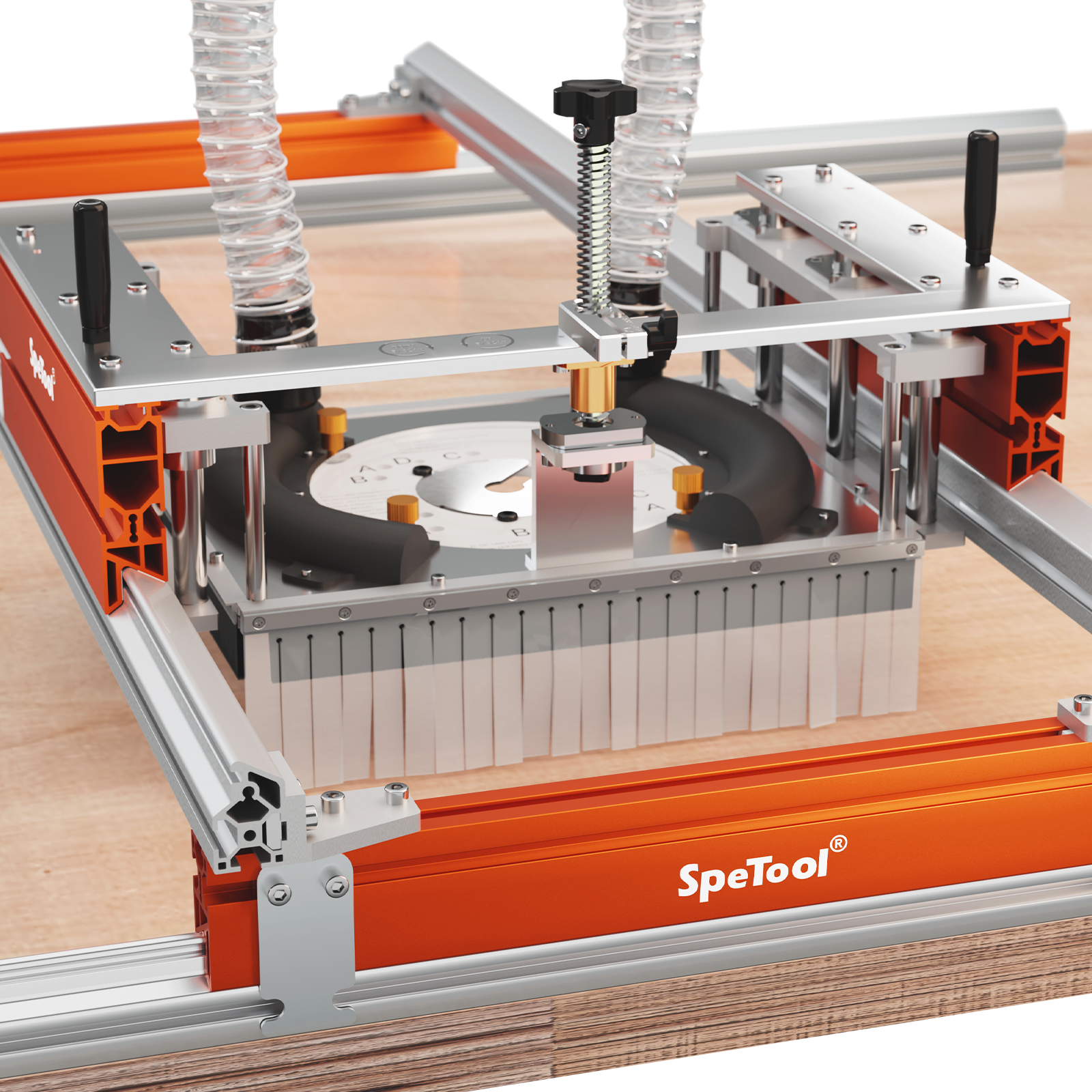
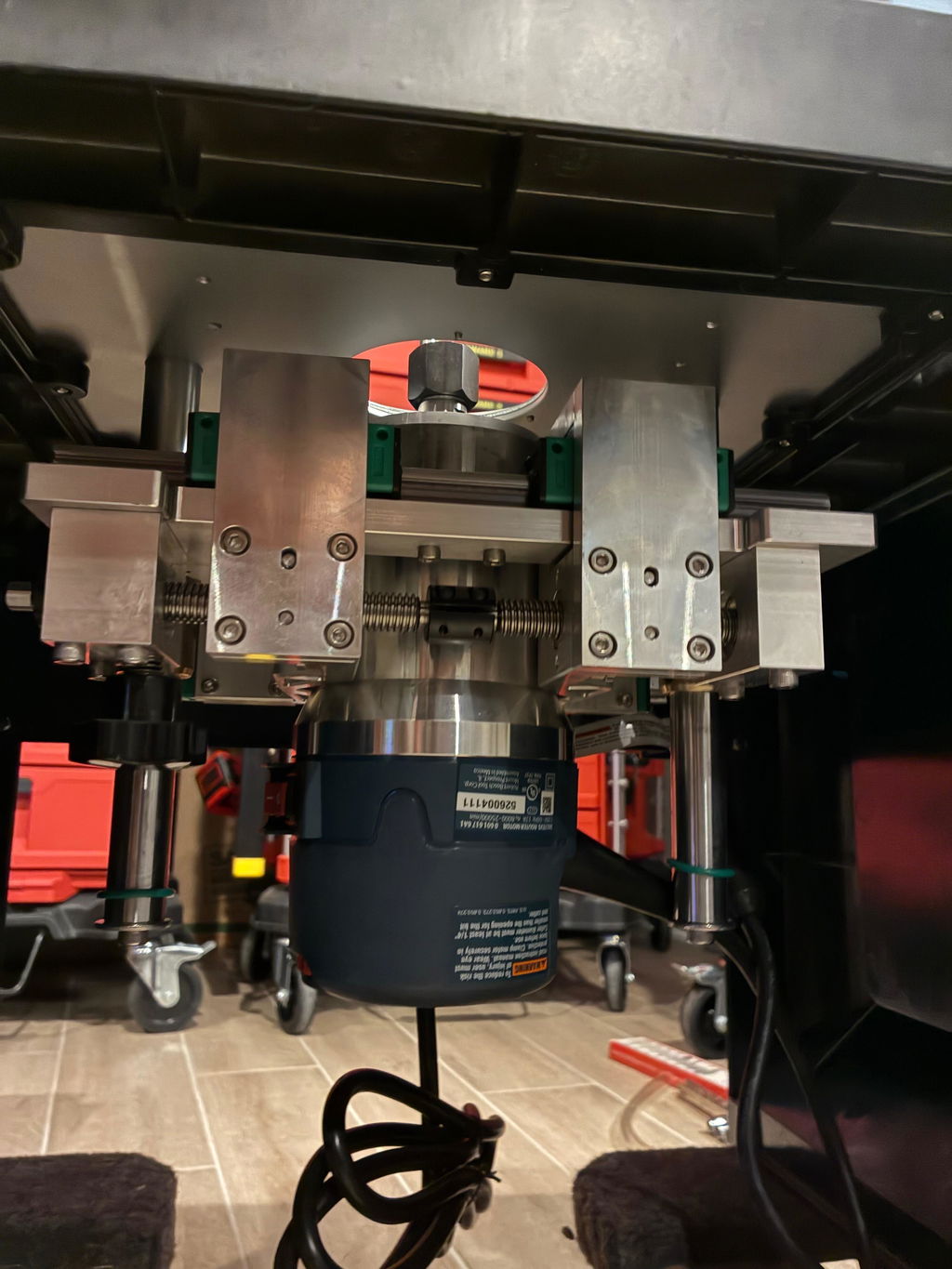
Vibration often occurs because the router isn't locked down tightly enough in the Z-axis. This is where the spetool xpert PRO shines. It features an upgraded height-adjustment mechanism with custom bearing housings and angular contact ball bearings. This design eliminates axial play, meaning the router stays exactly where you set it, even under heavy load. With 5/32” of depth change per full turn, you have the precision to take the lightest final passes for a glass-smooth finish.
The Ultimate Solution: SpeTool Xpert PRO
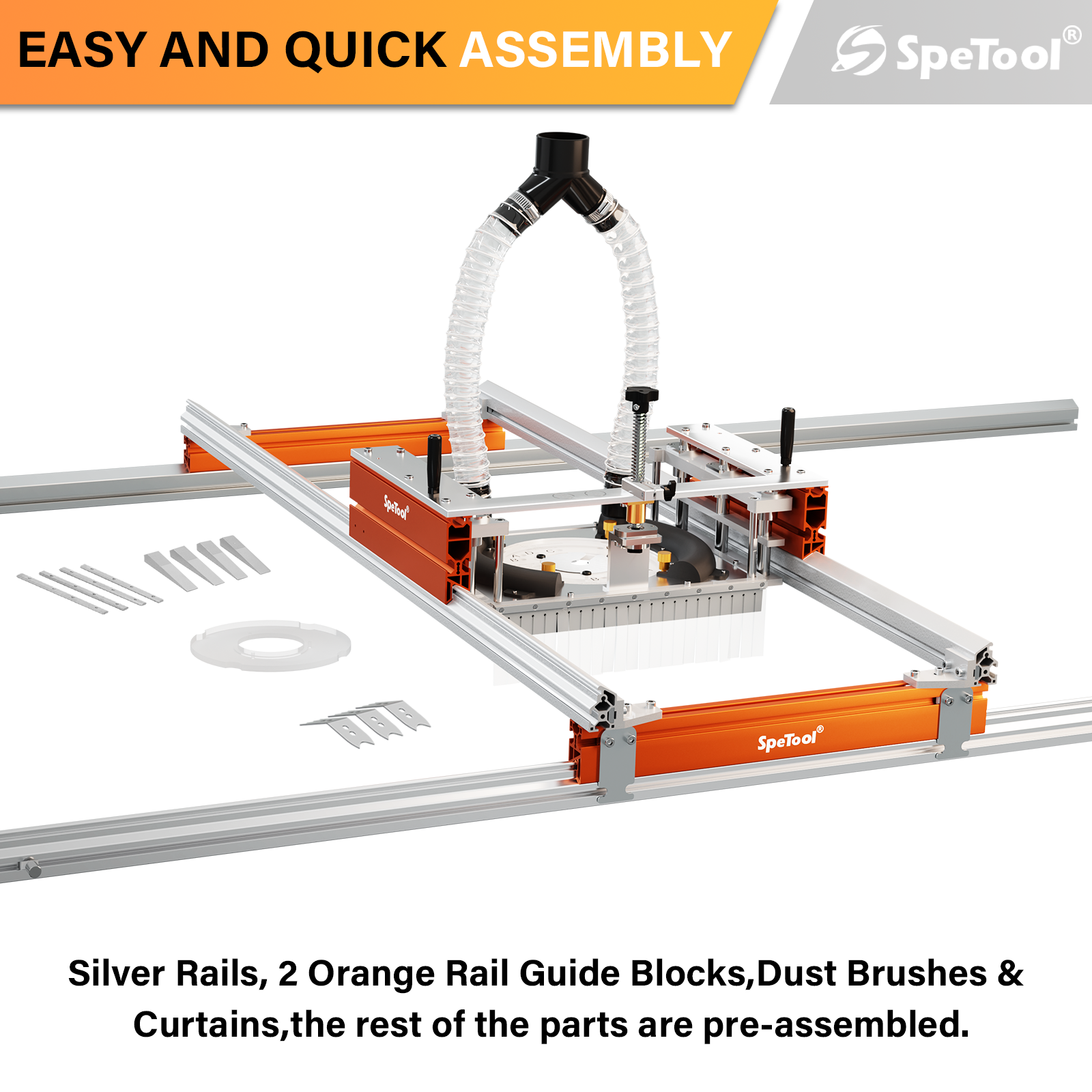
If you are tired of fighting your tools, it is time to upgrade to a system designed for professional results. The SpeTool Xpert PRO Router Sled offers a Modular Build for a Quick, Hassle-Free Setup. Most of the router carriage and key components are pre-assembled, allowing you to go from unboxing to milling in under 20 minutes.
This system handles everything from small cutting boards to massive conference tables. The durable aluminum rails and UHMW glide pads work in tandem to provide the most stable platform on the market. Furthermore, the pre-drilled plate is compatible with industry favorites like the DeWalt 618 and Bosch 1617, so you can keep using the router you trust.
Dust Collection and Performance
A cleaner workspace isn't just about safety; it's about visibility. If your Dust Collection System is failing, chips build up on the rails, causing the carriage to 'jump' and vibrate. The SpeTool Xpert PRO solves this with dual dust ports and a full-surround brush system that captures over 90% of debris, ensuring your glide path remains clear of obstructions.
For more tips on setting up your shop for large-scale milling, visit the SpeTool Homepage.