
4-Way Panel Clamps vs. Traditional Bar Clamps: Which is Best for Your Shop?
Table of Contents
The Glue-up Dilemma: Why Flatness Matters
Every woodworker knows the frustration of a failed glue-up. You spend hours milling lumber to perfection, only for the boards to buckle or slip when you apply pressure. Traditional bar clamps provide immense force, but they often lack the vertical control needed to keep a panel perfectly flat. This is where the debate between a 4 way panel clamp and traditional bar clamps begins.
Traditional Bar Clamps: The Pros and Cons
Traditional bar clamps or pipe clamps are the workhorses of the shop. They are versatile and powerful. However, when used for wide panels, they apply pressure only from the sides. This often results in the panel "bowing" or "tenting" in the middle. To combat this, woodworkers must use "cauls"—extra pieces of wood clamped across the top and bottom—to force the boards flat. This process is time-consuming, requires extra clamps, and creates a messy workspace.
The 4-Way Advantage: Precision Pressure
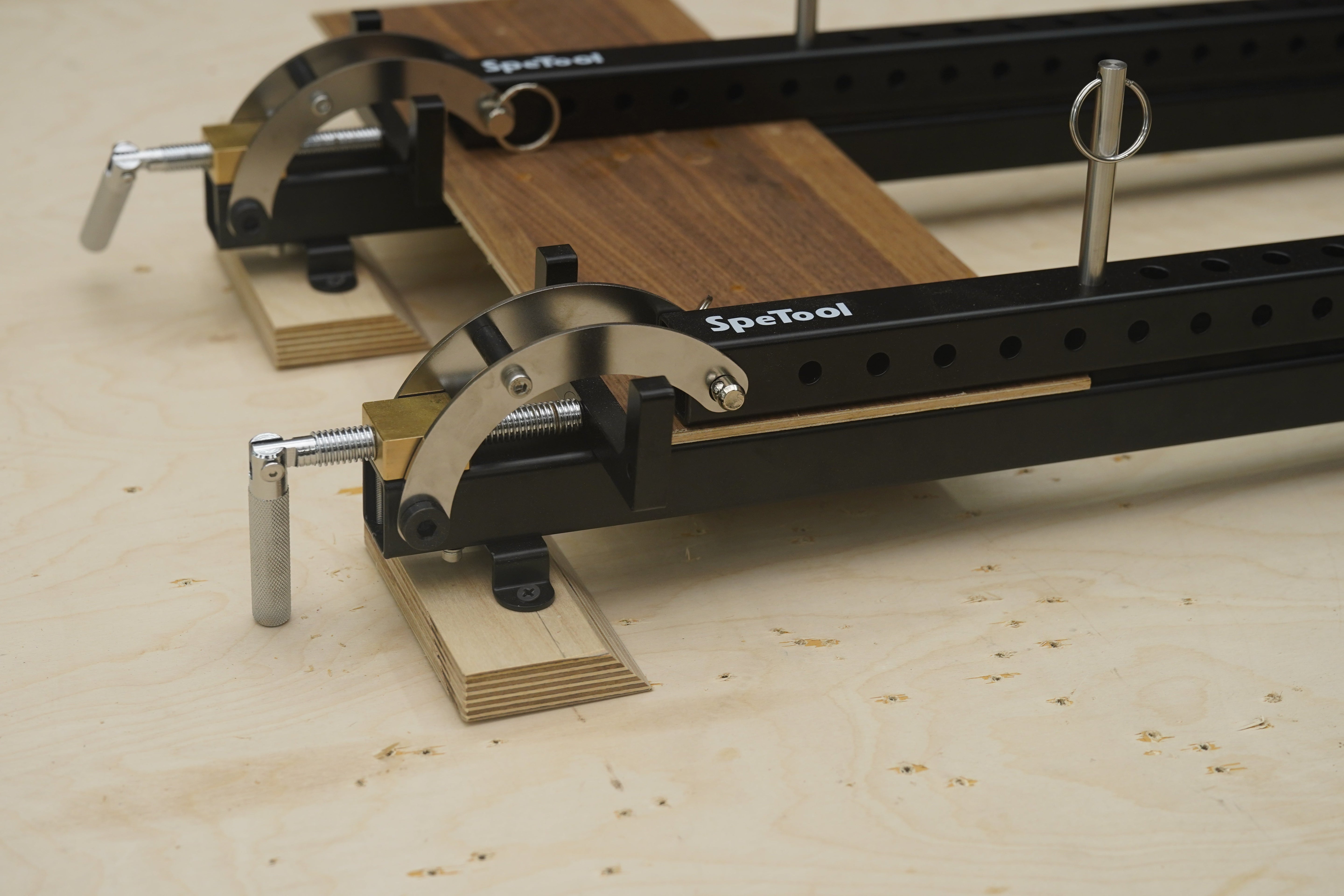
A 4 way panel clamp solves the bowing issue by applying pressure in four directions simultaneously. As you tighten the screw, the mechanism pulls the vertical bars together while pushing the horizontal bars inward. This unique action ensures that the joints are flush and the panel stays flat without the need for cumbersome wood cauls.
For those looking to streamline their workflow, the SPETOOL 36-inch 4-way panel clamp offers a professional solution. These woodworking clamps 36 inch are specifically designed to eliminate the secondary step of flattening panels after they come out of the clamps.
Why the Spetool Panel Clamp is Different
The spetool panel clamp isn't just another clamp; it's a precision-engineered tool. With parallelogram-action couplers and fix pins, it is easy to adjust the width and thickness you need and continuously apply pressure from all sides. Unlike cheaper alternatives, these clamps are made of heavy-duty steel pipe with a durable powder-coat finish and copper thread bushings to ensure smooth operation.
One major advantage of the SPETOOL design is the special surface treatment. Glue squeeze-out is inevitable in woodworking, but on this fixture, dried glue can be easily removed by hand or a knife without damaging the tool. This makes it ideal for projects like cutting boards, table tops, and cabinet doors where cleanliness and precision are paramount.
Direct Comparison: 4-Way vs. Bar Clamps
- Setup Speed: 4-way clamps are faster because they eliminate the need for cauls.
- Flatness: 4-way clamps provide automatic flattening; bar clamps require manual intervention.
- Thickness Range: The SPETOOL 4-way clamp accommodates panels from 1/4" to 3" thick.
- Capacity: These woodworking clamps 36 inch are perfect for medium to large table tops.
Final Verdict
If you are tired of fighting your boards and spending hours sanding down uneven joints, it is time to upgrade. While traditional bar clamps have their place for general assembly, the 4 way panel clamp is the superior choice for panel glue-ups. It simplifies your workflow, saves time, and produces a flatter, more professional result every time.