
Flattening Oversized Boards: How to Flatten Wood Without a Planer or Jointer
Table of Contents
The Challenge of Wide Boards
For most DIY woodworkers, the biggest bottleneck isn't their imagination—it's the width of their machinery. Standard benchtop jointers usually top out at 6 or 8 inches, and industrial 20-inch planers can cost more than a used car. When you are faced with a beautiful, wide live-edge slab or a tabletop that is 30 inches wide, the question arises: how to flatten wood without a planer?
Traditional methods like using hand planes (as described in detail on Wikipedia) are physically demanding and require years of practice to master. Fortunately, there is a modern, high-precision solution that doesn't require a five-figure investment: the router sled.
Why a Router Sled is the Superior Alternative
A router flattening sled acts as a bridge over your workpiece, allowing a router equipped with a surfacing bit to travel in a perfectly flat plane across the wood. It effectively turns your handheld router into a wide-format CNC milling machine. This setup is ideal for budget-conscious woodworkers who need to process material that simply won't fit through traditional shop equipment.
Unlike DIY wooden sleds that can warp or sag over time, a professional-grade aluminum system provides the rigidity needed for a glass-smooth finish.
Product Spotlight: The SpeTool Cratos S01001
If you are looking for the ultimate solution to flatten oversized boards, the SpeTool Cratos S01001 Router Sled is a game-changer. Designed for both sturdiness and precision, the rail is constructed from 6061 high-strength anodized aluminum alloy, ensuring it will never bend or warp, even after heavy use on massive slabs.
Key Features for Woodworkers:
- Accurate Height Adjustment: It features 5 pre-set Z-axis positions, allowing you to adjust the sled's height (from 1.5 inch to 6 inch) without the need for manual balancing. This is particularly useful for thinner wood projects where precision is critical.
- Easy Slide-In Design: An opening breach in the brackets enables your router to easily slide in with no extra steps.
- Universal Compatibility: The package includes two router plates—one pre-drilled and one blank for DIY customization—ensuring it fits most routers on the market.
- Dust Control: This router sled can be used with SpeTool dust collection systems to capture up to 90% of wood chips, keeping your workspace clean.
Step-by-Step Guide to Flattening Wood
1. Secure Your Workpiece
Place your wood on a flat workbench. Use the clamping tools included with the SpeTool Cratos S01001 to fix the slab in place. If the wood is wobbling, use plastic shims to stabilize it before you start cutting.
2. Set Your Depth
Using the laser pre-set positions for the Z-axis, lower your router bit until it touches the lowest point on the board. For the first pass, you only want to take off a small amount of material (usually 1/16th to 1/8th of an inch).
3. The Milling Process
Move the router flattening sled back and forth across the width of the board, slowly advancing down the length. Let the speed of the router bit do the work; do not force it. If your bit isn't long enough for thicker slabs, consider adding a Router Collet Chuck Extension from the SpeTool catalog.
Pro Tips for a Smooth Finish
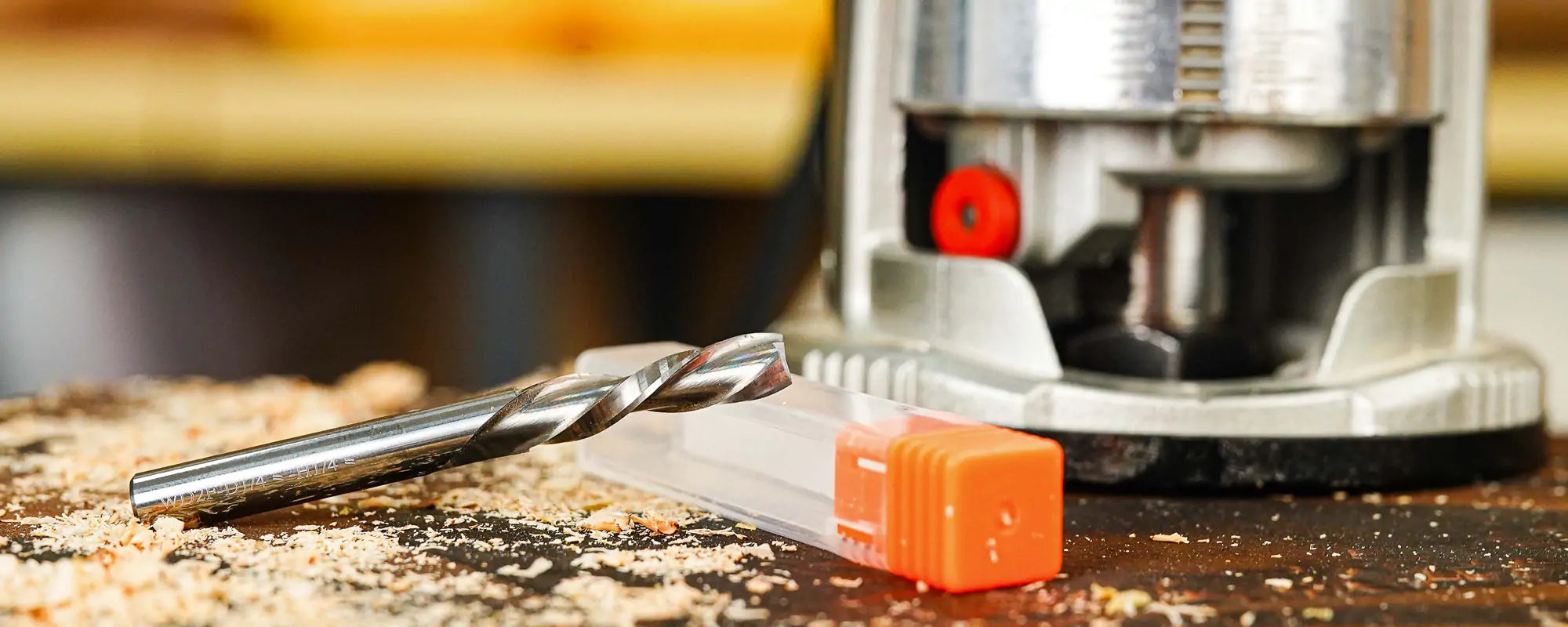
To achieve the best results when learning how to flatten wood without a planer, always use a high-quality carbide surfacing bit. Ensure your passes overlap by about 30% to prevent ridges between cuts. Finally, remember that while a router sled creates a flat surface, you will still need to do some light sanding to remove any minor tooling marks before applying your finish.
For more specialized woodworking tools and accessories, visit the official SpeTool website to explore their full range of milling solutions.