
Is Building a DIY Router Sled Worth It? (Time vs. Precision Analysis)
Every woodworker eventually faces the 'Slab Challenge.' You find a beautiful, live-edge piece of walnut or oak, but it is too wide for your jointer and too thick for your planer. The solution is a router sled for planing. However, the first question most DIYers ask is: 'Should I build one or buy one?'
While building your own shop jig is a rite of passage, the hidden costs of time, material instability, and lack of precision can often outweigh the initial savings. In this guide, we break down the DIY vs. commercial router sled debate to help you decide which path fits your workshop.
Table of Contents
- The True Cost of a DIY Router Sled
- The Precision Gap: Stability and Warping
- The Professional Edge: SpeTool Cratos S01001
- Efficiency and Dust Management
- The Final Verdict: Time vs. Money
The True Cost of a DIY Router Sled
At first glance, a DIY router planer sled seems like a weekend project that costs nothing more than some scrap plywood and a few drawer slides. But let’s look at the actual requirements for a functional build:
- Materials: High-quality MDF or Baltic Birch plywood ($40-$70), aluminum T-tracks ($30), and assorted hardware ($20).
- Time: A reliable sled requires perfect squareness. Expect to spend 4 to 8 hours designing, cutting, and calibrating.
- Maintenance: Wood-based sleds are prone to humidity changes. A sled that was flat in July might be warped by October.
For a value-conscious woodworker, spending $100 on materials and a full day of labor often equals the cost of a professional kit that works perfectly out of the box.
The Precision Gap: Stability and Warping
The primary issue with homemade versions is 'sag.' When your router sits in the middle of a 4-foot plywood span, the weight causes the wood to flex. This results in a 'dish' effect on your slab, meaning you have to spend hours sanding later. Professional tools like those found at SpeTool utilize metal components to eliminate this frustration.
The Professional Edge: SpeTool Cratos S01001
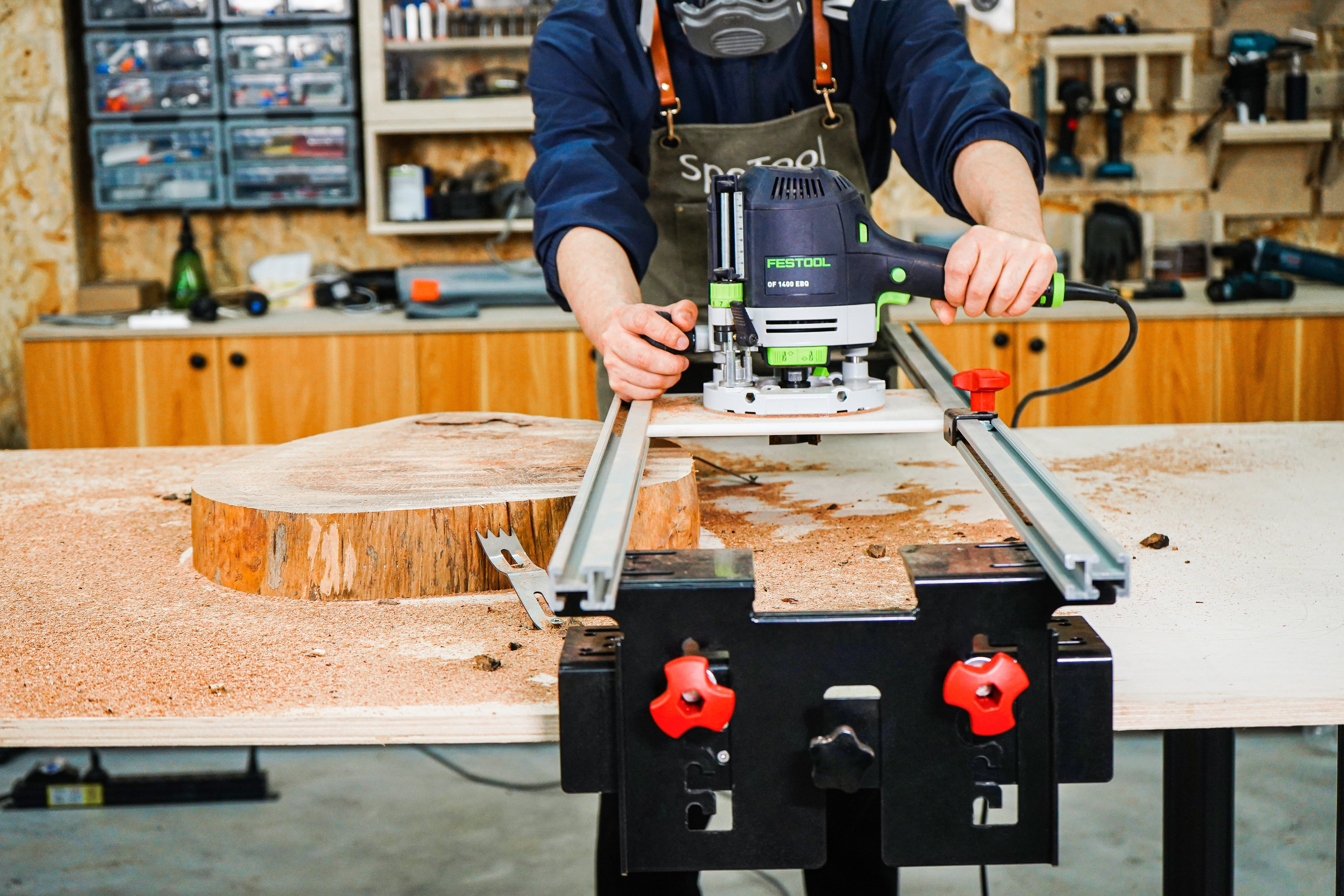
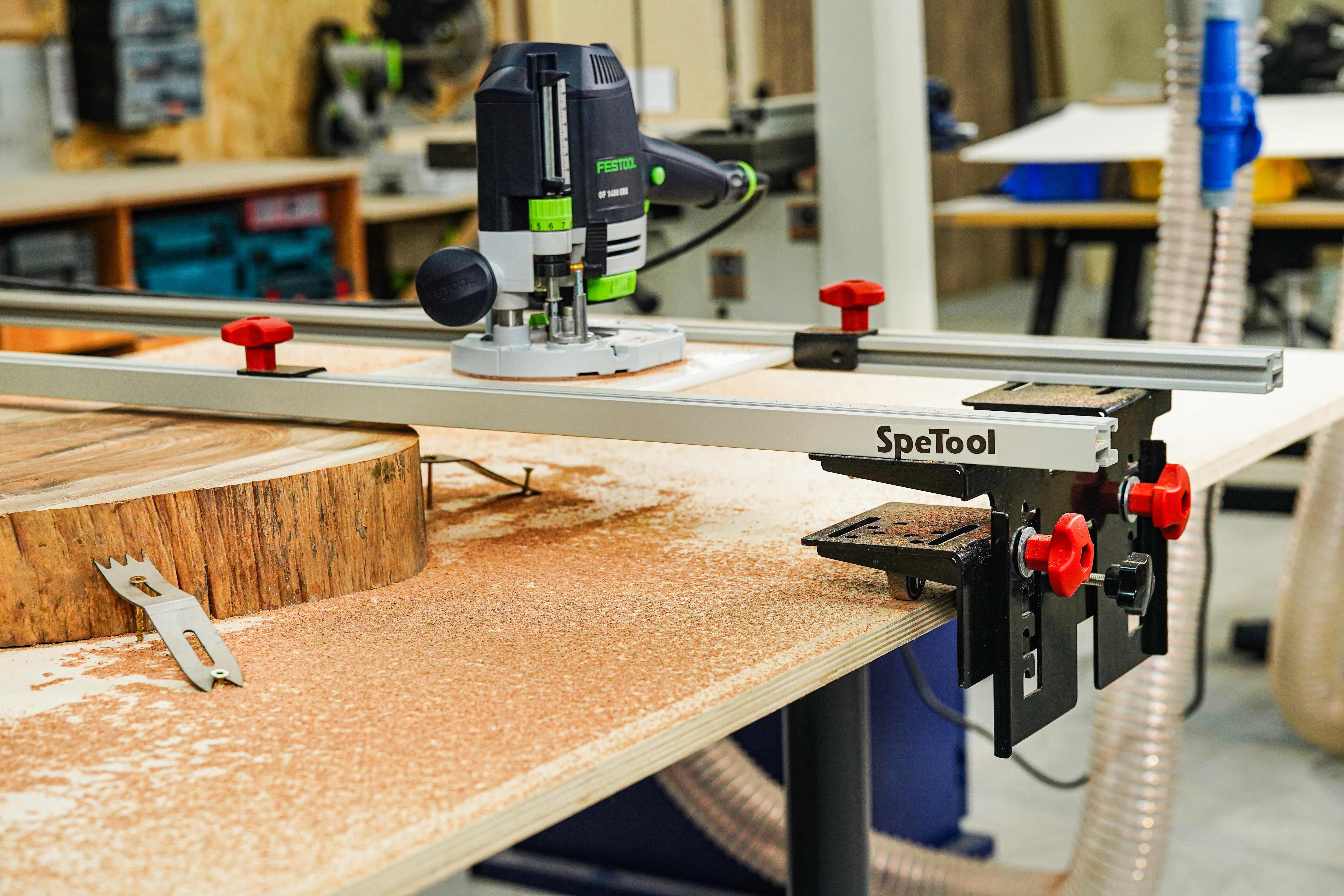
If you value your time and demand repeatable precision, the SpeTool Cratos S01001 represents a significant upgrade over any DIY build. Unlike wooden jigs, the rail is made of 6061 high-strength anodized aluminum alloy, which will never bend or warp, even after heavy use on dense hardwoods like maple or mesquite.
Key advantages include:
- Precise Height Adjustment: The system features a base bracket and a lift bracket with 5 preset heights. There is no need for tedious balancing—just click and go.
- Universal Compatibility: It includes two router plates (one pre-drilled and one blank), ensuring it fits almost any router on the market.
- Easy Slide-In: An opening breach in the brackets allows your router to slide in effortlessly without extra assembly steps.
Explore the full specs of the SpeTool Cratos S01001 Router Sled to see how it can transform your slab flattening process.
Efficiency and Dust Management
One of the most overlooked aspects of a router sled project is the mess. Flattening a large slab creates gallons of wood chips. Most DIY sleds have no dust collection, leaving you in a cloud of debris. The SpeTool Cratos can be used with their specific dust collection system (ASIN: B0D78YXTK8) to capture 90% of wood chips, making your shop safer and cleaner.
Additionally, this kit is 'All-Inclusive.' It comes with clamping tools to fix your wood plate and all the necessary screws. You won't have to make three trips to the hardware store just to get started.
The Final Verdict: Time vs. Money
Build a DIY sled if you enjoy the process of jig-making and only plan to flatten one small board a year. However, if you are working on dining tables, desks, or high-end furniture, the investment in a professional router planer sled pays for itself in the first two projects. The laser pre-set position for the Z-axis ensures you never lose your depth, and the rigid aluminum rails ensure your first pass is as flat as your last.
For more professional woodworking tools, visit authoritative woodworking guides or check out the latest innovations at SpeTool.