
How Much Pressure is Too Much? A Wood Glue Clamping Pressure Guide
In the world of woodworking, few things are as satisfying as a perfectly flush glue-up. However, for many beginners and even seasoned pros, the question remains: how hard should you actually squeeze? Applying too little pressure results in a weak bond and visible gaps, while applying too much can lead to the dreaded "starved joint." This guide explores the science of pressure and how tools like the spetool panel clamp can help you achieve professional results every time.
Table of Contents
- The Science of Glue Clamping Pressure
- Understanding and Avoiding Starved Joints
- The 4-Way Clamping Advantage
- The Role of Copper Thread Bushings
- Best Practices for Panel Glue-Ups
The Science of Glue Clamping Pressure
Wood glue, typically Polyvinyl Acetate (PVA), works by penetrating the wood fibers. To create a strong bond, you need enough pressure to bring the wood surfaces into intimate contact and force the glue into the pores. According to industry standards, hardwoods generally require 175 to 250 PSI (pounds per square inch), while softwoods need between 100 to 150 PSI.
Achieving this without specialized tools is difficult. Traditional bar clamps often apply pressure from only one direction, which can cause wide panels to bow or buckle. This is where 4-way panel clamps become essential, as they apply vertical and horizontal pressure simultaneously to keep your project flat.
Understanding and Avoiding Starved Joints
A "starved joint" occurs when so much pressure is applied that almost all the glue is squeezed out, leaving insufficient adhesive to bond the fibers. While modern research suggests it is actually quite difficult to starve a joint with manual hand clamps, excessive pressure can still cause issues like wood deformation or assembly misalignment.
When searching for the best clamps for cutting boards, look for tools that allow for incremental, controlled pressure. You want to see a consistent bead of "squeeze-out" along the entire seam. If the glue disappears entirely or the wood starts to crush, you have gone too far.
The 4-Way Clamping Advantage
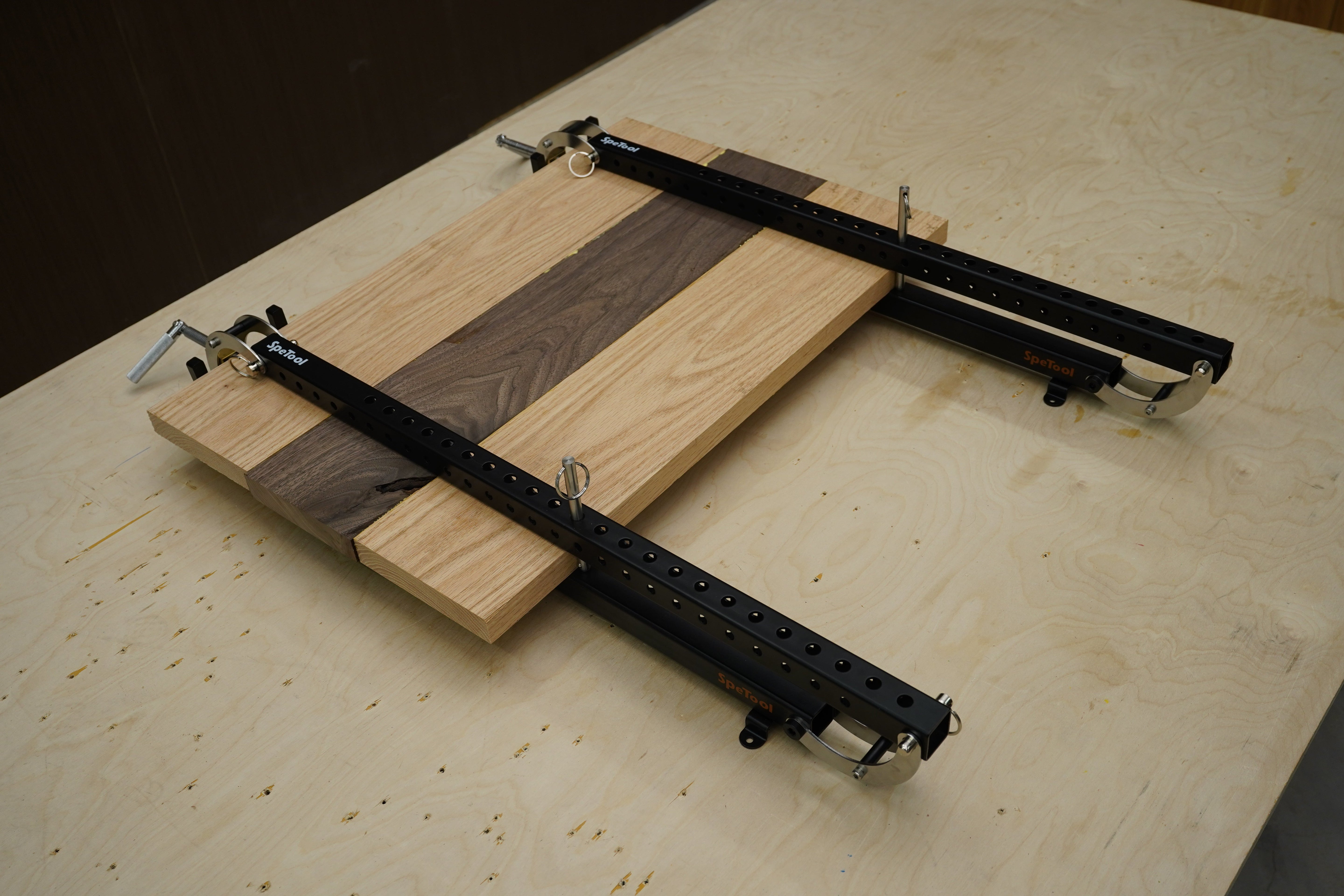
One of the biggest challenges in panel glue-ups is preventing the boards from "tenting" or lifting in the middle. The spetool panel clamp solves this by using parallelogram-action couplers. This unique design applies pressure from all four sides at once, ensuring that your joints remain flush and your panel stays perfectly flat.
Key Features of the Spetool System:
- Two-Directional Pressure: Clamps in two directions simultaneously, eliminating the need for heavy cauls.
- Versatile Adjustability: Accommodates panels from 1/4" to 3" thick and up to 24" wide.
- Durable Construction: Made with steel pipes and a powder-coat finish for long-term reliability in the shop.
For those working on tabletops, wide door panels, or thick bench tops, using a specialized panel clamp woodworking system is a game-changer for efficiency and precision.
The Role of Copper Thread Bushings
When dialing in the perfect amount of pressure, the mechanical components of your clamp matter. The spetool panel clamp features high-quality copper thread bushings. Unlike cheaper plastic or soft metal alternatives, copper bushings ensure that the retaining pins remain durable and strong under high torque.
This allows woodworkers to "feel" the pressure more accurately as they tighten the clamp. The smooth action of the copper threads prevents the jerky, inconsistent tightening that can lead to uneven pressure across a long glue joint. Furthermore, the special surface treatment on these clamps ensures that dried glue can be easily popped off with a chisel or even a fingernail, protecting the tool's longevity.
Best Practices for Panel Glue-Ups
- Dry Fit First: Always clamp your project without glue first to ensure there are no gaps and that your 4-way panel clamps are adjusted to the correct width.
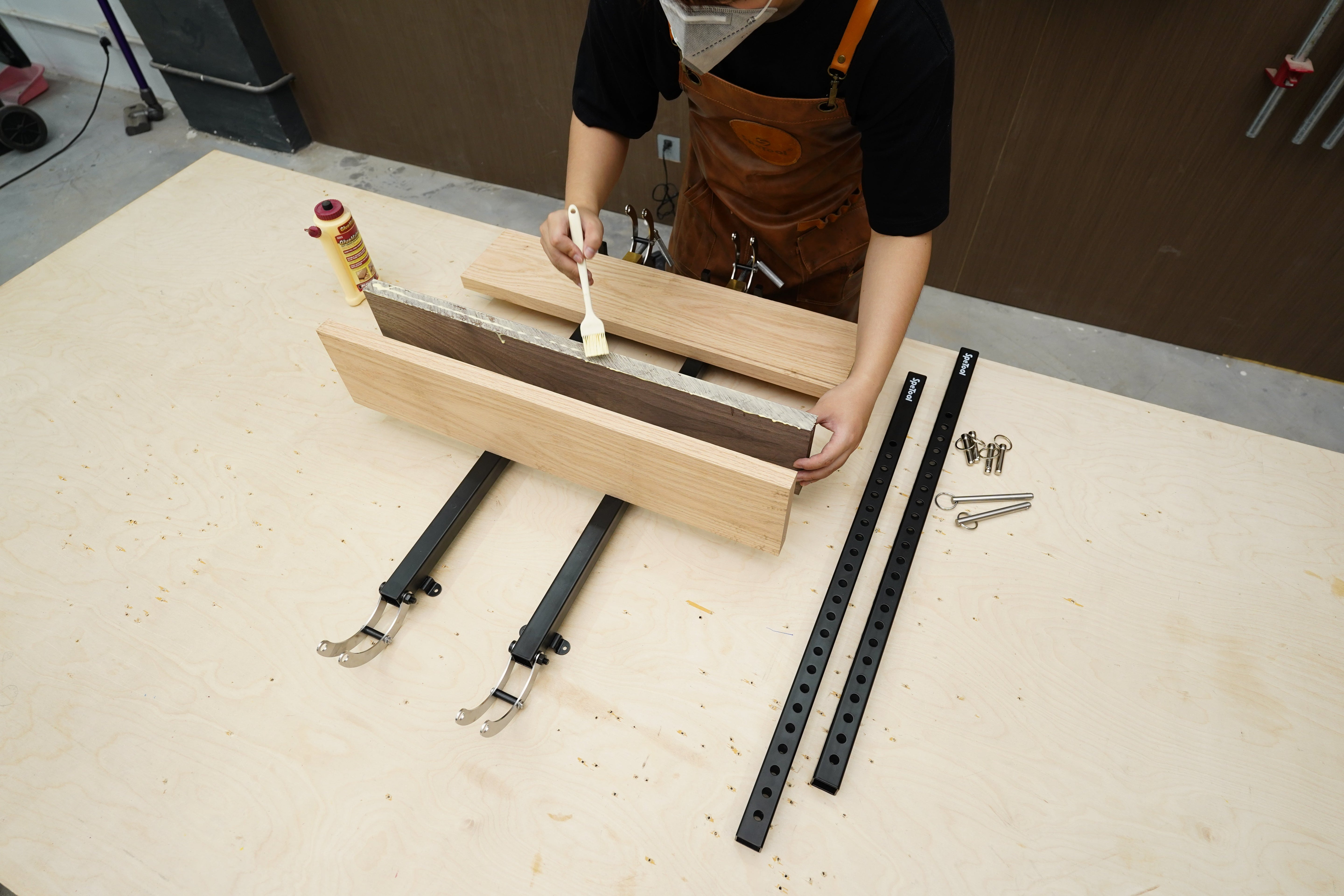
- Apply Glue Evenly: Use a roller or brush to get total coverage on both mating surfaces.
- Monitor Squeeze-Out: Tighten until a uniform bead of glue appears. If using the Spetool system, the parallelogram couplers will naturally level the boards as you tighten.
- Clean Up Early: Wait about 20-30 minutes for the glue to reach a "rubbery" state, then scrape it off to minimize sanding later.
If you are looking for a reliable way to upgrade your shop, the Spetool 24-inch 4-way panel clamp 2-pack offers a professional-grade solution for creating flawless cutting boards and furniture components.