
No More Sanding: How to Get Flush Joints in Woodworking Every Time
Every woodworker knows the frustration: you spend hours milling your lumber to perfection, only to have the boards shift during glue-up. You end up with 'stepped' joints that require hours of aggressive sanding or planing to flatten. If you are a beginner, this is often the moment where a fun project becomes a chore.
The secret to professional-grade table tops and cutting boards isn't just in the glue—it's in the clamping pressure. Specifically, it is about how to get flush joints in woodworking by applying pressure in more than one direction. In this guide, we will explore why traditional clamps fail and how the 4-way panel clamp system can save your projects and your sanity.
Table of Contents
- The Problem: Why Standard Clamps Cause Misalignment
- The Solution: The Power of 4-Way Pressure
- Why the Spetool Panel Clamp is a Game Changer
- Step-by-Step: Getting Perfectly Flush Joints
- Maintenance and Glue Cleanup
The Problem: Why Standard Clamps Cause Misalignment
When you use standard pipe or bar clamps, you are applying pressure from the sides. While this closes the glue line, it does nothing to prevent the boards from buckling upward or downward. Even a slight variation in moisture or a microscopic imperfection in your joinery can cause the boards to 'cup' under pressure.
This misalignment results in uneven surfaces. For a beginner, this usually means reaching for a belt sander, which often creates dips and valleys, further ruining the project. To avoid this, you need a tool that forces the boards into a single, flat plane while simultaneously squeezing the joints shut.
The Solution: The Power of 4-Way Pressure
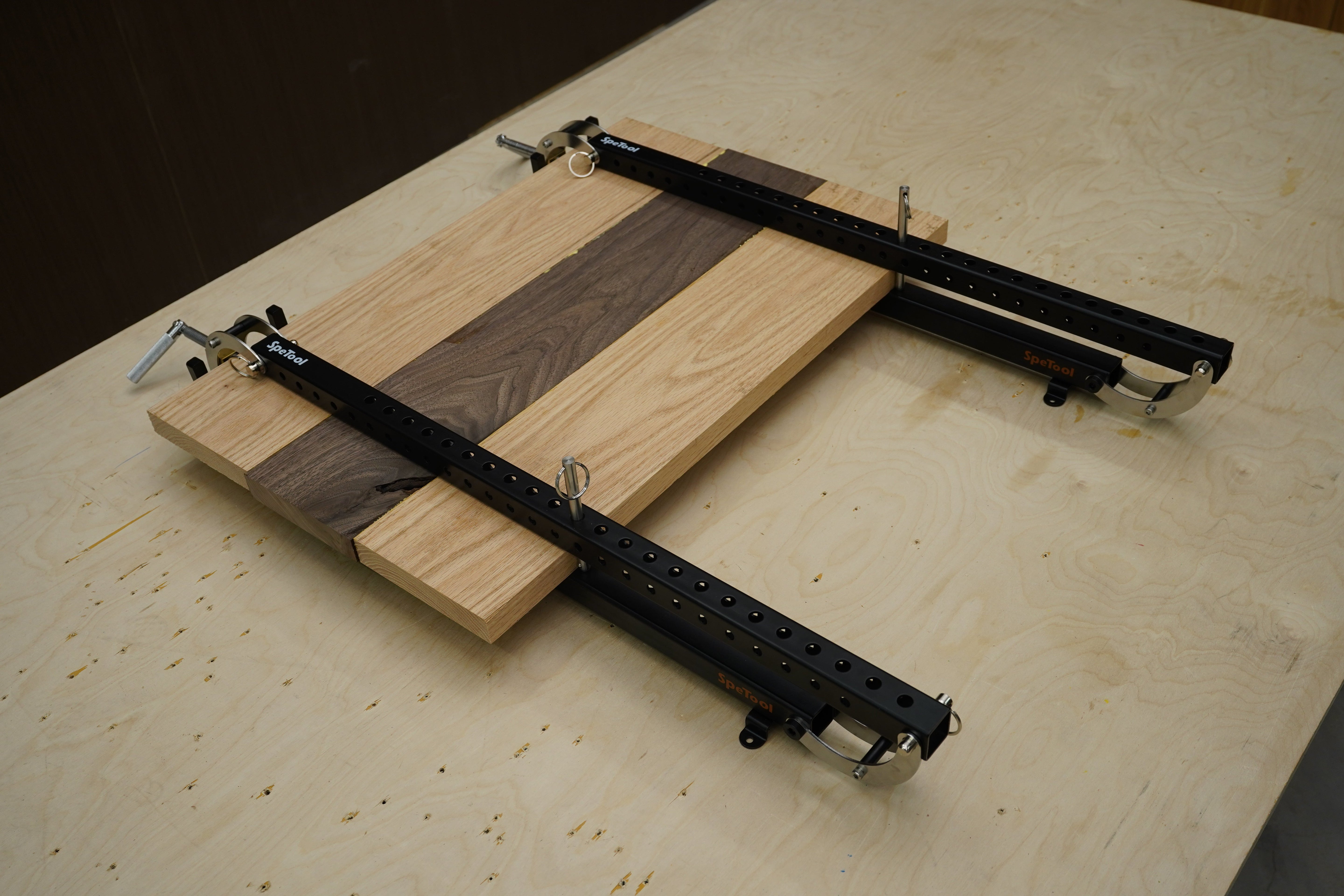
This is where 4-way panel clamps come into play. Unlike traditional clamps, these tools use a mechanical advantage to apply pressure to all four sides of the joint—top, bottom, and both sides—at once. By sandwiching the boards between two horizontal bars while applying lateral pressure, the wood has nowhere to go but perfectly flat.
For those making high-end kitchenware, finding the right clamps for cutting boards is essential. Cutting boards are prone to warping during glue-up because of the many small segments involved. A 4-way system ensures each piece stays flush, meaning you only need a light finish sanding rather than a workout with 60-grit sandpaper.
The Advantage of the Spetool Panel Clamp
If you're looking for a reliable solution, the Spetool 24-inch 4-Way Panel Clamp 2-Pack is specifically designed to solve the 'sanding nightmare.'
What sets the spetool panel clamp apart is its use of parallelogram-action couplers. These allow the clamp to distribute pressure evenly across the width and thickness of your workpiece. Whether you are working with thin 1/4" panels or heavy-duty 3" bench tops, the fix pins allow for quick adjustments to accommodate your specific project size.
Key Features:
- Two-Way Pressure: Clamps horizontally and vertically simultaneously for perfectly flat panels.
- Durable Construction: Made from steel pipe with a durable powder-coat finish and copper thread bushings.
- Glue Resistance: The special surface treatment means dried glue pops right off with a putty knife.
- Versatility: Accommodates panels up to 24 inches wide, making it ideal for everything from fine furniture to utility tabletops.
Step-by-Step: Getting Perfectly Flush Joints
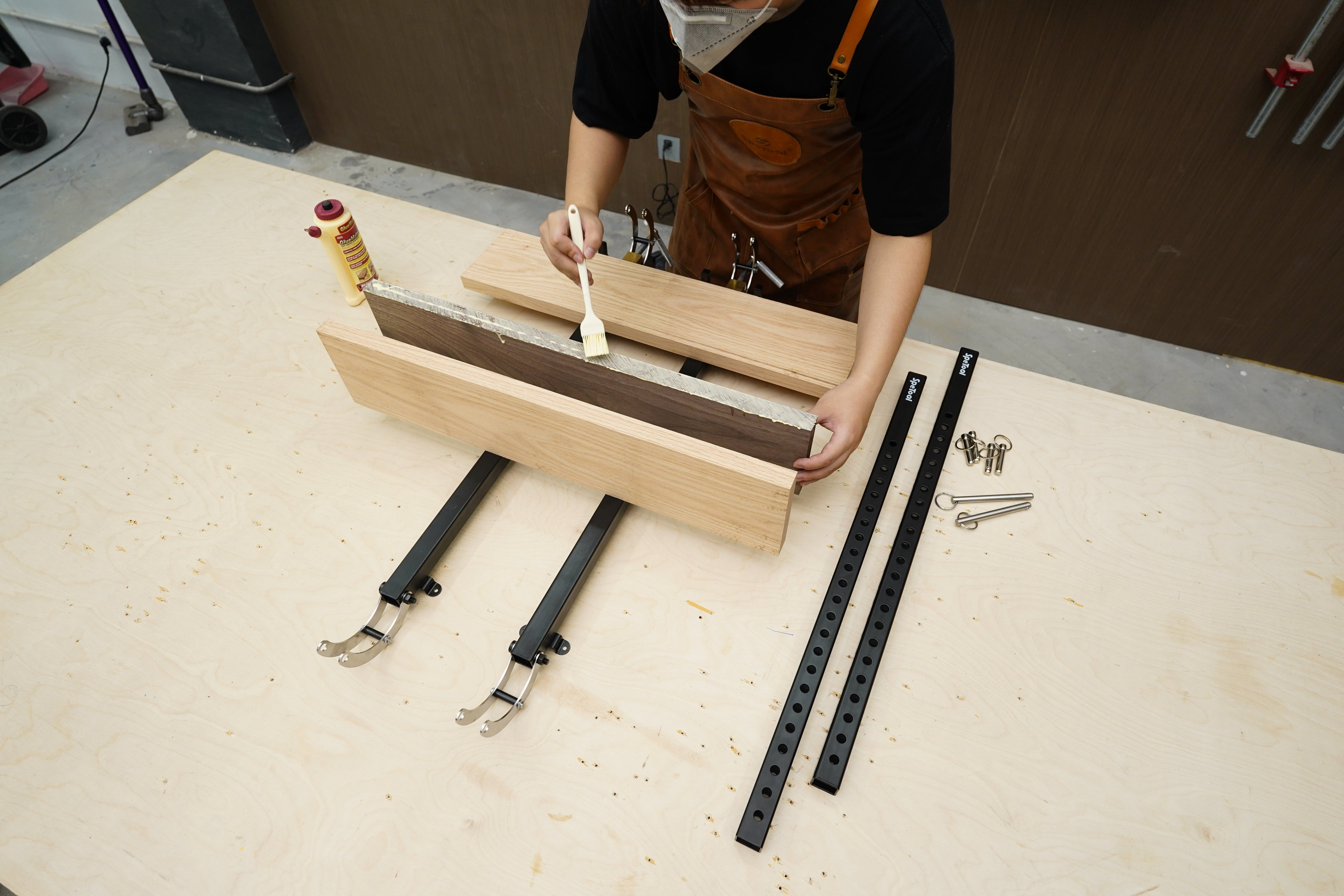
- Dry Fit First: Always arrange your boards without glue first. Use the spetool panel clamp to see how the boards sit. If there are gaps, your edges aren't square.
- Apply Glue Evenly: Use a roller to ensure a thin, even coat of glue on both surfaces.
- Position the Clamps: Place your panel into the 4-way panel clamps. Adjust the parallelogram couplers to match the thickness of your wood.
- Tighten Gradually: Don't crank one clamp down fully at once. Tighten them incrementally to allow the wood to seat itself into the flat plane.
- Check for Flushness: Run your finger across the joint. It should feel like a single piece of wood.
Maintenance and Glue Cleanup
One of the biggest headaches in woodworking is cleaning glue off your tools. The spetool panel clamp features a powder-coated finish that prevents glue from bonding permanently. For the best experience, we recommend following the included video instructions to ensure the copper bushings and pins remain in top shape for years of precision use.
By investing in the right tools, you move from 'fixing mistakes' to 'perfecting crafts.' No more endless sanding—just beautiful, flush joints every time.