
Timber Framing at Home: Using Portable Guides for Heavy Duty Joists
Timber framing is an art form that requires structural integrity and aesthetic precision. Whether you are building a custom pergola, a heavy-duty deck, or a traditional post-and-beam structure, the accuracy of your joinery depends on the precision of your holes. For many DIY builders and professionals in the United States, the challenge lies in bringing the accuracy of a stationary drill press to a massive 8x8 oak post that cannot be moved.
Table of Contents
- The Challenge of Large-Scale Precision
- Key Features of Heavy-Duty Drill Guides
- Efficiency with Plunge Drill Guides
- Mastering Diagonal Joinery
- Why a Metal Drill Guide is Essential
The Challenge of Large-Scale Precision
In timber framing, even a slight deviation in a bolt hole can lead to misaligned joints, compromising the safety of the entire structure. While a mini drill guide might suffice for small furniture projects, heavy-duty joists require a tool with significant mass and stability. Achieving precision drilling for timber framing means maintaining perfectly perpendicular or specifically angled paths through several inches of dense wood.
Key Features of Heavy-Duty Drill Guides
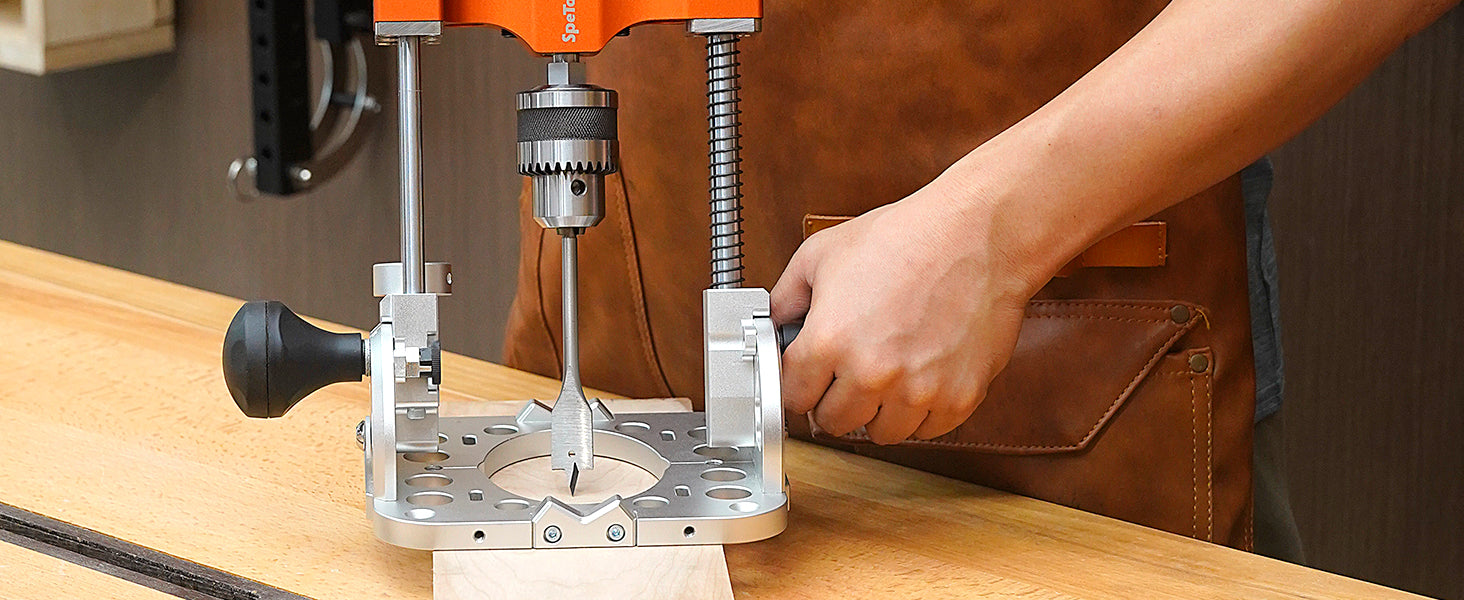
To bridge the gap between a handheld drill and a shop-bound drill press, tools like the SpeTool Portable Drill Guide have become industry favorites. This portable drill guide for hand drill is specifically engineered for high-stakes woodworking. Constructed entirely from metal, its heavy-duty chuck achieves an average radial runout of 0.004 inch, ensuring your long-bore holes remain true from entry to exit.
Stability is paramount when working with heavy timbers. Unlike lighter plastic models, a professional-grade metal drill guide utilizes an all-aluminum base and multiple guide poles—often three instead of the standard two—to prevent the impact force of high-torque drills from shifting the unit during operation.
Efficiency with Plunge Drill Guides
When working on repetitive tasks like floor joists, the smoothness of the drilling motion is critical. A high-quality plunge drill guide incorporates liner ball bearings to reduce friction. This allows for a continuous, smooth motion without the sticking that often plagues cheaper models. This design eliminates the need for constant lubrication and provides the operator with better tactile feedback through the 8.36lb base.
Mastering Diagonal Joinery
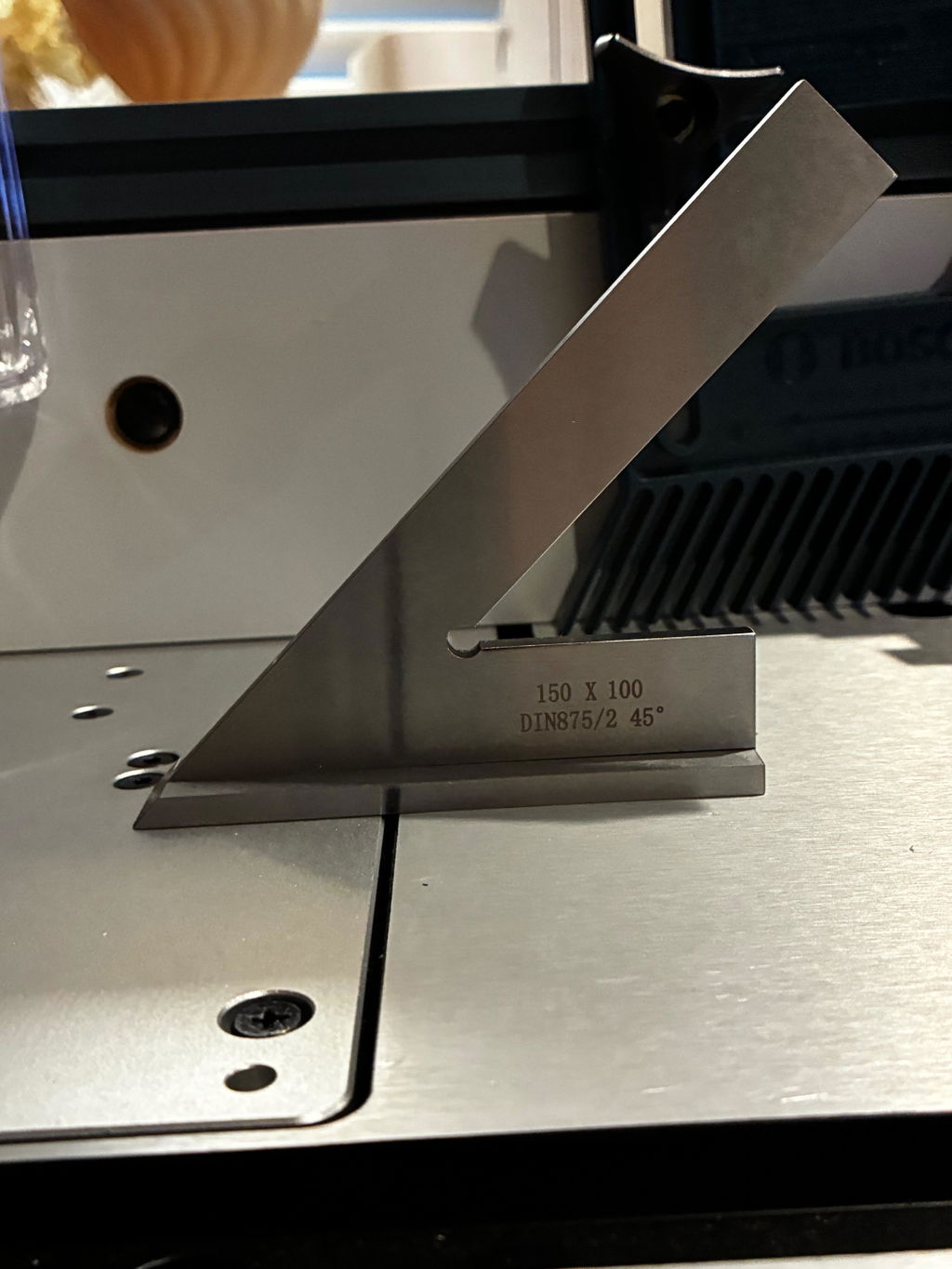
Many architectural timber designs require angled holes for decorative braces or structural fasteners. This is where a diagonal drill guide becomes indispensable. The ability to adjust the drill guide angle from 0° to 60° allows for immense flexibility. Specialized guides feature double locks every 7.5°, ensuring that once you set your angle, it stays locked despite the vibration of the drill.
Why a Metal Drill Guide is Essential
For the American timber framer, durability is non-negotiable. An anodized aluminum base provides rock-solid stability for both vertical and angled operations. Features like built-in V-blocks allow the guide to sit securely on cylindrical logs as well as flat beams, making it a versatile companion for any project site. For more professional woodworking tips, you can explore resources like Fine Woodworking or the Wikipedia page on Timber Framing.
Ready to upgrade your framing accuracy? Check out the SpeTool collection for more precision-engineered woodworking solutions.