
Safe Depth: Choosing the Right Router Collet Extension for Your Sled
When working with a router flattening sled, one of the most common frustrations is the "reach" problem. You have a massive wood slab, a sturdy sled, and a high-quality surfacing bit, but your router bit simply cannot reach the surface because the sled's base and rails add too much height. This is where a router collet extension becomes a necessary tool. However, using an extension at 12,000+ RPM involves significant safety risks if not calculated correctly.
Table of Contents
- The Reach Problem in Slab Flattening
- The Safety Risks of Extensions
- The SpeTool Formula for Safe Overhang
- Why the Right Sled Reduces Extension Need
- Installation Best Practices
- Frequently Asked Questions
The Reach Problem in Slab Flattening
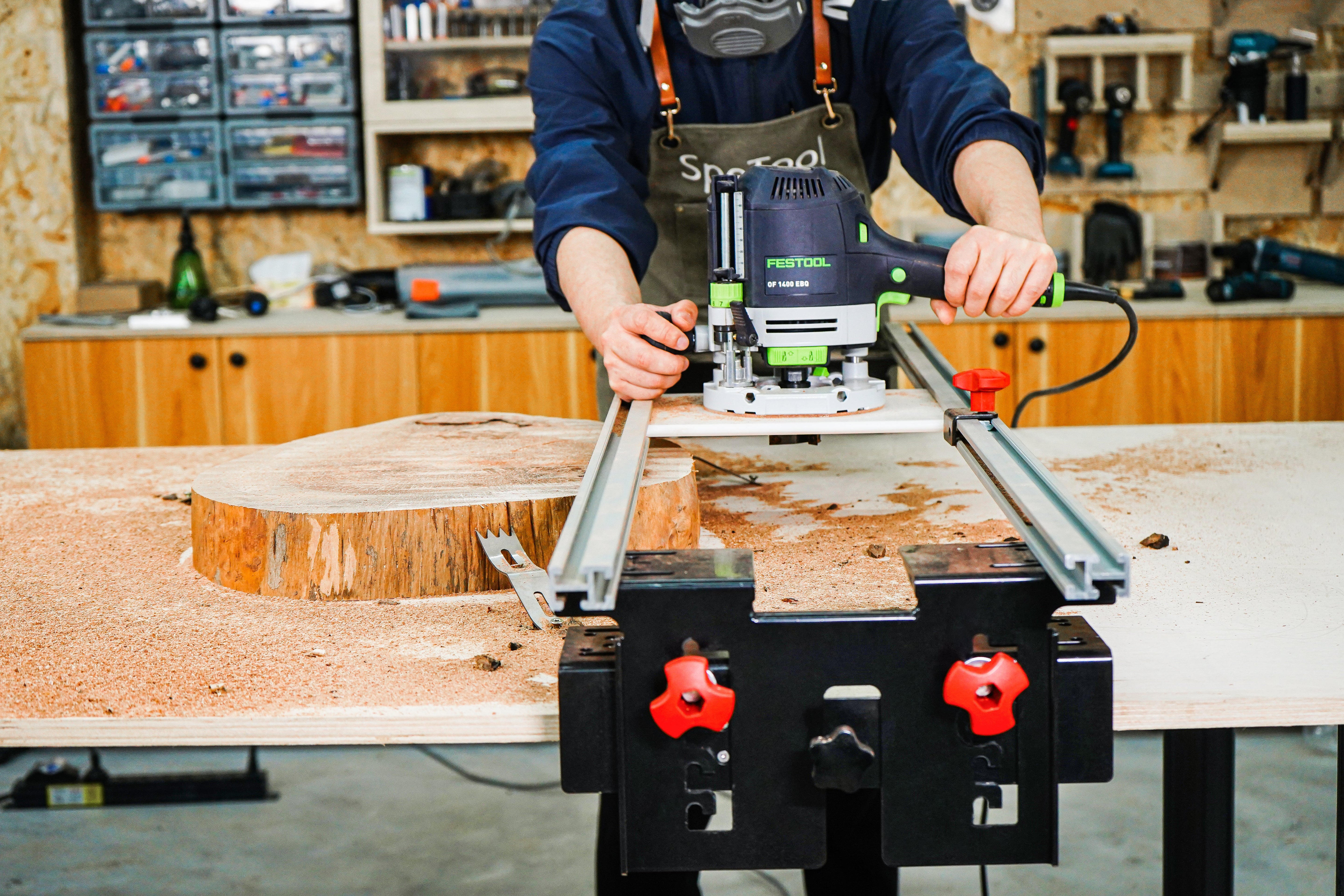
Using router sleds for large projects like dining tables or workbenches requires the router to sit atop a carriage. This carriage usually sits 1 to 2 inches above the workpiece. If you are using a standard woodworking router, the plunge depth may not be enough to allow the surfacing bit to touch the wood, especially as the slab gets thinner. This is why many woodworkers turn to a collet extension to bridge the gap.
The Safety Risks of Extensions
An extension adds a second point of potential failure and increases "runout" (wobble). At high speeds, even a microscopic misalignment can cause severe vibration, which can lead to:
- Poor surface finish (chatter marks).
- Damage to the router bearings.
- The bit snapping or the extension ejecting from the collet.
The SpeTool Formula for Safe Overhang
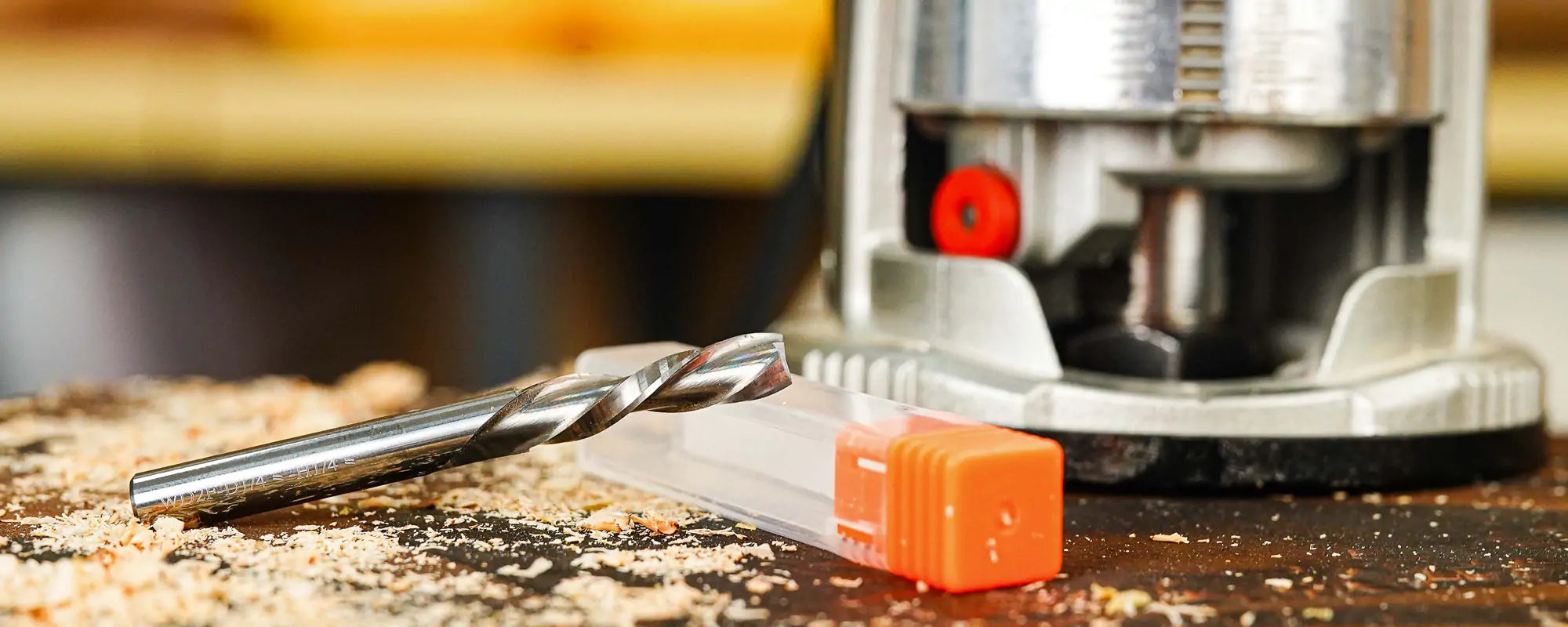
To mitigate these risks, SpeTool recommends a specific safety formula to find the correct overhang. When using a collet extension, you must ensure that the length of the extension protruding from the router collet (L) is proportional to the shank diameter (D). A common safety rule of thumb is that the overhang should never exceed 2.5 to 3 times the diameter of the shank for heavy-duty surfacing. Always ensure that at least 80% of the extension's shank is fully seated within the router's primary collet.
The SpeTool Cratos: A Precision Router Sled for Flattening Slabs
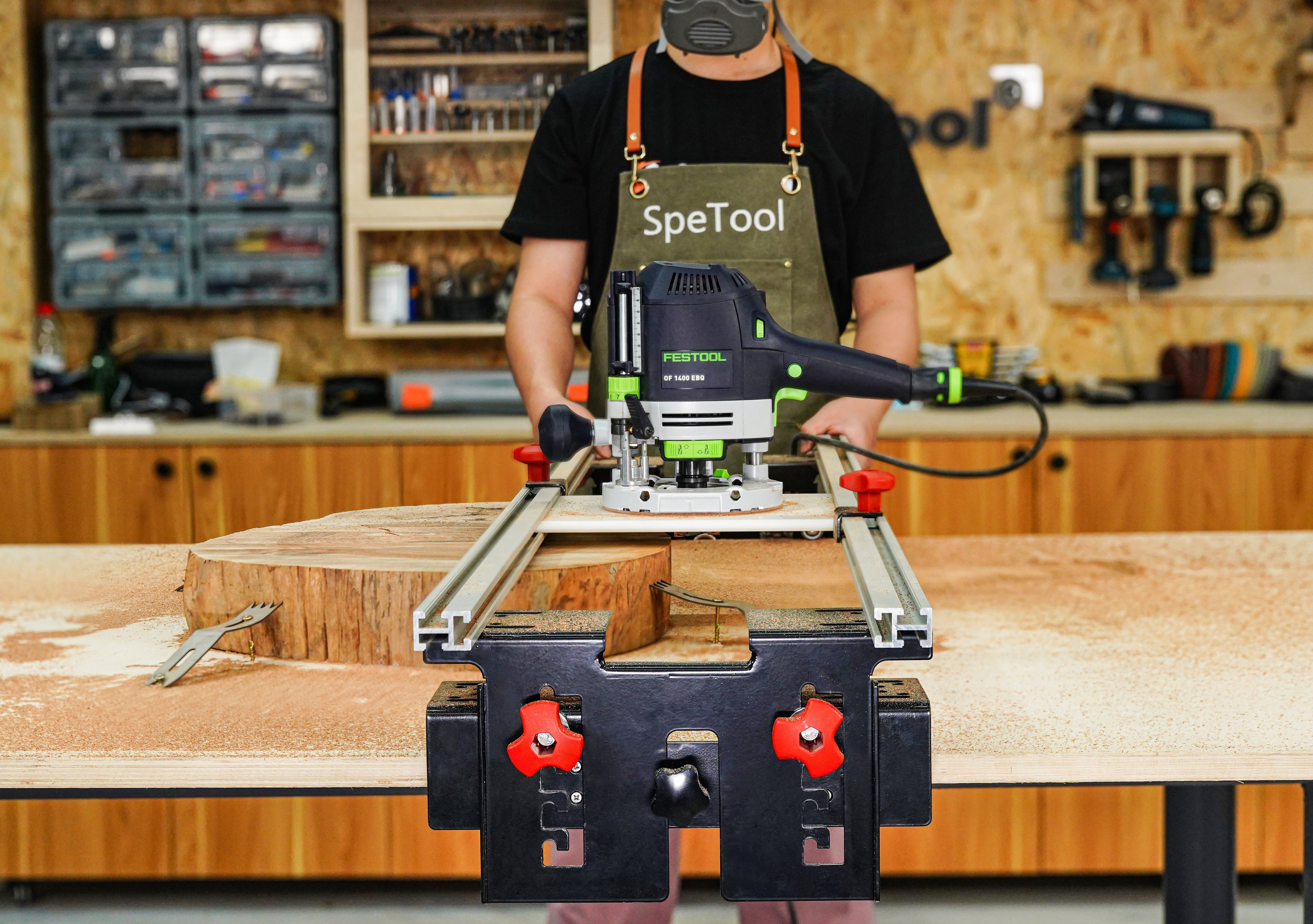
Choosing a high-quality router sled for flattening slabs can actually reduce your reliance on extreme extensions. The SpeTool Cratos S01001 Router Sled is designed with precision and safety in mind. Its rail is made of 6061 high-strength anodized aluminum alloy, ensuring it will never bend or warp under the weight of a heavy router.
Key features that solve depth issues include:
- Precise Height Adjustment: The lift bracket has 5 preset heights—no balancing needed, just click and go. This is great for thin wood and offers a lower profile than DIY sleds.
- Laser Pre-set Z-Axis: Allows for easy height adjustment without the risk of the router slipping mid-pass.
- Easy Slide-In: An opening breach in the brackets enables the router to easily slide in, saving setup time.
- Universal Compatibility: Includes two router plates (one pre-drilled, one blank) to fit almost any router on the market.
For a cleaner workspace, it can be paired with SpeTool dust collection accessories to capture 90% of wood chips, making the flattening process much more comfortable.
Installation Best Practices
When installing your extension into your router flattening sled setup:
- Clean the router collet and the extension shank with alcohol to remove oils.
- Insert the extension into the router collet until it bottoms out, then pull it back 1/16th of an inch before tightening.
- Insert your surfacing bit into the extension, following the same "bottom out and pull back" rule.
- Always run the router at a lower speed setting when using extensions to minimize centrifugal force.